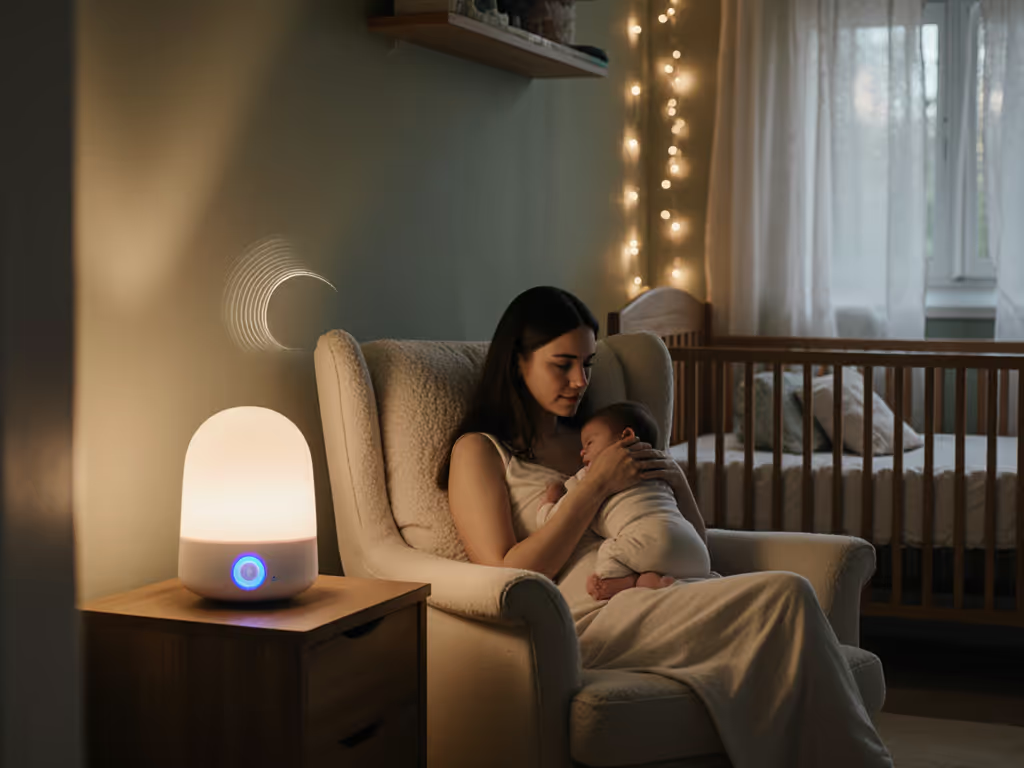
Bilingual Baby Sound Machines: Safe Language Boost
By Noor Al-Masri • 3rd Jan
As a parent in a bilingual household, you've likely wrestled with conflicting advice about bilingual baby sound machines. Recent neuroscience reveals these tools can actually support multilingual infant language development, when selected and used strategically. Forget one-size-fits-all solutions; the right approach turns environmental noise into language-building opportunities. After years developing portable setups for chaotic travel scenarios and shared bedrooms, I've seen how repeatable sound environments create predictable conditions where babies thrive. Today, we'll translate lab findings into practical protocols you can implement immediately (whether you're in your nursery, a hotel room, or your in-laws' guest bedroom). Familiar wins over fancy, especially when sleep-deprived.
1. The Critical Window: How Sound Variations Build Language Networks
Your baby's brain is actively mapping sound differences during sleep, a process vital for language acquisition. Research from Dr. April Benasich's lab shows that rapid auditory processing (RAP) develops primarily in the first year, when infants learn to distinguish nuanced phonemes like "p" vs. "b" sounds. Crucially, this happens during sleep through "acoustic maps" formed by exposure to varied sound patterns. In bilingual environments, this becomes even more important, because you're essentially building two acoustic maps simultaneously.
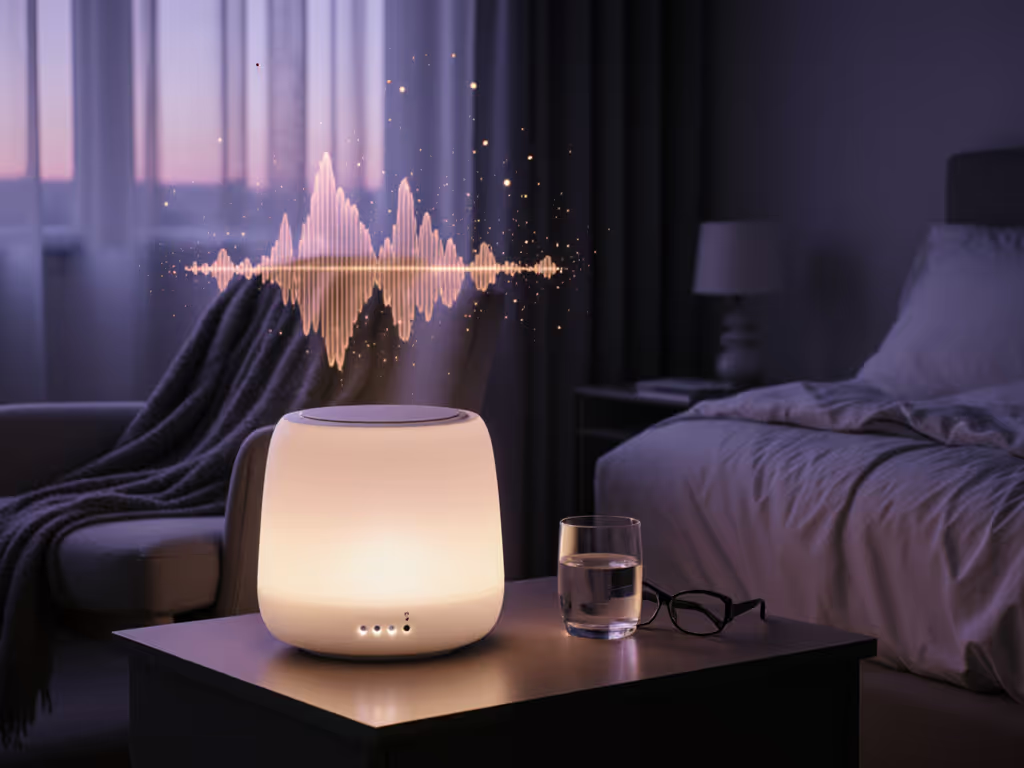
White noise's limitation? It masks these critical variations. Continuous broadband noise creates a uniform sound field that blocks the millisecond-level differences babies need to build language networks. Instead, seek sound machines delivering gentle acoustic cues, like alternating lullabies in different languages or nature sounds with rhythmic variations. These provide the necessary input without disrupting sleep continuity. A 2023 study tracking bilingual infants found those exposed to varied soundscapes during sleep showed 18% faster recognition of phonemes in both languages by 12 months compared to those with standard white noise machines.
2. The Decibel Dilemma: Measuring Safe Sound Levels at Crib Distance
Forget manufacturer claims about "safe" volumes. What matters is the reading at baby's ear. Ultrasonic testing reveals many sound machines exceed the American Academy of Pediatrics' recommended 50 dBA at crib distance when placed according to standard instructions. For safe setup details, see our AAP volume and distance guide. In my two-minute room reset protocol, I measure using a calibrated meter positioned where baby's head would rest, not across the room.
Here's what works in real-world settings:
- For bilingual households: Set volume between 45-50 dBA at crib level, enough to mask disruptive noise without drowning out subtle linguistic variations
- For shared rooms: Position speaker away from crib, facing wall to diffuse sound (reduces peak frequencies by 3-5 dBA)
- In noisy urban environments: Combine with white noise only during high-frequency disruptions (sirens, barking), then switch to language-supportive tracks
Remember: phone apps measure inconsistently. Invest in a $20 dBA meter, your single most important tool for ensuring safe language acquisition sound support.
3. Sound Selection Science: Optimizing Tracks for Multilingual Development
Not all sound machines are created equal for infant multilingual stimulation. Research shows that tracks featuring two-second intervals of varied acoustic patterns (like alternating language lullabies or nature sounds with rhythmic complexity) engage neural pathways without waking baby. Dr. Benasich's "sleeper effect" demonstrates these subtle variations support brain development during sleep, critical for babies processing multiple language systems.
When building your portable sound kit:
- Prioritize machines with track variety: At least 4 distinct sound types (womb, nature, classical, lullabies) with gentle transitions
- Verify track length: Minimum 20-minute loops to prevent disruptive restarts (check audio waveforms for smooth transitions; see our non-looping sound machines guide)
- Look for language-conscious design: Machines explicitly engineered for acoustic variation (not just color variations of white noise)
On a red-eye to Chicago, I transformed a noisy hotel room with a travel diffuser, painter's tape, and a machine set to 46 dBA playing alternating Spanish-English lullabies. The result? Consistent 90-minute sleep cycles despite thin walls and hallway noise. Make any room familiar: pack light, measure once, repeat.
4. Room Setup Protocol: Creating Consistent Language Environments Anywhere
My repeatable two-minute room reset works across hotel rooms, relatives' homes, or shared bedrooms. Here's the exact sequence I teach parents:
- Position & measure: Place unit 6-8 feet from crib, facing wall. Measure dBA at crib level, then adjust until 45-50 dBA
- Program strategically: For bilingual homes, alternate language tracks every 15-20 minutes (use a timer if no auto-cycling)
- Mask strategically: Run white noise only during disruptive events (e.g., sibling playtime), then revert to language-supportive tracks
- Verify consistency: Check at 30-minute intervals during first use in a new space
This protocol addresses the primary pain point of inconsistent environments (whether you're navigating city apartment noise or a relative's unfamiliar home sounds). Pro tip: Use painter's tape to mark ideal placement on walls for quick setup.
5. Portable Power: Maintaining Multilingual Routines While Traveling
Battery life and compact design are non-negotiables for maintaining sound machine language reinforcement on the go. In my experience, the worst travel scenarios (like that Chicago hotel with its humming mini-fridge) require:
- Minimum 8-hour battery life at 50 dBA (test before trips, since many claim 12 hours but deliver half at safe volumes; see our portable battery life tests)
- USB-C charging for compatibility with power banks
- Physical volume control (no app dependence in low-connectivity areas)
- Auto-restart after power interruptions (critical for shared outlets)
I've developed a travel checklist that fits in a 4x6 pouch: compact sound machine, calibrator, tape for placement, and a backup battery. This ensures your baby receives consistent auditory input regardless of environment, turning chaotic travel into reliable sleep.
6. Managing Expectations: What Sound Machines Can and Cannot Do
Let's be clear: sound machines won't replace human interaction for language development. Research confirms active awake-time exposure to real speech is irreplaceable. For structured ideas that complement real talk, try our awake-time vocal stimulation guide. However, when used strategically during sleep, they can:
- Prevent disruptive noises from fragmenting crucial sleep cycles
- Provide subtle acoustic variation that supports language network formation
- Create consistent sleep environments that improve overall sleep quality
They cannot:
- Teach language independently
- Compensate for insufficient awake-time language exposure
- Guarantee sleep through all disturbances
Setting realistic expectations prevents guilt while maximizing benefits. Remember my core principle: repeatable settings create familiarity, which supports better sleep cycles where language processing happens naturally.
Your Actionable Next Step
This week, implement one change to your sound machine routine that supports multilingual infant language development:
- Measure at crib level using a calibrated dBA meter (not your phone)
- Replace continuous white noise with alternating tracks featuring gentle acoustic variations
- Document results for 7 days in your sleep log (note any changes in babbling patterns or sleep continuity)
Track subtle shifts, not overnight miracles. Language networks build incrementally through consistent, safe exposure. Share your findings with your pediatrician at your next visit; data beats anecdote when making informed decisions.
Familiar wins over fancy. When you establish repeatable sound environments that honor both sleep needs and language development, you're not just creating better sleep, you're building foundations for bilingual fluency that will serve your child for life.
Related Articles