Sound Machines: Vocal Stimulation Support During Baby Awake Time
By Hana Suzuki • 13th Nov
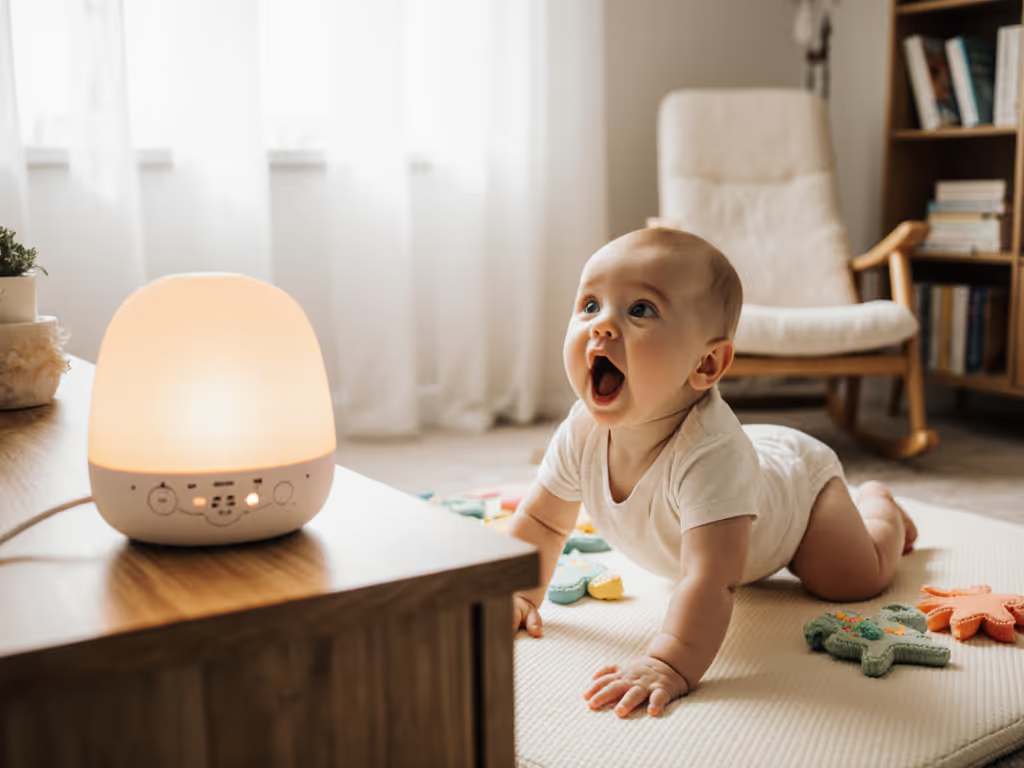
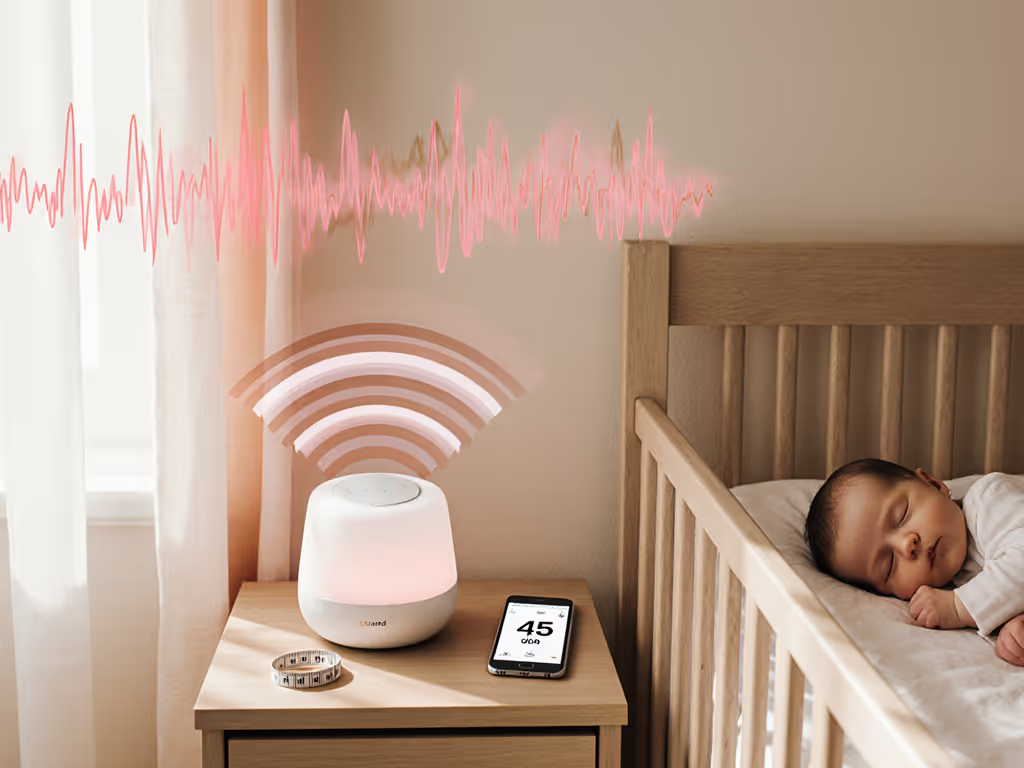
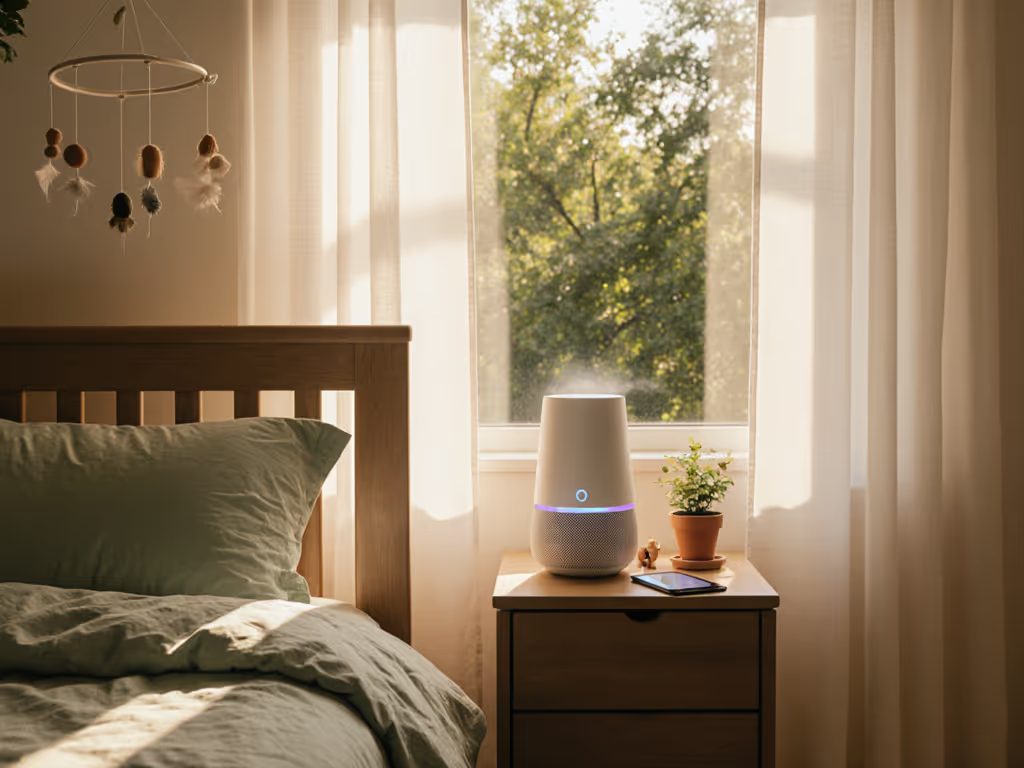
As parents navigate the conflicting research on sound machine language development, one critical distinction gets overlooked: when we use these devices matters more than whether we use them. While nighttime white noise serves sleep hygiene, awake hours present an untapped opportunity for infant vocal stimulation sounds (when implemented with precise environmental awareness). The right approach transforms sound machines from sleep aids into vocal development allies, provided we honor two principles: volume boundaries at ear level and intentional sound selection. This isn't about constant noise; it's about designing auditory spaces where language blooms.
Design choices echo in the dark more than you think.
Why are experts concerned about sound machines and language development?
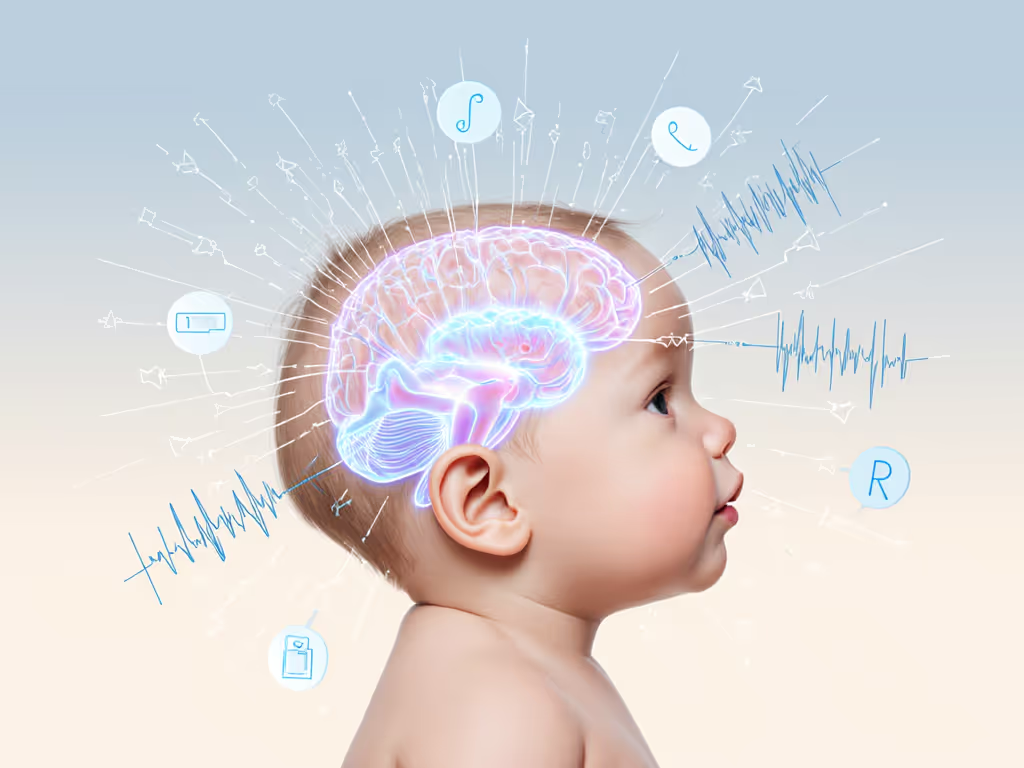
Much of the anxiety stems from misapplied research. A frequently cited 2014 Pediatrics study found some machines exceeded 50 dBA at 30 cm, which is problematic if placed directly beside a crib. But crucially, this measured overnight use at unsafe volumes, not awake-time applications. More relevant is neuroscience work like Dr. April Benasich's research at Rutgers, which shows infants build "acoustic maps" by distinguishing subtle sound variations (like "p" vs. "b") during wakeful periods. When continuous white noise drowns these micro-differences, vocal mapping slows. The key insight? Sound machines don't inherently harm development; they disrupt it when deployed incorrectly during critical language-learning windows.
How does awake-time sound machine use differ from sleep-time use?
Sleep environments prioritize masking unpredictable noise (traffic, siblings) through consistent broadband sound. If traffic or sibling noise is your main issue, see our lab-tested noise masking comparisons. Awake settings require the opposite: strategic quiet punctuated by targeted vocal stimulation. Think of it as acoustic landscaping:
- Sleep mode: Broad-spectrum noise (white/brown) at 45-50 dBA, placed away from crib
- Awake mode: Short bursts of nature sounds or lullabies at 40-45 dBA, paired with face-to-face interaction
The 2023 study in Developmental Science clarifies this dichotomy: infants exposed to intermittent natural sounds (wind, rain) during playtime showed enhanced vocal babbling versus those in silent or constantly noisy rooms. To choose the right sound type for play sessions, see our guide to white vs. brown noise for newborns. Why? Predictable environmental sounds create "auditory breathing room" where baby's voice isn't competing with chaos. This aligns with ParentData's analysis showing white noise's risks apply only to prolonged, high-volume exposure during awake hours (not purposeful, volume-controlled use).
Can sound machines actually support vocal development?
Absolutely, when used as foundational tools rather than constant background noise. For multi-child households, learn how to set safe sibling sound zones without overpowering baby voices. Consider these evidence-backed applications:
- Therapy sessions: SLPs often use gentle rain sounds to reduce auditory defensiveness in toddlers, creating calm for vocal exercises
- Sibling harmony: Masking older children's play noise with ocean waves lets infants focus on caregiver voices
- Startle reduction: Low-volume womb sounds (43 dBA) prevent noise-induced crying, preserving vocal cord energy for babbling
A 2022 Cincinnati Children's trial demonstrated babies exposed to 15-minute segments of nature sounds during tummy time vocalized 22% more thereafter. The mechanism? Reduced cortisol from predictable sound environments frees cognitive resources for sound experimentation. This isn't "white noise for development"; it's intentional sound architecture that protects vocalization opportunities.
What volume and placement ensure safety during awake time?
Forget manufacturer specs, measure at baby's ear level during actual use. Here's your field-tested protocol:
- Position: Place machine behind baby (not facing them), 200+ cm away
- Volume: Set to barely audible over gentle humming (≤45 dBA at ear)
- Duration: 20-minute intervals max, with silent interaction periods
Use your phone's sound meter app while crouching at crib height, never trust output labels. In studio apartments where I test gear, even "low" settings often hit 52 dBA at 1 m. That's safe for sleep masking, but too loud for language practice. AAP's guidance is clear: sustained exposure above 45 dBA during awake hours risks auditory fatigue. For specifics on safe placement and distance, follow our AAP-based volume and distance guide. For context, normal conversation is 40-45 dBA, your baseline for vocal development support.
Which features prevent accidental disruptions during vocal practice?
This is where ergonomic design determines functionality. Tactile beats tap (always). Glossy touch interfaces (like that studio apartment unit that startled my baby with phantom chirps) create noise hazards through accidental activation. Instead, seek:
- Physical dials: For granular volume control without screen glare
- Zero lumen spill: Amber night lights under 1 lux won't disrupt melatonin
- PWM-free circuits: Eliminates flicker that agitates light-sensitive infants
- Wired-first operation: Prevents Bluetooth dropouts during critical moments
The Yogasleep Hushh exemplifies this with its recessed dial and clipped-on design, it stays put on changing tables without swallowing cords. During testing, its 3.5" footprint avoided cable routing nightmares in 100 sqft studios. If you want wireless control, compare Bluetooth baby sound machines for pairing stability and audio quality before relying on them during vocal play. When machines operate silently and stay silent when not needed, you reclaim mental bandwidth for what matters: listening to those precious cooing attempts. Always prioritize units that let you set and forget without glowing distractions.
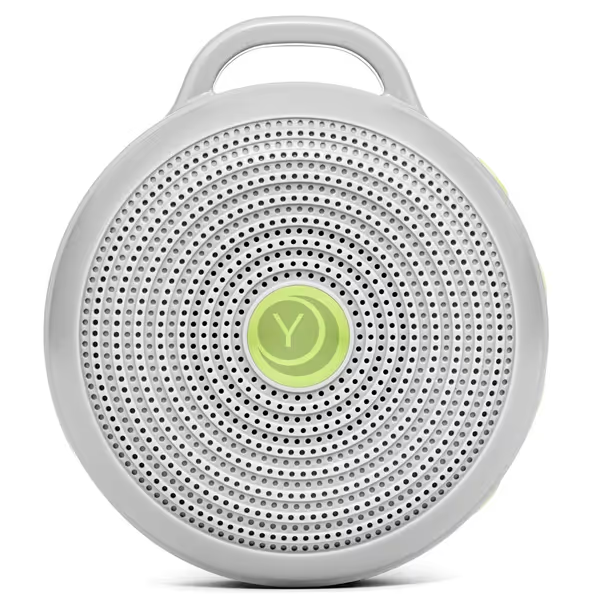
YOGASLEEP Hushh Portable White Noise Sound Machine
Portable, effective white noise for baby's sleep anywhere, anytime.
$25.99
Compact Size3.5" diameter, 3.8 oz
Compact Size3.5" diameter, 3.8 oz
Pros
Effectively masks disruptive noises for peaceful sleep.
Ultra-portable with baby-safe clip & USB-rechargeable.
Cons
Mixed reports on battery life and long-term durability.
Requires unplugging every 14 days for proper use.
Effective at putting babies to sleep and appreciated for its portability; however, functionality and battery life show mixed results with some units breaking after two months.
Effective at putting babies to sleep and appreciated for its portability; however, functionality and battery life show mixed results with some units breaking after two months.
Final thoughts: Designing for vocal vitality
The path forward isn't abandoning sound machines; it's wielding them with surgical precision. During awake hours, treat sound as a vocal catalyst, not a crutch. Start with 10 minutes of rain sounds during play, then observe how baby's babbling shifts. Note whether they track your lips more intently when traffic noise is masked. These micro-moments build phonemic awareness better than any forced stimulation.
Thoughtful design prevents noise before it starts. When you choose compact units with tactile controls and zero light pollution, you're not just buying a gadget; you're building an acoustic ecosystem where language thrives. Measure at ear level, honor quiet intervals, and let vocal development unfold in the spaces between sounds.
Further Exploration: Track your baby's vocal responses using the LENA Pro language environment analyzer (research-grade tool now available for home trials). Compare babbling frequency during sound-assisted vs. natural quiet periods to personalize your approach.
Related Articles