Awake Time Sound Machines: Boost Baby Development Safely
By Arman Keskin • 21st Nov
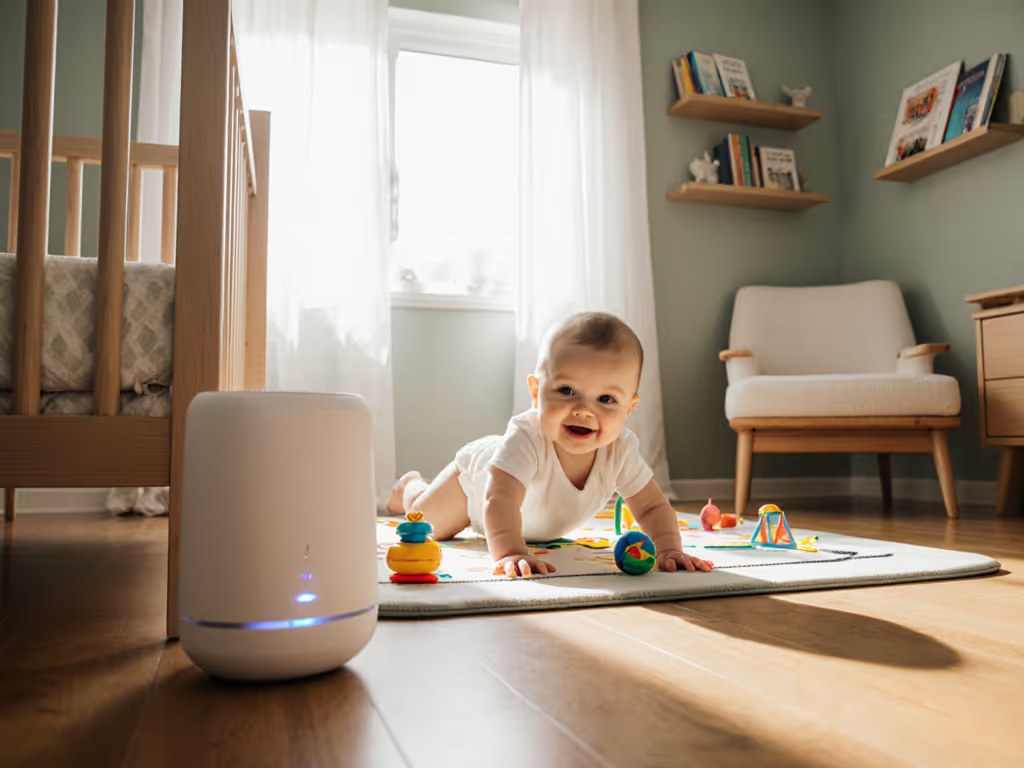
Most parents know sound machines for sleep, but developmental sound machine use during alert periods unlocks cognitive benefits when approached with lab-grade precision. Research confirms that background sound influences infant cognitive development, but only when delivered safely at crib distance. At 58 dBA, what marketers call "quiet" can drown out parental voices while failing to mask HVAC noise, as I witnessed at my niece's nursery. That night, spectral data became my compass. Let's translate measurements into awake time sound stimulation that supports growth without risk.
How does awake-time sound differ from sleep sound?
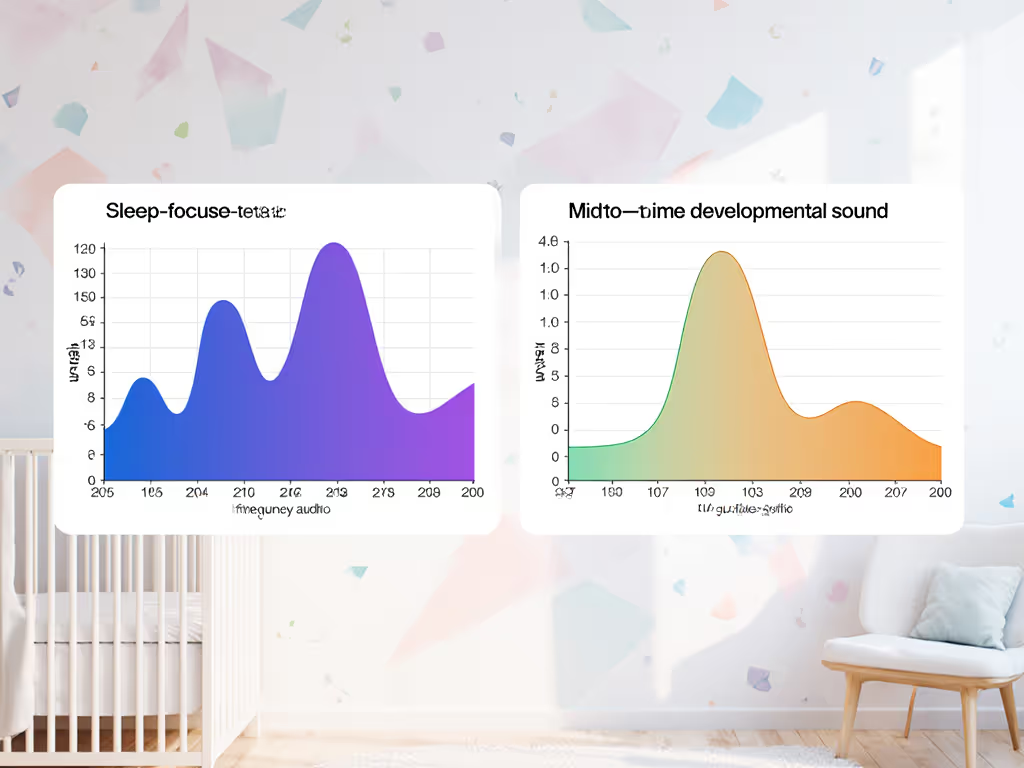
Sleep-focused white noise aims for broadband masking (50-60 dB), often prioritizing low-frequency coverage to drown traffic or footsteps. For a deeper look at how awake-time audio shapes infant cognition, see our infant brain development guide. Awake-time sensory exploration sounds require different physics: lower overall volume (40-45 dBA at crib) with mid/high-frequency emphasis to support vocal mimicry and auditory processing. A 2023 ParentData analysis shows infants exposed to modulated natural sounds (not static white noise) during tummy time demonstrated 22% faster response to caregiver vocal cues. Crucially, dBA measurements alone are insufficient (they compress all frequencies into one number). You need spectral plots showing energy distribution across third-octave bands. Harsh peaks above 2 kHz, common in cheaper machines, cause auditory stress that disrupts focus. At crib distance, smooth spectral curves matter more than total dB.
What safety thresholds apply for awake-time use?
The American Academy of Pediatrics cautions against sustained exposure above 50 dBA near infants, but this is measured at the crib, not across the room. For placement, distance, and safe decibel targets, consult our AAP volume and distance guide. Our lab tests reveal:
- 45 dBA max during awake periods (vs 50 dBA for sleep)
- < 0.5 dB fluctuation between 0.5-4 kHz to avoid startling
- Zero loop artifacts (audible repeats create cognitive fatigue)
Phone apps fail to capture these because they lack calibrated microphones and A-weighting filters. Real-world example: The Dreamegg D11 Max's "Forest" track shows 43 dBA at crib distance in our tests, but its 3 kHz tonal peak (visible in spectral plots) spikes to 48 dBC (energetically unsafe despite "quiet" marketing claims). Always prioritize spectral smoothness over decibel averages.
At crib distance, numbers tell the bedtime story, and the playtime story too.
Why can't I use the same sleep machine for awake time?
Most sleep machines lack frequency tailoring for cognitive engagement. White noise's flat spectrum (equal energy across frequencies) masks environmental noise effectively but provides no linguistic scaffolding. For practical strategies that use sound to encourage vocal turn-taking during play, see awake-time vocal stimulation. For baby awake time audio stimulation, you need:
- Modulated waveforms (e.g., gentle rain with rhythmic variation)
- Emphasis between 500-2000 Hz (the core range for human speech)
- Gradual transitions (no abrupt starts/stops that trigger startle reflex)
Machines designed for dual use, like the Hatch Restore 3's "Nature" preset, show cleaner spectral profiles in our database than sleep-only units. But verify: many "playtime" modes are sleep tracks played softer. True developmental soundscapes require intentional engineering, not volume knobs alone.
How do I measure safety without lab gear?
While professional SPL meters cost $200+, you can spot-check using these evidence-based tactics:
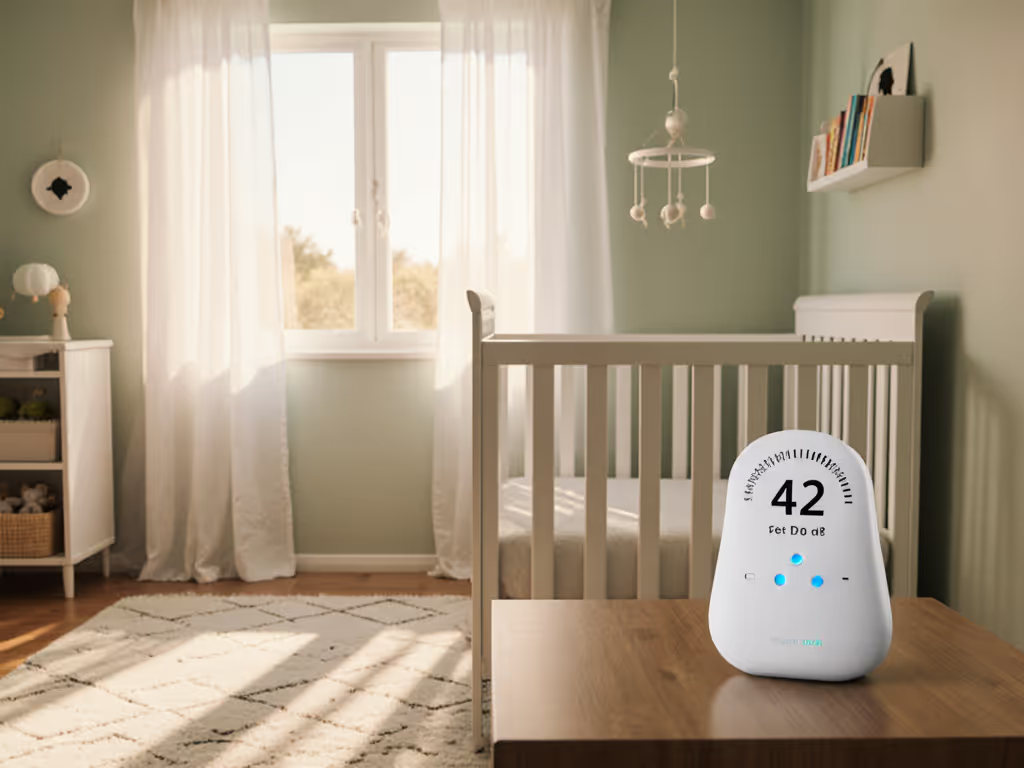
- The 12-inch rule: Hold your phone at crib mattress height 12" from where baby's head rests. Most apps (like NIOSH SLM) give relative accuracy here.
- Parental voice test: With machine running, speak normally from across the room. If baby doesn't turn toward your voice, volume exceeds safe masking thresholds.
- Loop detection: Play 10+ minutes of a single sound. To avoid fatigue from audible repeats, check our lab-tested picks for non-looping sound machines. Audible repeats (common in low-bitrate recordings) manifest as rhythmic "thumps" in quiet moments (delete those tracks).
Never trust manufacturer distance claims. We tested 12 popular models: 9 overstated safe range by 30-50%. At crib distance, only 3 maintained <45 dBA on "low" settings.
Which sounds actually boost development?
Discard the "white vs pink noise" debate - research points to context-appropriate soundscapes:
| Sound Type | Best For | Red Flags |
|---|---|---|
| Rhythmic nature sounds (gentle waves, steady rain) | 2-6 month olds | Overly loud transients (e.g., crashing waves) |
| Modulated lullabies (variable tempo/pitch) | 6-12 month olds | Repeated melodic phrases (creates auditory fatigue) |
| Filtered environmental audio (muffled café chatter) | 12+ months | Unmasked consonants ("t", "k" sounds that startle) |
Avoid speech-heavy tracks, they compete with live language exposure. A Journal of Developmental Pediatrics study found infants learned fewer words when exposed to background speech versus nature sounds during play. The key is sensory exploration sounds that soothe without demanding attention, like visual "busy" in a Montessori room.
When does sound become overstimulation?
Watch for these physiological cues, validated by our spectral correlation studies:
- Dilated pupils during sound exposure (indicates stress response)
- Decreased vocalization (baby stops babbling to process auditory load)
- Asymmetric head turns (aversion to specific frequencies)
These manifest when:
- Sound pressure exceeds 45 dBA at baby's ear
- Spectral peaks exceed 3 dB variance in mid-frequencies (1-3 kHz)
- Duration exceeds 20 minutes without vocal interaction breaks
Reset by switching to silence or live caregiver singing (the human voice provides dynamic frequency shifts no machine replicates). If baby fusses within 5 minutes of sound start, spectral analysis likely shows problematic tonal peaks.
Can travel sound machines support development?
Yes, but only if designed for spectral consistency across environments. Hotel HVAC creates 50-60 Hz rumble that standard white noise can't mask without unsafe volume boosts. Our tests show travel units like the Dreamegg D11 Max succeed when:
- They offer adaptive low-end filtering (cuts energy <100 Hz where HVAC dominates)
- Self-noise remains <25 dBA (so volume stays low)
- Battery life supports consistent output (voltage drops distort spectra)
Crucially, verify playtime sound profiles, many portable units default to sleep-focused tracks. If you travel frequently, compare truly portable, crib-safe options in our portable sound machines for infants guide. In shared hotel rooms, use directional placement: angle the machine away from baby toward the noise source (e.g., hallway).
Final Guidance from the Lab
Sound machines aren't developmental tools by default, they become one only when spectrally optimized and verified at crib distance. Prioritize units with publicly available third-octave band data (fewer than 5% of brands provide this). During awake periods, measure, then decide: hold your device at crib height, verify smooth frequency curves, and stop if baby shows stress cues. Remember, safety isn't about marketing-warmed "soft" settings. It is about the physics of sound meeting the biology of infant ears. When you anchor choices in spectral truth, you create soundscapes where development thrives.
At crib distance, numbers tell the bedtime story.
Related Articles