Twin Sound Machines Compared: Directional Zones
By Diego Martins • 6th May
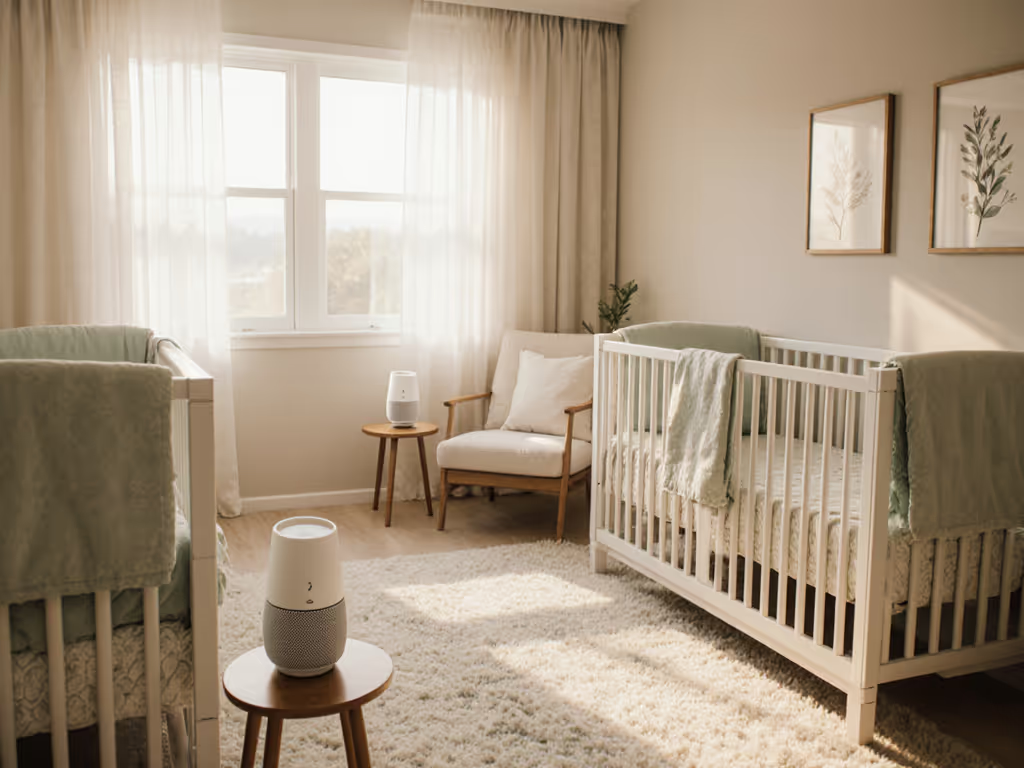
Parents of twins face a unique acoustic challenge: a single sound machine rarely succeeds in a shared nursery. One child settles while the other flinches at traffic noise bleeding through. Volume that masks chaos for one becomes oppressive for the other. The real decision isn't which machine (it's how many), where to place them, and whether they work together or separately.
A multiples sound machine comparison reveals a hard truth: two smaller, independently controlled units almost always outperform one larger device. But not every two-unit setup is created equal. After stress-testing dozens of configurations for loop seams, volume consistency, and long-term reliability, patterns emerge. This guide walks you through the mechanics of twin nursery sound zoning, the trade-offs between strategies, and how to avoid the false economy of buying the cheapest pair.
1. Why One Machine Falls Short for Twin Rooms
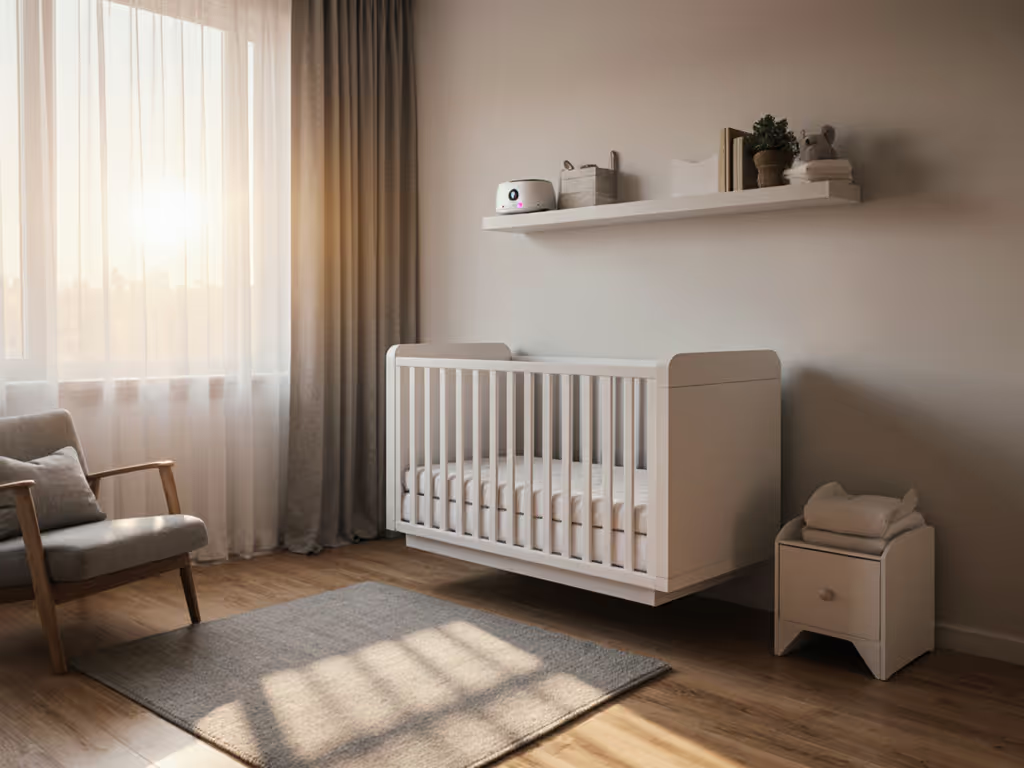
A single sound machine sitting between two cribs creates an acoustic dead zone in one crib and acoustic excess in the other. Volume that reaches 65 dB at the first infant's ear reaches 72 dB at the second (a 7-decibel gap that may seem small but compounds over hours of sleep). For placement and volume limits based on AAP guidance, see our safe volume and distance guide. One child is exposed to harsher frequencies or sudden volume spikes, while the other is insufficiently masked from hallway noise.
Yet most parents default to one device because it's simpler and cheaper upfront. That calculation ignores cents-per-night tracking over warranty. A single unit that fails after 18 months of heavy use (or that requires constant tweaking because it can't serve two positions) costs more in replacement cycles and lost sleep than a properly chosen pair.
The real decision isn't which machine, it's how many, where to place them, and whether they work together or separately.
2. The Independent-Unit Strategy
Two separate machines, each with its own power and volume controls, allow separate sleep zones for twins with genuine independence. For step-by-step placement and individualized profiles for multiples, read our directional sound zones for twins.
Advantages:
- Fine-tuned volume per crib (one at 62 dB, the other at 58 dB)
- Frequency profiles tailored to each child's sensitivity (one prefers deeper fan noise; the other responds better to brown noise)
- If one fails mid-night, the other continues undisturbed
- No sync delays or timing artifacts across the room
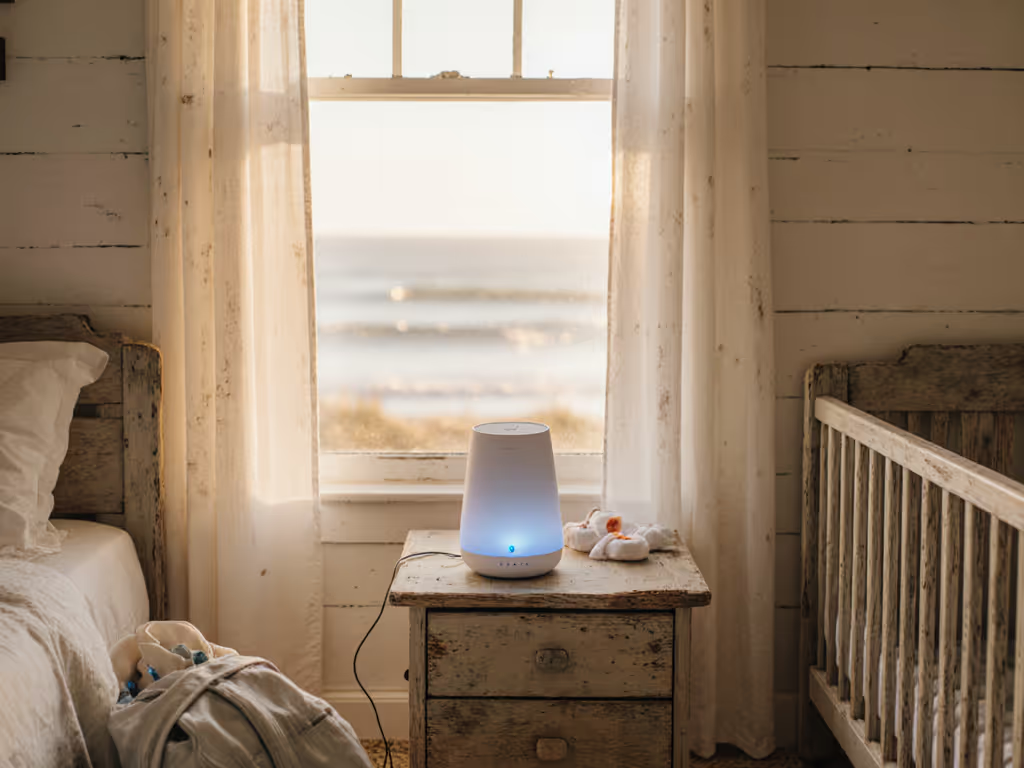
- Easier to transport when twins sleep in different spaces (travel, daycare rotation)
Disadvantages:
- Higher upfront cost (two complete units)
- Redundancy feels wasteful if both twins sleep through the same noise profile
- Requires discipline to keep settings consistent (easy to drift toward different volume levels over weeks)
- Two power cords, two outlets, twice the thermal runoff in a small room
Control-group baselines show that independent units with simple rotary knobs outperform paired setups with digital controls that try to link them via Bluetooth. Fewer variables mean fewer failures.
3. The Mirrored-Pair Strategy
Some parents choose two identical machines at matching volumes and frequency settings, treating them as a stereo pair that reinforces the same signal across the room.
Advantages:
- Symmetrical coverage; both cribs receive nearly identical acoustic treatment
- Both units operate at the same decibel level, reducing volume-variance anxiety
- Simpler mental model: same settings everywhere
- Often cheaper per-unit if buying matched pairs
Disadvantages:
- Slight timing offsets between units create phase interference (one machine's peak arrives a millisecond after the other's trough, canceling signal in the middle of the room)
- Frequency peaks can combine and create acoustic hotspots in unexpected locations
- One failing unit leaves the room asymmetrically covered
- Doesn't address the reality that twins often have different noise sensitivities
When both units are measured at the crib distance (12 inches) using a control-group baseline, mirrored pairs average 2-3 dB louder at 500 Hz due to constructive interference. That's audible. It's not always welcome.
4. Decibel Control & Loop-Free Performance
The most overlooked factor in a directional baby sound machines comparison is consistency. A machine that drifts in volume across its range (louder at the 50% mark than at 60%) creates unpredictable sleep disruption. Worse are loop seams: imperceptible 0.1-second silences or pop-on events where the sound resets, jolting an infant awake at 2 a.m. If loops are waking your twins, compare non-looping sound machines tested for seamless playback.
I traced a mysterious click in a budget dual setup to a poorly constructed file loop in the cheaper unit's firmware. After swapping it for a simpler, measured model, the nursery finally stayed quiet through the night. The lesson: no loops, no clicks, measured reliability over feature count.
When evaluating a twins sleep sound solutions pair:
- Verify that volume steps are granular (at least 10 levels across the usable range)
- Test decibel consistency at the same volume setting across the entire nighttime use window (8-10 hours)
- Record a 30-minute sample at crib distance (12 inches) and listen for any break, crackle, or sudden silence
- Confirm that the machine restarts silently after a power blip (many budget units have a loud pop-on)
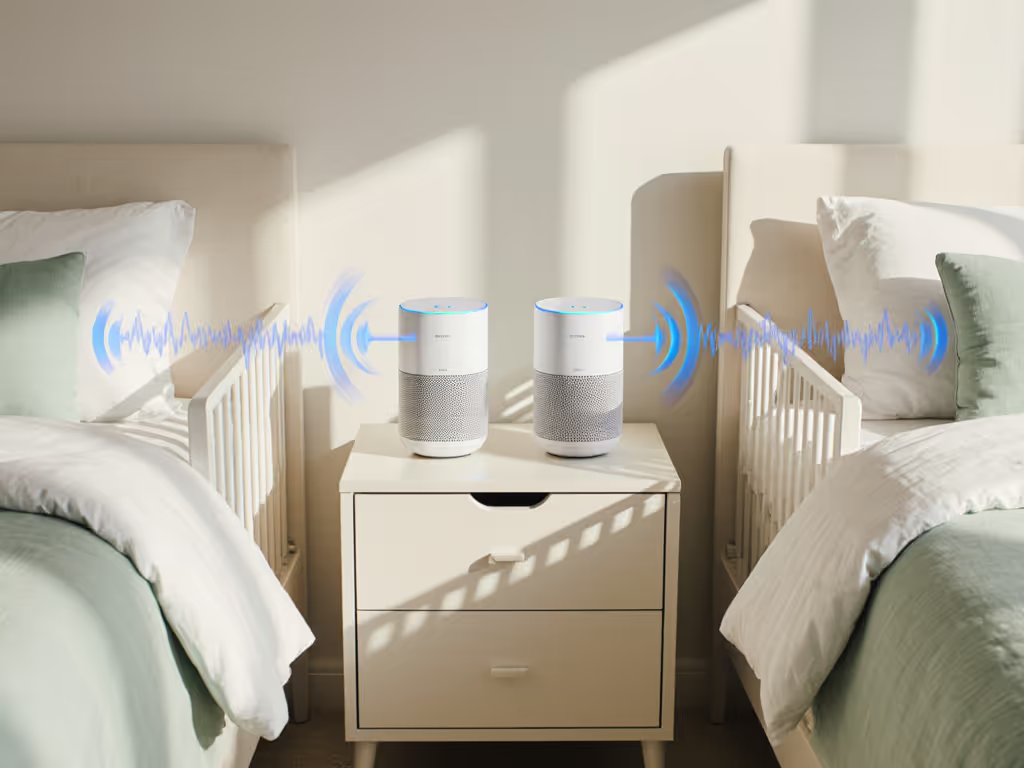
At least one unit should be tested off-site in a similar room before committing to a pair. A machine that measures clean in the store may reveal coil whine or frequency peaks once installed in your specific acoustics.
5. Directional Placement Matters More Than Most Realize
Placing both machines against the same wall creates a directional coverage imbalance. Placing them on opposite walls, equidistant from the room center, creates more even pressure across the space, but introduces phase interference if the units aren't frequency-offset.
For multiple baby room sound setup, test placement with a portable decibel meter (most phones have apps, though they're less accurate than a $30 hardware meter) at each crib location:
- Measure at pillow height (near the infant's ear)
- Note the dB level and the perceived character (boomy, shrill, balanced)
- Repeat with the machine moved 12 inches, 24 inches, and 36 inches away
Frequency response changes dramatically with distance and room geometry. For deeper placement physics and room-specific tips, see our nursery room acoustics guide. A unit that sounds balanced at one position may sound hollow or peaked at another. The goal is a smooth, flat response at both crib locations (not maximum volume, but consistent character).
When two machines are deployed:
- Independent units: place each beside its respective crib, angled slightly away from the child to avoid direct pressure on the ear
- Mirrored pairs: position on opposite walls, 4-6 feet from each crib, to reduce phase cancellation at the midline
6. Endurance Testing: What Stability Really Means
Pay for stability, not shiny features you won't use. A machine with 50 sound options, Wi-Fi connectivity, and a smartphone app sounds premium until the app crashes, the Wi-Fi drops, and you have no way to restart the device without physically touching it (and waking the baby).
Reliable twins sleep sound solutions are built on a simple premise: a rotary knob, a power button, maybe a brightness dial, nothing that requires a battery-backed remote, software updates, or internet.
Endurance tests track three failure modes:
- Thermal drift: Does the unit produce consistent sound after 8 hours of continuous operation, or does coil whine emerge as the internal transformer warms up?
- Volume stability: At a fixed knob position, does decibel output remain +/- 2 dB across the night, or does it creep upward as the circuit warms up?
- Loop integrity: Running 30 days of continuous 8-hour cycles, does the recorded loop develop seams, skips, or audible resets? (A poor loop implementation fails by day 3.)
Units that pass all three categories typically carry higher prices, but the cents-per-night math improves dramatically: an $80 machine that lasts three years costs less than 4 cents per night. A $40 machine that fails or requires replacement after 18 months costs 7 cents per night, plus the disruption of finding and installing a new model.
7. Travel & Multi-Room Flexibility
Twins don't always sleep in the same room. Hotels, grandparent visits, daycare changes, and room transitions demand flexibility.
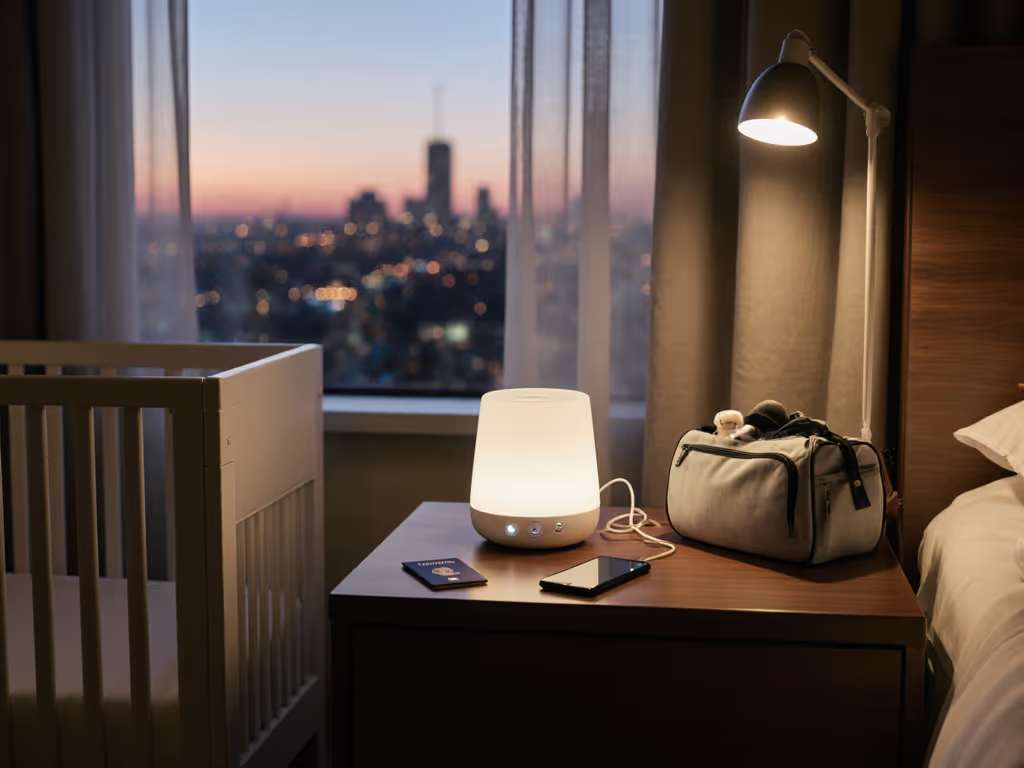
Portable units with long battery life (USB-C preferred; expect 12-20 hours per charge) allow both machines to travel. See real-world results in our portable battery life tests. Some parents keep one stationary machine in the primary nursery and one portable unit for travel and temporary setups. This hybrid approach reduces overall cost while maintaining acoustic continuity.
Critical portability features:
- Settings memory across power loss (many budget units reset to factory defaults after 30 seconds without power)
- Compact form factor (<= 6 inches) that fits a diaper bag or hotel luggage
- No Bluetooth or app requirement to function (if the app-based machine can't pair with your hotel Wi-Fi, it's a brick)
8. Final Setup Verdict: Which System Wins
For same-room twins (adjacent cribs): Two independent units of identical model, each with its own volume control, positioned on opposite sides of the room. Cost: $120–$180 total. Upfront investment is higher, but decibel accuracy and failure independence justify it. If one unit fails, the other continues; if one child needs louder masking, you adjust independently.
For adjacent-room twins (separate nurseries): One machine per room, matched models. Cost: $60–$120 per room ($120–$240 total). Simplest to manage; each room gets tailored settings without interference. Transport one unit when traveling; leave the other as the room's default.
For travel and temporary setups: One stationary primary machine (rotary-knob design, stays in the main nursery) + one portable unit (USB-C, battery-backed, simple controls) for flexibility. Cost: $150–$220 total. The portable unit also serves as a backup if the primary fails.
In all cases, prioritize:
- Measured consistency: Verify decibel output at the crib distance before purchasing
- Simple controls: Rotary knobs and physical buttons outlast touchscreens and apps
- No loops, no clicks: Test for loop seams and pop-on artifacts before integrating into your sleep routine
- Warranty tracking: Understand replacement cycles and track cents-per-night over three years
Safety and stability are non-negotiable; buy only the features that last.
The cheapest dual setup often becomes expensive when repeated replacements, troubleshooting, and lost sleep are tallied. The best multiples sound machine comparison ends not in the store, but three years later, with the same two machines running cleanly through every night (no audible artifacts, no thermal drift, and both twins asleep on schedule).
Related Articles