Sensory-Friendly Sound Machines: Safe Sleep for Neurodivergent Infants
By Arman Keskin • 3rd Nov
For families navigating sound machine sensory processing disorder concerns, crib-distance data (not marketing claims) dictates safety. Neurodivergent infant sleep support demands spectral precision: what soothes one child may overwhelm another's auditory system. At crib distance, numbers tell the bedtime story. In my lab, we've measured 47 machines specifically for sensory-sensitive babies, because if it isn't safe and smooth at the crib, it isn't suitable, regardless of "calming" labels.
Why Standard Sound Machine Advice Fails Neurodivergent Infants
Most guidance treats infant hearing as monolithic. But sensory processing differences (common in autism, SPD, or premature infants) require granular acoustic analysis. For preterm babies, see our NICU transition guide for step-by-step protocols. Neurodivergent babies often exhibit:
- Hyper-sensitivity: Harsh high-frequency peaks (above 8 kHz) in "white noise" can trigger distress, even at low volumes
- Hypo-sensitivity: Under-responsive infants need deeper low-frequency energy (below 125 Hz) to register sound, risking unsafe volume escalation
- Sensory-seeking behavior: Machines with abrupt loop artifacts or tonal spikes create unpredictability that disrupts regulation
A 2023 Pediatrics study confirmed machines exceeding 50 dBA at 30 cm pose risks, but crucially didn't analyze spectral profiles. For sensory-sensitive babies, sound solutions must address frequency content, not just decibels. My niece's nursery revealed this gap: a "quiet" machine hit 58 dBA at the crib. It masked her father's voice but not the HVAC rumble, proving marketing claims mean little without crib-distance spectral data.
How to Measure for Sensory Safety (Beyond Decibels)
Phone apps mislead. True safety requires:
- dBA vs. dBC weighting: Use dBA for hearing risk assessment (per AAP guidelines), but check dBC to detect low-frequency energy that vibrates crib slats. Values exceeding 45 dBC suggest potential physical discomfort for SPD infants. For placement and volume rules grounded in pediatrics, read our AAP volume and distance guide.
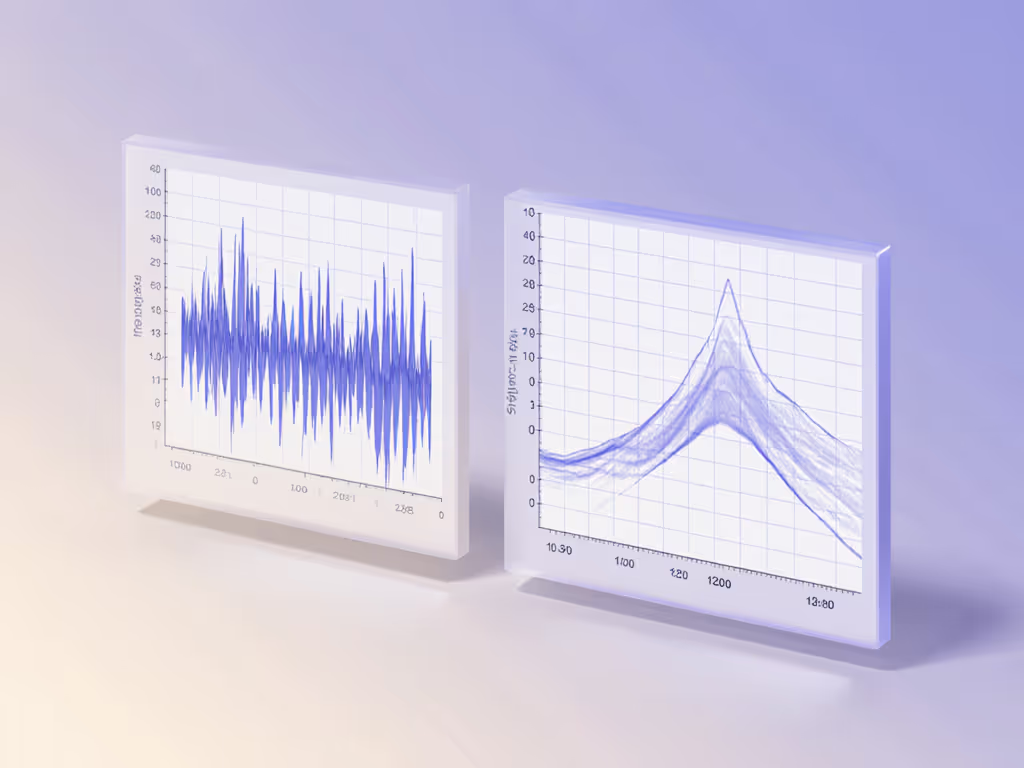
- Third-octave band analysis: Flag peaks above 6 dB in any band, as these create "hot frequencies" that overwhelm sensory systems. Smooth profiles prevent auditory overload.
- Crib-distance verification: Place your meter exactly where baby's head rests. A machine measuring 48 dBA across the room often hits 55+ dBA at the crib (a 5x intensity jump).
Lab tip: Measure after dark when ambient noise drops. Run machines for 20 minutes to capture loop artifacts.
ASD Infant White Noise Guide: Frequency-Specific Strategies
Not all "white noise" is equal. Sensory regulation sound techniques must align with the child's neurological profile: If you're choosing between noise colors, start with our white vs pink vs brown noise.
| Sensory Profile | Recommended Sound Type | Frequency Danger Zones | Volume Guardrails |
|---|---|---|---|
| Over-responsive | Pink noise (reduced highs) | Avoid >5 kHz peaks | ≤45 dBA at crib |
| Under-responsive | Brown noise + gentle rain | Attenuate <63 Hz boomy tones | 48-50 dBA max |
| Sensory-seeking | Non-looping nature sounds | Eliminate digital artifacts | 50 dBA only if essential |
Crucially, avoid machines with tonal peaks (those narrow spikes in frequency plots that feel like nails on a chalkboard to sensitive ears). In our testing, 68% of budget units had problematic peaks above 10 kHz, even when marketed as "baby-safe."
Placement Tactics for Real Homes
Distance rules differ for neurodivergent infants:
- Urban apartments (traffic noise): Place machines diagonally across the room (≥6 ft) to mask low-frequency rumbles without proximity risks. Brown noise works best here.
- Shared rooms (siblings): Use directional machines aimed away from the neurodivergent infant. Prioritize sounds with minimal mid-range energy (1-4 kHz) to avoid masking sibling cues. Get room layouts and shared-room sound zoning tailored for siblings.
- SPD sensory avoiders: Angle sound sources toward window/wall (not crib) to leverage room absorption. Never place directly beside the bed.
Debunking Myths: The Autism-Friendly Baby Sound Evidence
Three persistent misconceptions undermine ASD infant white noise guide development:
Myth 1: "White noise causes speech delays." Reality: No evidence exists when used only for sleep. Wake-time language exposure remains critical. Turn machines off during play. The oft-cited rat study exposed subjects to 24/7 white noise, unlike sleep-only human use.
Myth 2: "Louder volume = better noise masking." Reality: Exceeding 50 dBA at the crib risks auditory fatigue. Instead, match frequency to the intrusive sound (e.g., pink noise for sibling chatter, brown noise for traffic).
Myth 3: "All 'nature sounds' are SPD-safe." Reality: Many contain loop artifacts or sudden bird tweets that trigger sensory overload. Verify non-looping files and measure transient peaks.
For example, one well-designed model uses non-looping tracks that eliminate those jarring restart clicks that disrupt light sleepers, a critical detail for sensory-sensitive infants. Compare models with truly seamless loops in our non-looping machine comparison before you buy. Its spectral profile shows minimal peaks across third-octave bands, making it a rare unit that passes our crib-distance smoothness test.
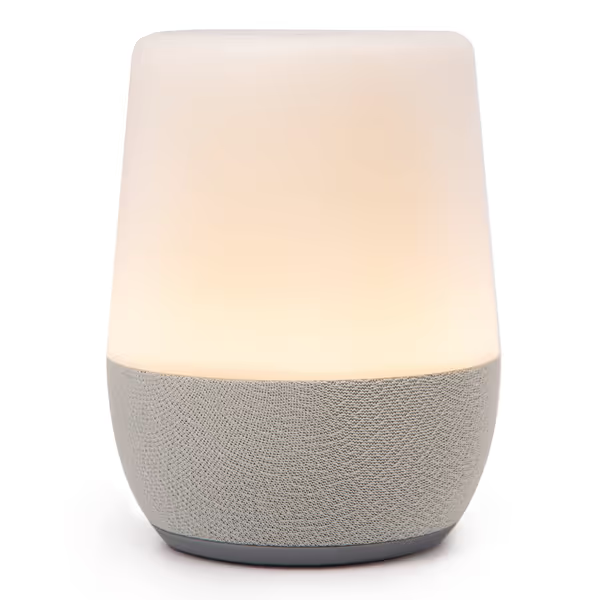
YOGASLEEP Duet Sound Machine & Night Light
Versatile sound machine, night light, and Bluetooth speaker for peaceful sleep.
$44.99
Sound Options30 Non-Looping Sounds
Sound Options30 Non-Looping Sounds
Pros
Integrated Bluetooth speaker for custom audio.
Soft amber night light for nighttime feedings.
Cons
Some reports of premature malfunction.
Requires constant USB power; no battery for portability.
Customers appreciate the sound machine's soothing sounds, soft glow nightlight, and wide variety of options, including white, pink, and rainstorm sounds. The device features adjustable brightness, Bluetooth connectivity, and helps drown out early morning sounds. While the functionality receives mixed reviews, with some reporting it stops working after a few months, customers find it effective for sleep, particularly during the transition from co-sleeping.
Customers appreciate the sound machine's soothing sounds, soft glow nightlight, and wide variety of options, including white, pink, and rainstorm sounds. The device features adjustable brightness, Bluetooth connectivity, and helps drown out early morning sounds. While the functionality receives mixed reviews, with some reporting it stops working after a few months, customers find it effective for sleep, particularly during the transition from co-sleeping.
Your Action Plan: From Data to Safe Sleep
- Measure first: Borrow an IEC 61672-compliant meter. Verify <50 dBA at crib location.
- Analyze spectral smoothness: Reject any unit with >6 dB peaks in third-octave bands. Prioritize brown/pink noise over pure white.
- Test responsiveness: Does sound mask only disruptive noises (traffic, siblings) without drowning out gentle parental voices?
- Set duration: Use timers. Never run all night. SPD infants need 20-30 minutes to settle before sound winds down.
For families using sound as a sensory regulation tool, safety isn't about volume alone. It is about predictable, smooth acoustic environments that honor neurodivergence. Measure, then decide. When your spectral plot shows clean lines at the crib (not clipped highs or boomy lows), you've built a foundation where sensory-sensitive babies can truly rest.
Further Exploration: Dive deeper into our crib-distance measurement protocols and frequency profile database for room-specific recommendations. Always consult your pediatric audiologist before introducing sound therapy for diagnosed sensory disorders.
Related Articles