Why Use Sound Machines: The Essential Guide
By Noor Al-Masri • 4th Nov
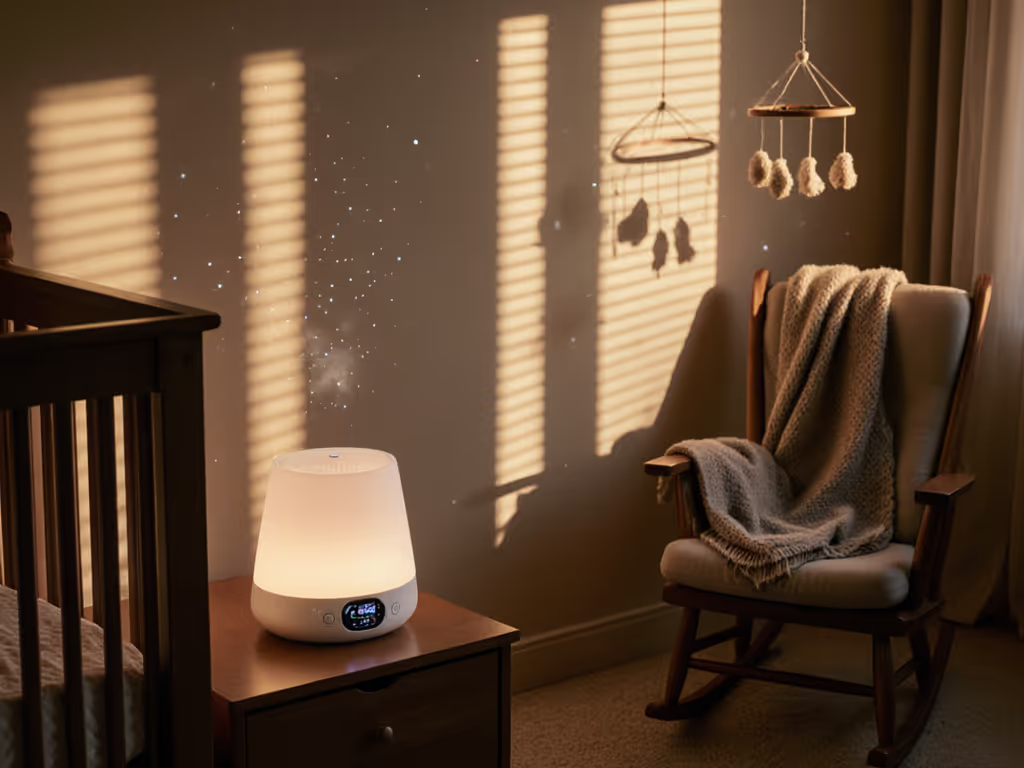
Did you know that more than 60 percent of parents use sound machines to help their babies sleep? Every parent understands how a restless night can affect the whole family. A good sleep routine is crucial for healthy childhood development and peace at home. Exploring how sound machines work and which types exist opens up new ways to create a soothing, safe environment that matches your family’s lifestyle and your baby’s unique needs.
Key Takeaways
| Point | Details |
|---|---|
| Functionality of Sound Machines | Sound machines generate soothing ambient noise to enhance sleep quality by mimicking the familiar sounds of the womb, thus reducing disruptions for infants. |
| Varieties Available | Infant sound machines come in several types, including portable, plug-in, smart devices, and medical-grade options, each designed to cater to specific sleep support needs. |
| Safety Protocols | It is essential to follow strict safety guidelines, such as maintaining decibel levels below 50 dB and positioning devices at least 3 feet from the infant, to protect their auditory development. |
| Alternatives | While sound machines are the preferred choice for infant sleep, alternatives like smartphone apps and household items can also be used but might lack the necessary sound quality and safety features. |
What Are Sound Machines Exactly
Sound machines are specialized electronic devices designed to generate consistent, soothing ambient noise to help individuals, particularly infants and young children, fall asleep more easily and maintain deeper, more restful sleep. Unlike traditional music players or white noise generators, sound machines produce carefully engineered acoustic environments that mimic natural sound patterns proven to calm neural systems and reduce sleep disruptions.
At their core, these devices create consistent background noise across specific frequency ranges, typically employing techniques like pink noise, white noise, or nature-inspired sounds such as rainfall, ocean waves, or gentle forest atmospherics. Modern sound machines utilize advanced audio engineering principles to produce smooth, non-repetitive sound profiles that prevent auditory fatigue and maintain a consistent acoustic environment without jarring interruptions or sudden volume changes.
The technological lineage of sound machines traces back to pioneering electronic music inventors like Raymond Scott, who developed early electronic sound generation tools. While Scott's original devices like the Clavivox were designed for musical composition, contemporary sound machines have been refined through pediatric sleep research and acoustic engineering to serve a specific therapeutic purpose. Contemporary models often integrate sophisticated features like:
- Precise decibel control
- Multiple sound profile selections
- Timer and auto-shutoff mechanisms
- Portable and compact designs
- Digital frequency modulation
Unlike simple noise generators, professional-grade sound machines represent a nuanced approach to creating optimal sleep environments, blending scientific understanding of auditory perception, infant neurological development, and advanced acoustic technology.
Variations Of Infant Sound Machines
Infant sound machines have evolved dramatically, moving far beyond simple noise generators to become sophisticated sleep support systems that cater to different developmental stages and specific family needs. These variations range from basic standalone devices to advanced smart technology solutions that integrate multiple functionalities, transforming how parents approach infant sleep environments.
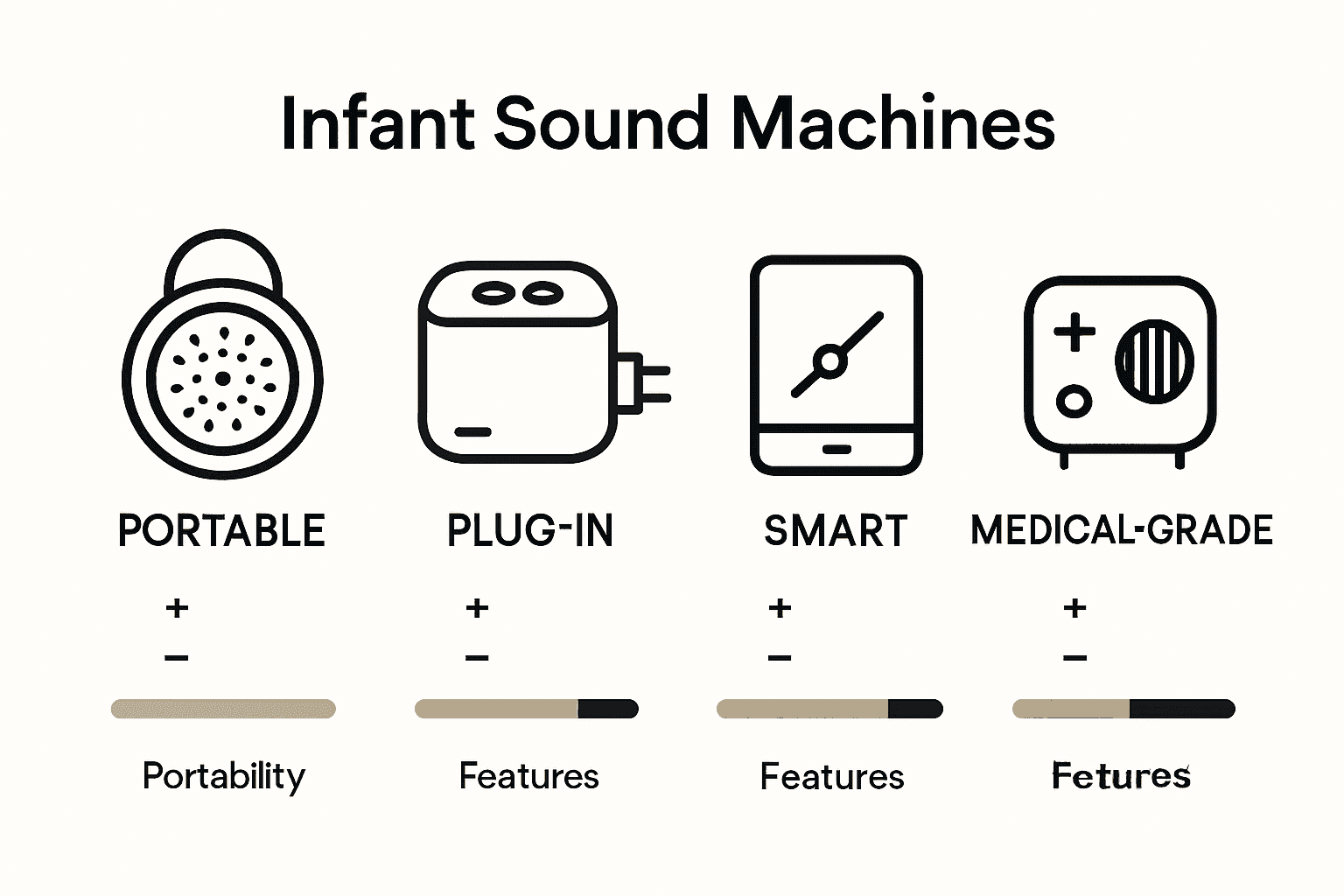
The most common categories of infant sound machines include portable battery-operated models, plug-in electrical units, smartphone-compatible smart devices, and multifunction nursery technology.
Here's how the main types of infant sound machines compare:
| Type of Sound Machine | Key Features | Pros | Limitations |
|---|---|---|---|
| Portable Battery-Operated | Lightweight<br>Rechargeable<br>3-5 sounds | Great for travel<br>Easy to relocate | Limited sound options |
| Plug-In Electrical Units | Consistent power<br>Wide sound variety | Reliable operation<br>No batteries | Less portable |
| Smart Devices | App control<br>Customizable lights<br>Timers | Multiple functionalities<br>Sleep training tools | Higher cost<br>Requires setup |
| Medical/Therapeutic Grade | Precise decibel control<br>Special frequencies | Supports sensory needs<br>Designed for safety | Expensive<br>Specialized use |
Portable sound machines are lightweight, travel-friendly options perfect for families who frequently move between home, daycare, and grandparents' houses. These compact devices typically offer 3-5 sound profiles and run on rechargeable batteries, ensuring consistent sound environments regardless of location.
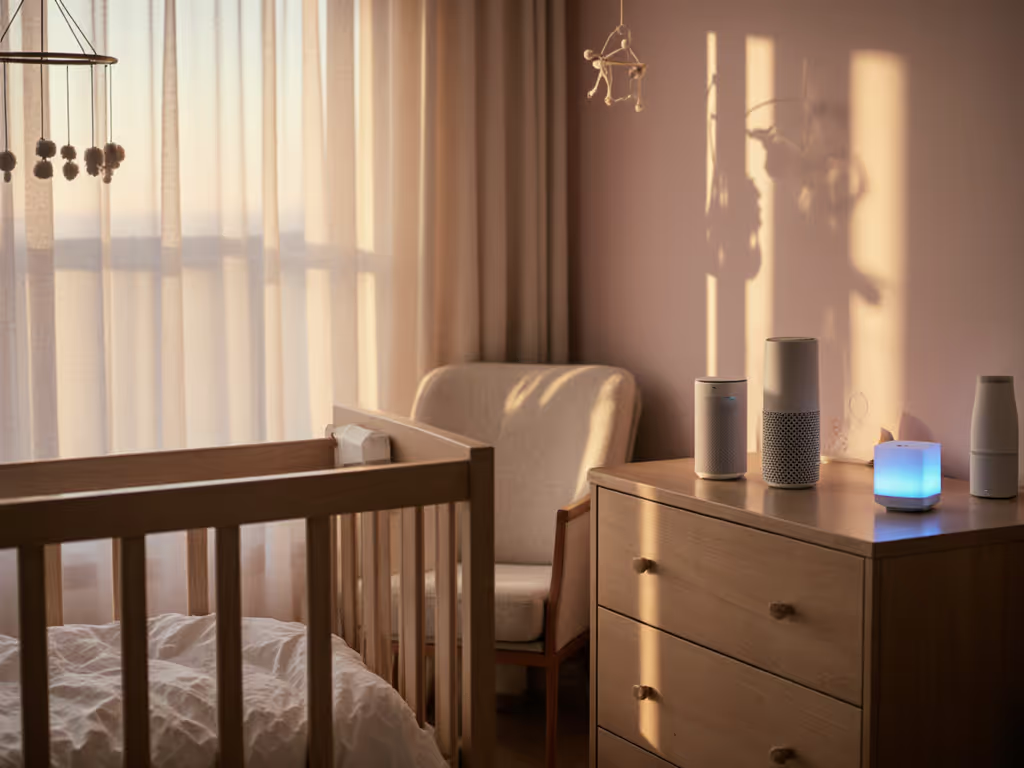
Smart sound machines represent the cutting edge of infant sleep technology, exemplified by products like the Hatch Baby Rest. These innovative devices combine multiple features beyond sound generation, including:
- Customizable night light colors
- Smartphone app control
- Sleep training timers
- Volume and sound profile adjustments
- Time-to-rise indicators for toddlers
- Programmable sleep routines
Moreover, specialized variations exist for specific needs. Therapeutic sound machines designed for infants with sensory processing challenges offer more nuanced sound profiles, while medical-grade devices provide precise decibel control and frequency modulation to support infant neurological development and create optimal sleep conditions.
How Sound Machines Support Baby Sleep
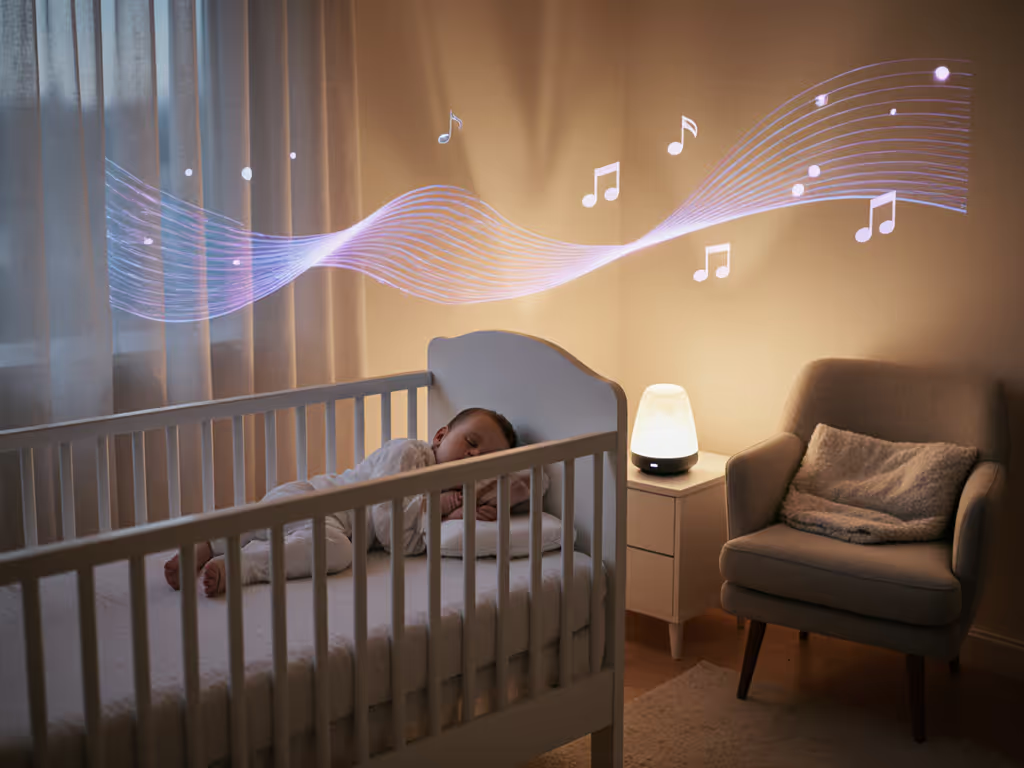
Sound machines play a critical role in supporting infant sleep by creating predictable, consistent acoustic environments that help babies transition more smoothly between sleep cycles and reduce environmental disruptions. Neurological research indicates that consistent background noise mimics the familiar sounds babies experienced in the womb, providing a sense of security and comfort that can significantly improve sleep quality and duration.
The physiological mechanisms behind sound machine effectiveness are rooted in how these devices interact with infant brain wave patterns. By generating smooth, uniform sound profiles like pink noise or white noise, these machines help mask sudden environmental sounds that might startle or wake a sleeping baby. This acoustic buffering prevents abrupt auditory stimuli from triggering wake responses, allowing infants to maintain deeper, more consistent sleep states and potentially extend overall sleep duration.
Sound machines support baby sleep through several key neurological and developmental strategies:
- Reducing stress hormone production
- Creating consistent sleep associations
- Blocking disruptive environmental noises
- Simulating intrauterine sound experiences
- Promoting relaxation through steady acoustic patterns
- Supporting circadian rhythm development
Moreover, specialized sound machines offer targeted features that go beyond simple noise generation. Advanced models provide carefully calibrated sound frequencies that align with infant neurological development, helping to create optimal sleep conditions while supporting sensory processing and early cognitive development. By transforming unpredictable sonic environments into stable, soothing acoustic landscapes, these devices become powerful tools in establishing healthy infant sleep patterns.
Safety Standards And Hearing Guidelines
Sound machines for infants require meticulous attention to hearing safety standards to prevent potential acoustic risks during critical developmental stages. Research led by experts like Dr. Blake Papsin has highlighted the crucial importance of proper sound machine placement and volume management to protect an infant's delicate auditory system from potential long-term damage.
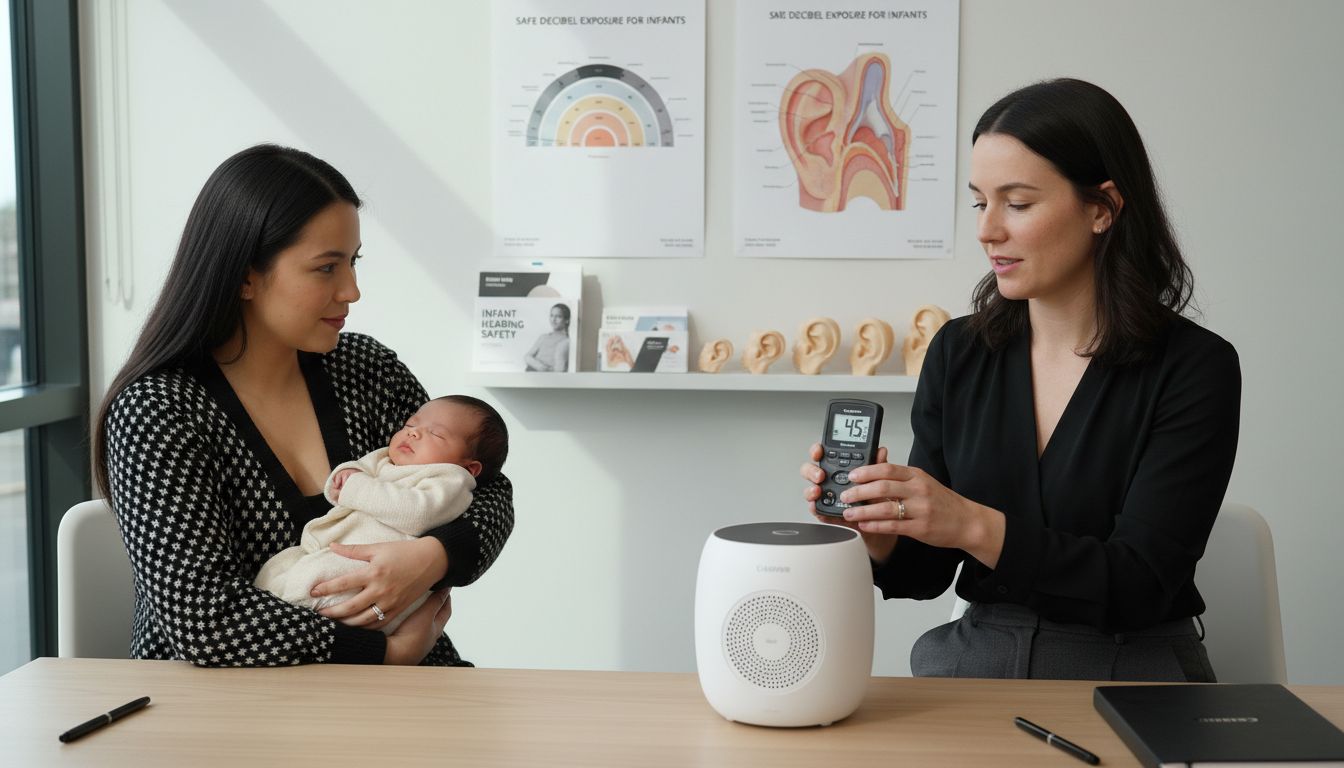
Professional acoustic guidelines recommend strict parameters for sound machine usage, emphasizing volume limitations and strategic device positioning. Decibel control is paramount, with pediatric audiologists suggesting that sound levels should never exceed 50 dB when used near an infant's sleeping area. Pubmed research has revealed that some infant sound machines can produce sound levels approaching 85 dB, which could potentially cause noise-induced hearing loss if used improperly or for extended periods.
Key safety recommendations for responsible sound machine use include:
- Positioning devices at least 3 feet from the infant's crib
- Maintaining volume below 50 decibels
- Using machines with automatic volume-limiting technology
- Selecting devices with adjustable sound profiles
- Regularly monitoring sound output
- Avoiding continuous overnight usage at maximum volumes
Moreover, parents should prioritize sound machines with built-in safety features like automatic volume reduction, timer functions, and frequency-specific sound generation. By understanding and implementing these critical guidelines, caregivers can leverage the benefits of sound machines while protecting their infants' auditory health during crucial early developmental stages.
Comparing Alternatives To Sound Machines
While dedicated sound machines remain the gold standard for infant sleep support, parents have several alternative strategies for creating soothing sleep environments. These alternatives range from low-tech solutions to digital technologies, each with unique advantages and potential limitations in supporting infant sleep patterns and acoustic comfort.
Smartphone applications represent a popular and accessible alternative to traditional sound machines. These digital solutions offer convenience and flexibility, allowing parents to generate white noise, nature sounds, and ambient audio directly from their mobile devices. However, smartphone apps typically lack the consistent acoustic engineering, precise frequency control, and dedicated sound profiles found in professional-grade sound machines. The primary drawbacks include potential battery drainage, inconsistent sound quality, and the risk of electromagnetic exposure when devices are placed near sleeping infants.
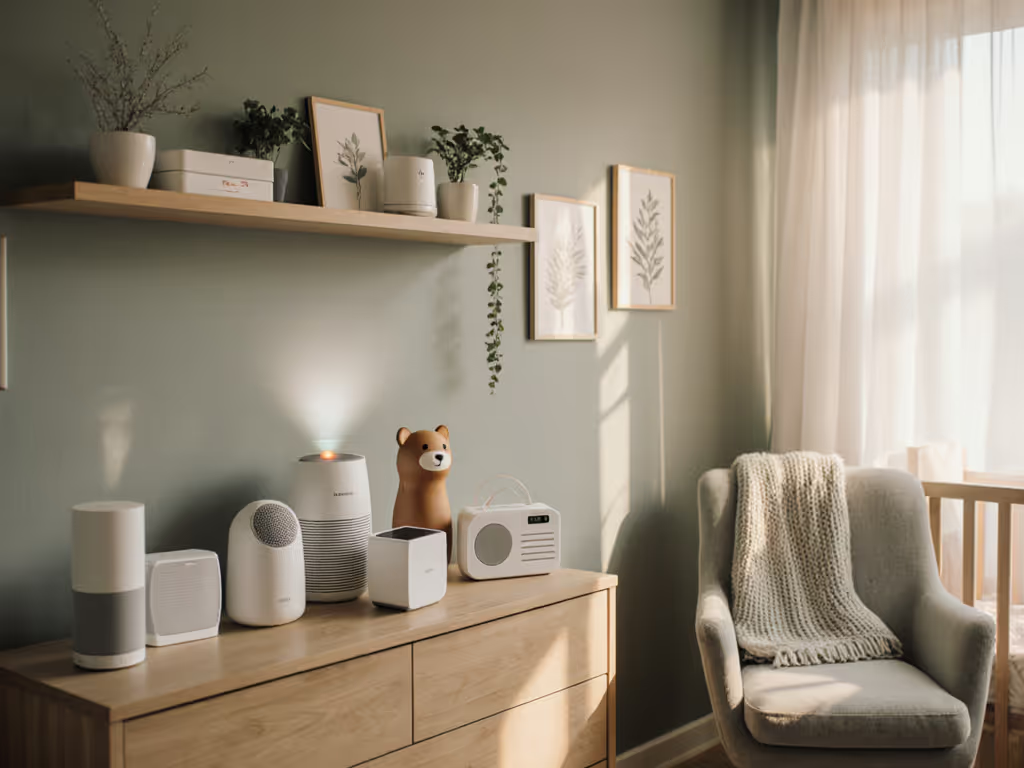
Other notable alternatives to dedicated sound machines include:
- Household fan white noise
- Portable bluetooth speakers
- Radio static on low volume
- YouTube/streaming service background sounds
- Air purifiers with background noise
- Traditional music players
- Room humidifiers with ambient sound
Additionally, some parents explore non-electronic alternatives like creating consistent background noise through natural household activities, such as running a dishwasher or utilizing gentle household background sounds. While these methods can provide temporary acoustic consistency, they lack the precise sound engineering and safety features of professionally designed sound machines, making them less reliable for consistent infant sleep support.
Discover the Best Sound Machines for Your Baby's Sleep Needs
If you are looking for ways to create a safe and soothing sleep environment for your infant, you are not alone. This guide highlights the challenge many parents face: finding a sound machine that balances effective noise masking with strict hearing safety standards. You want a device that supports your baby's neurological development and sleep quality without risking exposure to harmful decibel levels. Concepts like pink noise, volume control, and device placement are crucial for success.
At our Acoustic Lab for Little Ears, we understand the emotional importance of peaceful nights and restful babies. Our data-driven guides provide detailed insights based on lab-measured decibel profiles and real-home testing. We focus on helping you select the perfect sound machine engineered for infant sleep support, featuring safe volume levels and soothing sound options. Don't leave your baby's sleep to chance. Take the next step toward expert-approved sound solutions by visiting our site and exploring everything you need to know about creating the ideal nursery soundscape today.
Frequently Asked Questions
What are sound machines and how do they work?
Sound machines are electronic devices designed to produce soothing ambient noise, including white noise, pink noise, and nature sounds. They create consistent sound environments that help individuals, especially infants, fall asleep easier and maintain deeper sleep by masking disruptive noises and mimicking the sounds heard in the womb.
What types of sounds do sound machines produce?
Sound machines typically produce a range of sounds, including pink noise, white noise, and nature-inspired sounds like rainfall, ocean waves, or gentle forest atmospherics. These sounds are engineered to create smooth, non-repetitive audio profiles that promote relaxation and improve sleep quality.
How do I choose the right sound machine for my baby?
When selecting a sound machine for your baby, consider factors such as portability, sound variety, volume control, and additional features like timers or app connectivity. Portable models are great for travel, while smart devices offer multiple functionalities for enhanced sleep routines.
Are sound machines safe for my baby's hearing?
Yes, sound machines can be safe for infants if used correctly. It's essential to maintain sound levels below 50 decibels and position the device at least three feet away from the crib. Choosing machines with automatic volume-limiting features and regularly monitoring sound output can further protect your infant's auditory health.
Related Articles