
Complete Guide to Sleep Environment Safety
By Maya Okafor • 1st Nov
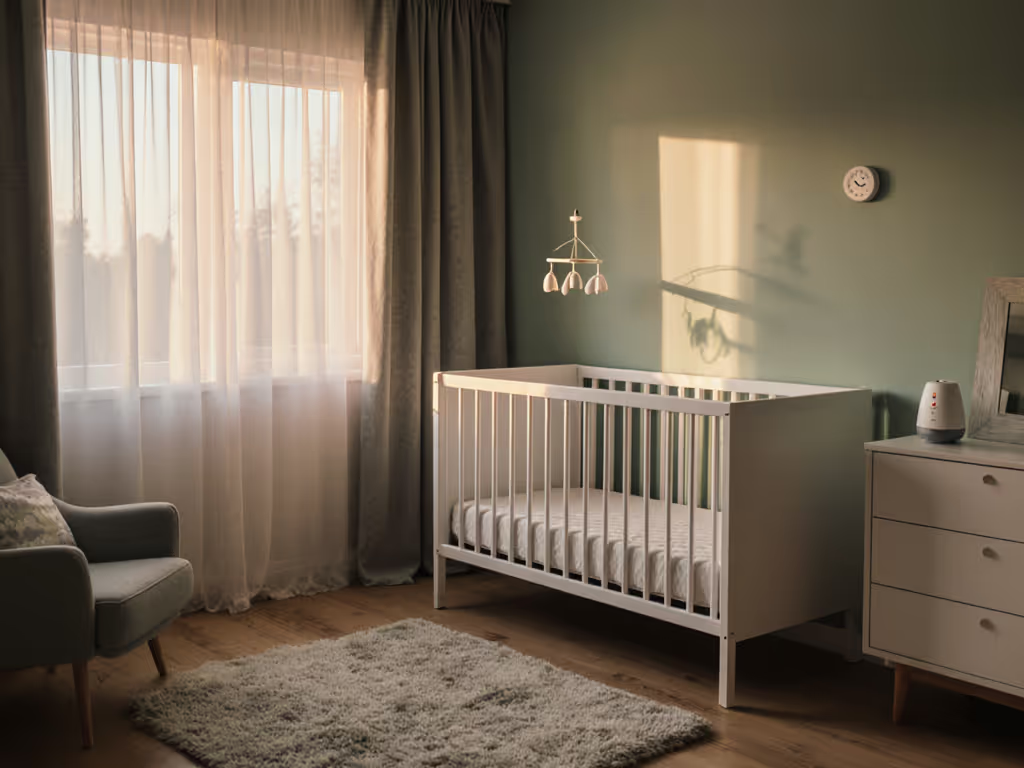
Every year, thousands of infants face preventable dangers during sleep, with Sudden Infant Death Syndrome (SIDS) still claiming lives despite decades of research. Simple changes in sleep setup can make a life-or-death difference, especially since most infants lack the strength to adjust themselves if their breathing is blocked. By understanding the exact principles of safe sleep, parents gain the tools to turn every nap and nighttime stretch into a reliably secure haven.
Key Takeaways
| Point | Details |
|---|---|
| Safe Sleep Environment | Ensure infants sleep on a firm, flat surface without soft items to minimize risks like suffocation and SIDS. |
| Sleep Surface Variations | Prioritize using regulated surfaces specifically designed for infants, such as cribs and approved bassinets, to ensure safety. |
| Key Practices | Follow the ABC guidelines—Alone, Back, and Crib—to consistently create safe sleep conditions. |
| Regulatory Standards | Be proactive in verifying product safety certifications and understanding evolving safety standards for infant sleep products. |
Defining Safe Sleep Environment Principles
Creating a safe sleep environment for infants isn't just a recommendation—it's a critical intervention that can prevent life-threatening risks. According to research from Vanderbilt University Medical Center (VUMC), a safe sleep environment requires strategic design focused on minimizing potential hazards. The fundamental principle is simplicity: a firm, flat surface free from additional objects that could compromise an infant's breathing or movement.
The core elements of a safe infant sleep space include:
- A firm, flat surface without soft cushioning
- A fitted sheet as the only covering
- No additional blankets, pillows, or soft objects
- Positioning the baby on their back
- Ensuring the sleep area is at a consistent, comfortable temperature
The National Institutes of Health's Safe to Sleep campaign emphasizes that reducing Sudden Infant Death Syndrome (SIDS) risk requires meticulous attention to sleep environment details. This means eliminating potential suffocation risks like stuffed animals, crib bumpers, loose bedding, and ensuring the sleep surface maintains structural integrity. Parents and caregivers should view the sleep space as a protective zone—minimalist, structured, and designed exclusively for the infant's safety.
Beyond physical setup, understanding why these principles matter is crucial. Infants lack the motor skills to reposition themselves if breathing becomes obstructed, making environmental design a critical protective strategy. By adhering to evidence-based sleep environment guidelines, caregivers can significantly reduce potential risks and create a secure sleeping sanctuary for their most vulnerable family members.
Variations in Infant Sleep Surfaces
Understanding the nuanced landscape of infant sleep surfaces is critical for ensuring optimal safety. Sleep surface variations present complex challenges that extend far beyond simple comfort considerations. Pubmed research reveals that not all sleeping locations are created equal, with significant disparities in safety profiles across different environments.
Research highlights several key sleep surface categories:
- Cribs: Engineered specifically for infant safety, with standardized design requirements
- Adult Beds: Substantially higher risk of accidental suffocation
- Bassinets: Designed for younger infants with structured safety parameters
- Portable Playard Surfaces: Offer regulated sleeping environments with mesh-sided protection
- Co-Sleepers: Specialized surfaces attached to adult beds with safety modifications
Published medical studies underscore a stark reality: mattress softness directly correlates with infant suffocation risks. One comprehensive study measuring surface characteristics found that increased mattress softness—particularly when combined with additional bedding—dramatically elevates potential breathing obstruction dangers. Notably, some infant mattresses can approach the softness levels of adult mattresses, creating unintended respiratory compromise scenarios.
Navigating these variations requires more than intuition. Caregivers must prioritize surfaces that maintain structural integrity, minimize movement restrictions, and provide a consistently firm foundation. The safest approach involves selecting purpose-designed infant sleep surfaces that meet rigorous safety standards, understanding that each inch of sleeping space represents a potential risk management decision. By approaching sleep surfaces with scientific precision and unwavering attention to detail, parents can create protective environments that significantly reduce potential health risks.

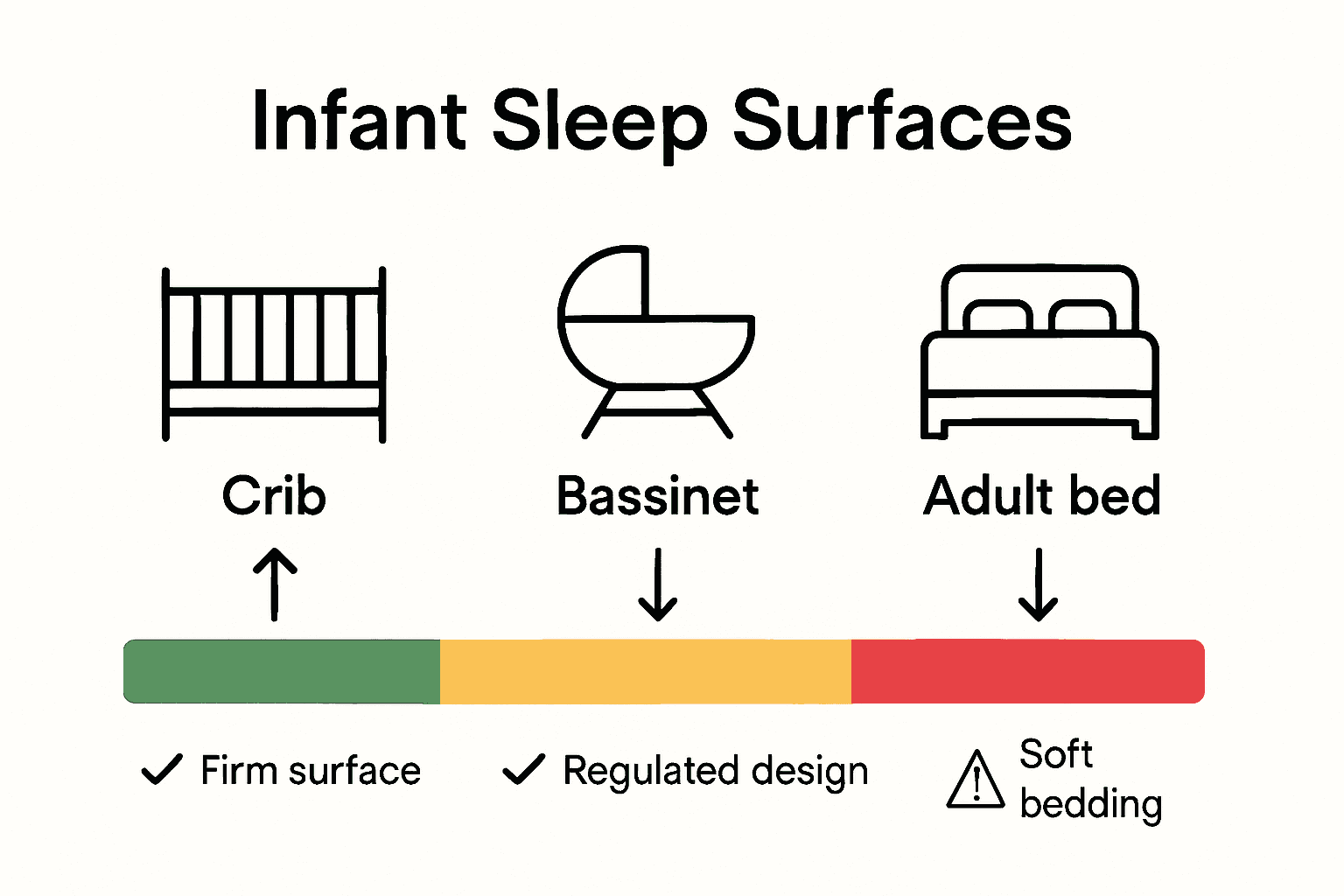
Here's a comparison of common infant sleep surfaces and their safety features:
| Sleep Surface Type | Safety Features | Major Risks |
|---|---|---|
| Crib | Firm surface<br>Standardized design<br>No soft items | Low if used properly |
| Bassinet | Structured sides<br>Firm mattress | Outgrown quickly<br>Potential tipping |
| Portable Playard | Mesh sides<br>Firm pad<br>Regulated design | Risk if non-standard pad used |
| Co-Sleeper | Attach to adult bed<br>Safety straps | Improper use<br>Entrapment |
| Adult Bed | No design standards<br>Soft surfaces | High suffocation & overlay risk |
| Sofa/Chair | Unregulated<br>Soft surface | Extreme suffocation risk |
Key Safe Sleep Location Practices
The science of infant sleep safety distills down to three fundamental principles: Alone, Back, and Crib (ABC). These guidelines, recommended by Stanford Children's Hospital, provide a straightforward framework for reducing Sudden Unexpected Death of an Infant (SUDI) risks. Understanding and implementing these practices isn't about perfection, but about creating consistently safe sleeping environments that protect vulnerable infants.
Key safe sleep location practices include:
- Room Sharing: Keep the infant's sleep surface in the same room as caregivers, but not in the same bed
- Back Positioning: Always place infants on their backs for sleep, never on stomachs or sides
- Firm Surface Requirement: Use sleep surfaces that are completely flat and firm
- Minimal Bedding: Use only a fitted sheet, avoiding blankets, pillows, or soft objects
- Regulated Temperature: Maintain a comfortable, consistent room temperature
The National Institutes of Health emphasizes that sleep location isn't just about physical placement—it's a comprehensive safety strategy. Soft surfaces like couches, waterbeds, and memory foam mattresses are strictly prohibited. These environments can create unintentional suffocation risks due to their inability to maintain consistent structural support. Portable sleep solutions like bassinets and playpens offer regulated environments, but caregivers must still ensure they meet current safety standards.
Beyond physical setup, safe sleep practices require ongoing vigilance. Caregivers should regularly assess sleep environments, understand evolving safety recommendations, and create consistent routines that prioritize infant respiratory protection.
Each sleep session is an opportunity to reinforce safety protocols, transforming seemingly simple moments into critical protective interventions.
Regulatory Standards for Sleep Products
Product safety standards represent the critical foundation of infant sleep protection, transforming well-intentioned guidelines into measurable, enforceable requirements. The Consumer Product Safety Commission (CPSC) serves as the primary regulatory body, establishing comprehensive standards that manufacturers must meet to ensure infant sleep product safety across cribs, bassinets, play yards, and related equipment.
Key regulatory requirements encompass:
- Structural Integrity: Products must withstand specific weight and stress tests
- Material Safety: Mandatory screening for toxic chemicals and flame-retardant properties
- Dimensional Specifications: Precise measurements to prevent entrapment risks
- Manufacturing Quality Control: Consistent production standards
- Labeling Requirements: Clear safety instructions and usage guidelines
Research from the American Academy of Pediatrics highlights a significant challenge in current standards: the lack of an objective, standardized definition for surface "firmness". This gap creates potential inconsistencies in mattress and sleep surface evaluations. While current regulations provide robust protection, ongoing scientific research continues to refine and improve safety protocols, recognizing that infant protection requires continuous adaptation to emerging scientific understanding.
Navigation of these standards demands more than passive compliance. Caregivers must actively verify product certifications, understand regulatory markings, and remain informed about potential product recalls. The landscape of infant sleep product safety is dynamic—what meets standards today might be refined tomorrow. By maintaining an informed, proactive approach, parents can transform regulatory standards from bureaucratic checklists into genuine protective mechanisms for their most vulnerable family members.
Risks Of Unsafe Sleep Environments
Infant sleep environments harbor hidden dangers that can transform seemingly innocent moments into potential life-threatening scenarios. Medical research reveals a stark reality: improper sleeping arrangements can exponentially increase risks of accidental suffocation, overlay, and Sudden Infant Death Syndrome (SIDS). Understanding these risks isn't about inducing fear, but empowering caregivers with critical knowledge to protect their most vulnerable family members.
Primary high-risk sleep environment factors include:
- Adult Bed Surfaces: Significantly higher suffocation probability
- Soft Bedding: Blankets, pillows, and cushions create breathing obstruction zones
- Non-Standard Sleep Locations: Sofas, chairs, and unregulated surfaces pose extreme risks
- Uncontrolled Temperature: Overheating or extreme cold can compromise infant respiratory function
- Unsupervised Sleep Spaces: Environments without consistent monitoring
Published medical studies highlight a disturbing trend: less than half of mothers consistently follow safe sleep practices. The use of soft bedding dramatically increases suffocation risks, with infants unable to reposition themselves when breathing pathways become compromised. Research from multiple medical journals consistently demonstrates that adult beds, sofas, and chairs present substantially higher risks compared to purpose-designed infant cribs and sleep surfaces.
Navigating these risks requires more than passive awareness—it demands active, informed intervention.
 Caregivers must transform sleep environments from potential danger zones into scientifically structured protective spaces. This means consistently applying evidence-based practices, maintaining vigilant supervision, and recognizing that every sleep moment represents a critical opportunity to safeguard an infant's most fundamental biological function: unobstructed breathing.
Protect Your Infant with Expert Sound and Sleep Environment Insights
Ensuring a safe sleep environment means more than just arranging a firm mattress and removing soft bedding. As highlighted in the "Complete Guide to Sleep Environment Safety," minimizing risks such as suffocation and SIDS requires precise attention to every detail in your baby's sleep space. One often overlooked factor is the impact of noises and sounds on your infant's safety and sleep quality. That is where our Acoustic Lab for Little Ears steps in.
At Baby Sound Machines, we blend lab-measured decibel profiles with real-home testing to help you select environment-specific sound machines that support safe sleep practices. Using scientifically backed data, you can create a calm, well-regulated sleep environment that complements the ABC principles and regulatory standards recommended in the article. Don't leave your baby’s sleep safety and comfort to chance. Visit Baby Sound Machines now to discover sound solutions designed to protect your infant’s sleep environment. Take action today to safeguard each precious night with data-driven choices.
Frequently Asked Questions
What are the key principles for creating a safe sleep environment for infants?
Creating a safe sleep environment for infants involves three key principles: place the baby Alone in their crib, lay them on their Back, and ensure they sleep in a Crib or bassinet that meets safety standards. This reduces the risk of Sudden Unexpected Death of an Infant (SUDI).
Why is a firm sleep surface important for infants?
A firm sleep surface is crucial as it minimizes the risk of suffocation and ensures that the infant can breathe comfortably without the danger of sinking into soft materials, which can obstruct their airways.
How do different infant sleep surfaces compare in terms of safety?
Cribs provide a standardized, firm sleeping surface, while adult beds and sofas significantly increase suffocation risks. Other options like bassinets and portable playards offer varied safety features but must be used according to safety guidelines to minimize risks like tipping or suffocation.
What materials should I look for in infant sleep products to ensure safety?
Infant sleep products should have stringent structural integrity, non-toxic materials, and meet specific dimensional specifications to prevent entrapment. Additionally, they should be free from soft padding and comply with current safety regulations.
Recommended
Related Articles