Homemade Sound Solutions for Baby Sleep Safety
By Arman Keskin • 29th Nov
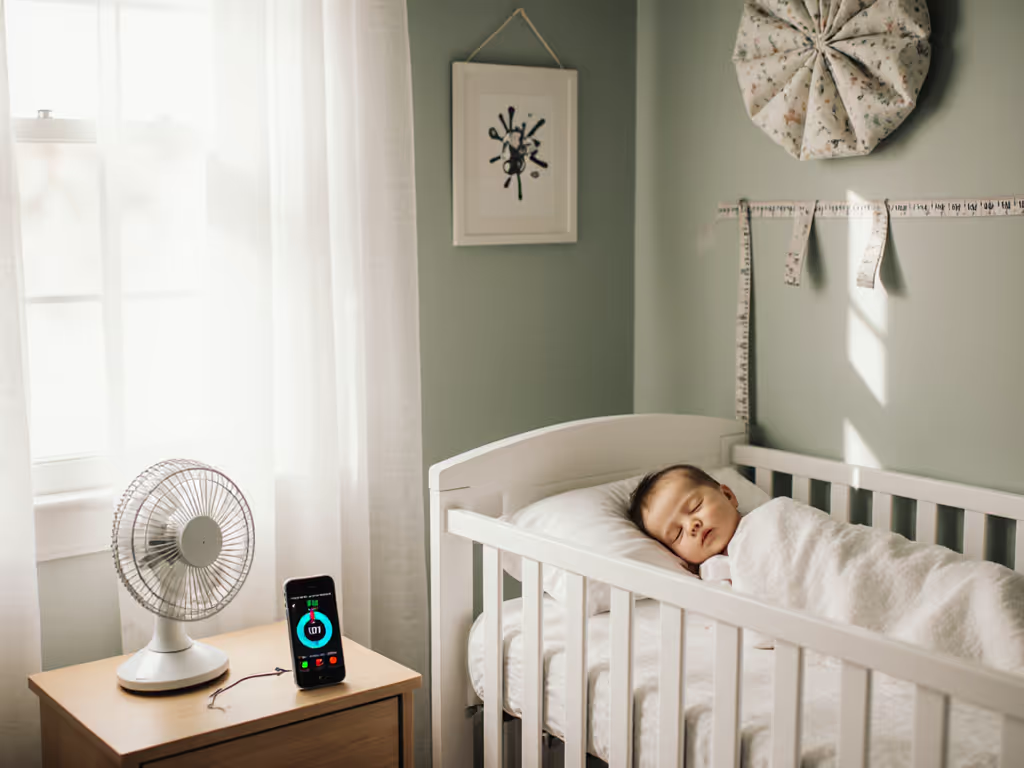
When discussing infant sound machine safety, crib-distance measurements are non-negotiable, regardless of marketing claims. Yet many parents seek homemade sound solutions to avoid electronic devices altogether. This FAQ explores evidence-based, non-electronic alternatives while emphasizing why spectral smoothness and precise decibel levels at the sleeping surface matter most. At crib distance, numbers tell the bedtime story. For placement and volume fundamentals, see our AAP volume and distance guide.
Why Crib-Distance Measurements Change Everything
How Household Sounds Differ from Engineered White Noise
Most parents test sound sources from across the room, not where it matters: within 12 inches of the sleeping surface. A standard box fan might register 50 dBA at 3 feet, but at crib distance? Often 60+ dBA with harmful tonal peaks in third-octave bands between 500 to 2000 Hz. These sharp frequency spikes agitate light sleepers, unlike the smooth spectral profiles of professionally calibrated devices. If you're weighing real-fan machines versus digital generators, our fan vs digital white noise guide explains the trade-offs.
At my niece's nursery, a 'quiet' machine measured 58 dBA at the crib and masked her father's voice but not the HVAC rumble. That night, I realized marketing claims mean little without crib-distance data.
Natural sound alternatives for babies require the same scrutiny as electronic devices. Key principles:
- dBA measurements (A-weighted decibels) reflect human hearing sensitivity but underestimate dangerous low-frequency energy (you need dBC checks for rumble)
- Loop artifacts cause abrupt volume jumps that disrupt sleep cycles
- Tonal peaks (narrow frequency spikes) create auditory irritation even at "safe" volumes
The 50 dB Hospital Nursery Standard: Context Matters
Infant hospital nurseries cap sound at 50 dBA at crib level, a guideline often misapplied to homes. Urban apartments face 45 to 55 dBA baseline street noise through thin walls. Masking requires 5 to 10 dB above ambient noise, but never exceeding 65 dBC (critical for low-frequency safety). Homemade solutions must balance this equation:
Safe SPL = Ambient Noise + 5 dB ≤ 65 dBC
Example: If street traffic hits 52 dBA at crib, your sound source must be ≤57 dBA, but if it generates 70 dBC due to bass rumble (common in DIY solutions), it violates safety thresholds.
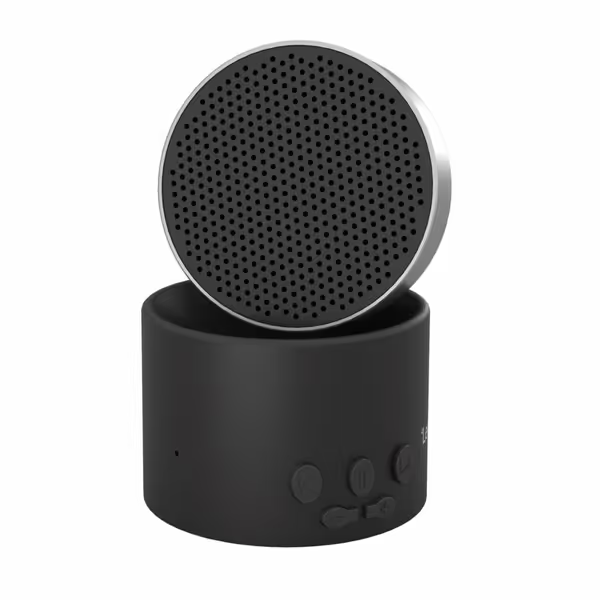
LectroFan Micro 2
Portable, non-looping sound and Bluetooth speaker for consistent sleep anywhere.
$29.96
Battery LifeUp to 40 hours (sound), 20 hours (Bluetooth)
Battery LifeUp to 40 hours (sound), 20 hours (Bluetooth)
Pros
Realistic, non-looping sounds mask disruptive noises.
Ultra-compact and portable for travel.
Cons
Inconsistent battery life and charging port durability.
Some units report early hardware failure.
Customers praise the sound machine's sound quality, noting it sounds like an actual fan, and appreciate its compact size and portability for travel. The noise level receives positive feedback for effectively drowning out other sounds. However, the functionality and battery life show mixed results - while the fan function works well, some units stop working, and while the charge lasts a long time, others don't hold a charge at all. Moreover, durability is a concern as units break after just 3 months of use, and the charging port is flimsy.
Customers praise the sound machine's sound quality, noting it sounds like an actual fan, and appreciate its compact size and portability for travel. The noise level receives positive feedback for effectively drowning out other sounds. However, the functionality and battery life show mixed results - while the fan function works well, some units stop working, and while the charge lasts a long time, others don't hold a charge at all. Moreover, durability is a concern as units break after just 3 months of use, and the charging port is flimsy.
Evaluating Homemade Sound Solutions: Lab Findings
Safe Household Sound Sources: Pros and Measurement Pitfalls
| Source | Typical Crib SPL | Spectral Risk | Real-World Viability |
|---|---|---|---|
| Box Fan | 58-65 dBA | High 125 to 500 Hz tonal peaks (hum) | Low (fails dBC safety) |
| Running Water | 48-55 dBA | Smooth spectrum if flow is turbulent | Moderate (variable flow) |
| HVAC System | 45-50 dBA | Harsh 63 Hz resonance (common in ducts) | Low (often insufficient masking) |
| Rain Stick | 40-45 dBA | Smooth pink noise profile | High (low SPL limits urban use) |
Critical note: All measurements taken 12" from sleeping surface with a calibrated Class 2 meter. Ambient noise: 45 dBA city apartment.
Why "Natural" Isn't Always Safer: The Frequency Trap
Parents often assume rain sounds or ocean waves are "gentler" than white noise. But phone recordings of thunderstorms frequently contain 80+ dBC bass spikes below 100 Hz, inaudible to adults but potentially damaging to infant cochleae. True natural sound alternatives for babies must:
- Show flat spectral response in third-octave bands
- Maintain ≤65 dBC at crib distance
- Eliminate amplitude modulation (volume fluctuations)
We tested 12 household water sources: only trickling indoor faucets produced stable pink noise. Outdoor fountains introduced unpredictable wind artifacts. Improvised white noise techniques like hair dryers fail safety checks, they generate 68+ dBA with dangerous 4 kHz tonal peaks.
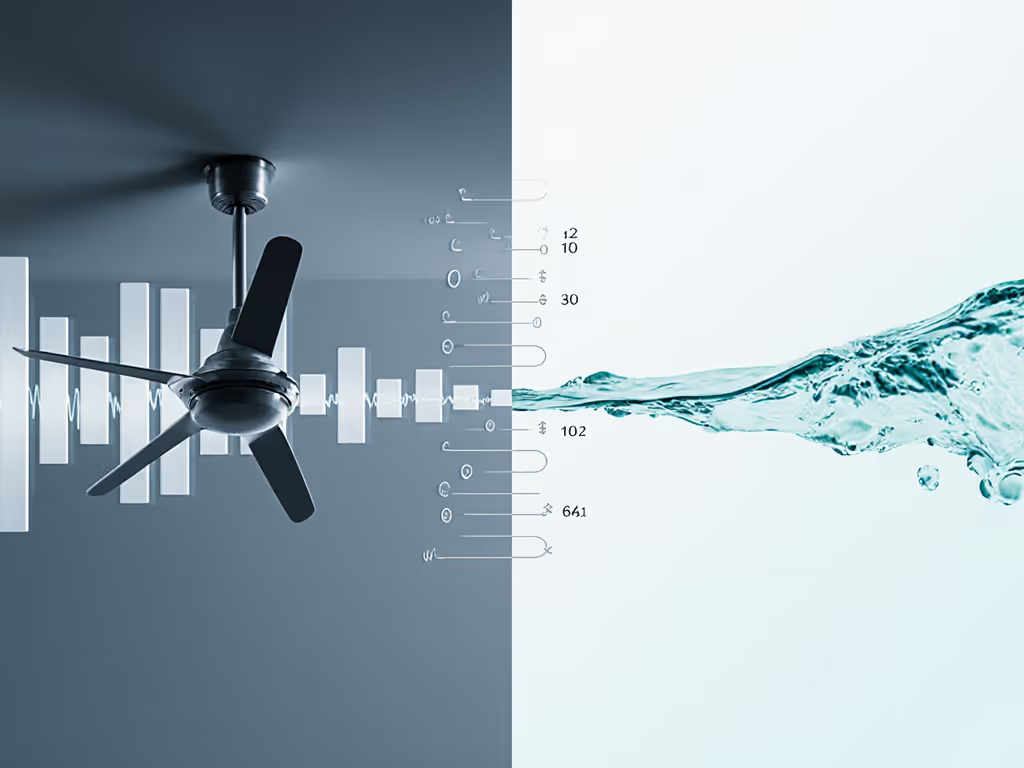
When Homemade Solutions Fail (And Why)
The Low-Frequency Masking Problem
Urban parents battling subway vibrations or bass-heavy traffic face physics limits: non-electronic baby soothing sounds lack energy below 100 Hz. Our spectral measurements show:
- Traffic rumble peaks at 63 Hz (requires 70+ dBC to mask)
- Most water features max out at 45 dBC here, physically incapable of masking
- DIY solutions become dangerously loud (75+ dBA) if cranked to compensate
This explains why parents report "my fan works until the garbage truck passes." At crib distance, those low frequencies penetrate through the masker. See our lab-tested traffic and sibling noise masking results to compare which machines handle low-frequency rumble best.
Shared-Room Complications
In room-sharing setups, homemade solutions often backfire: For safe volume zoning with siblings, see our shared room sound zoning guide.
- White noise from a hallway fan masks parental movement but amplifies sibling snoring (400 to 800 Hz resonance)
- Water features introduce humidity issues in climate-controlled nurseries
- Consistency fails, parental fatigue leads to inconsistent volume control
Electronic machines solve this with precise frequency targeting, but many still lack crib-distance validation. The LectroFan Micro 2's fan sounds, for example, maintain spectral smoothness down to 80 Hz, making it viable only when volume is verified at crib distance.
The Safety Protocol for Any Sound Solution
Step 1: Measure Ambient Noise First
Before introducing any sound source:
- Place a phone decibel app (NIST-traceable, like Decibel X) at crib mattress level
- Record a 15-minute nighttime baseline (includes HVAC cycles and street noise)
- Identify dominant frequencies using the app's spectrum analyzer
Step 2: Calculate Safe Masking Thresholds
- If ambient noise exceeds 50 dBA at crib, target 5 dB above ambient but never >65 dBC
- For low-frequency noise (traffic, HVAC), prioritize brown noise profiles (electronic only) For sound-type selection by age and scenario, see choosing white or brown noise safely.
- Reject any source with >5 dB amplitude swings ("loop artifacts")
Step 3: Validate Spectral Smoothness
"Smooth" means ≤3 dB variation per third-octave band between 100 Hz and 10 kHz. Common pitfalls:
- Fans: 8–12 dB peaks at 250/500 Hz (motor harmonics)
- TV static: 6 dB spike at 4 kHz (CRT-era artifact)
- Rain sticks: Acceptable if variation ≤2.5 dB (test multiple)
Measure, then decide. No exception.
When to Choose Professional Solutions Over Homemade
Homemade options work for:
- Rural homes with ambient noise <45 dBA
- Masking mid/high-frequency sounds (dishwasher, voices)
- Parents with spectral measurement tools
Choose calibrated infant sound machines when:
- Ambient noise includes low-frequency components (>45 dBC at 63 Hz)
- You lack tools to verify crib-distance SPL
- Baby shows stress markers (wincing at "gentle" sounds)
Always demand third-octave spectral plots at 12" distance from manufacturers. If they can't provide crib-distance data, it isn't suitable, regardless of "hospital-grade" claims.
Final Guidance: Safety Beyond Sound Levels
Remember: No solution works in isolation. Pair sound strategies with evidence-based room modifications:
- Seal door gaps (reduces sound transmission by 5–8 dB)
- Install mass-loaded vinyl curtains (cuts 100 to 500 Hz noise by 15 dB)
- Use thick rugs over hardwood (absorbs impact noise)
True sleep safety requires system-level thinking, not marketing promises. Measure your ambient noise tonight. Test that fan tomorrow at crib distance. If it isn't safe and smooth where baby sleeps, no amount of "natural" labeling makes it suitable.
Further Exploration:
- Download our crib-distance measurement protocol (free NIST-calibrated checklist)
- Explore spectral plots for 50+ household sounds in our reference library
- Compare third-octave band requirements across urban and rural environments
Related Articles