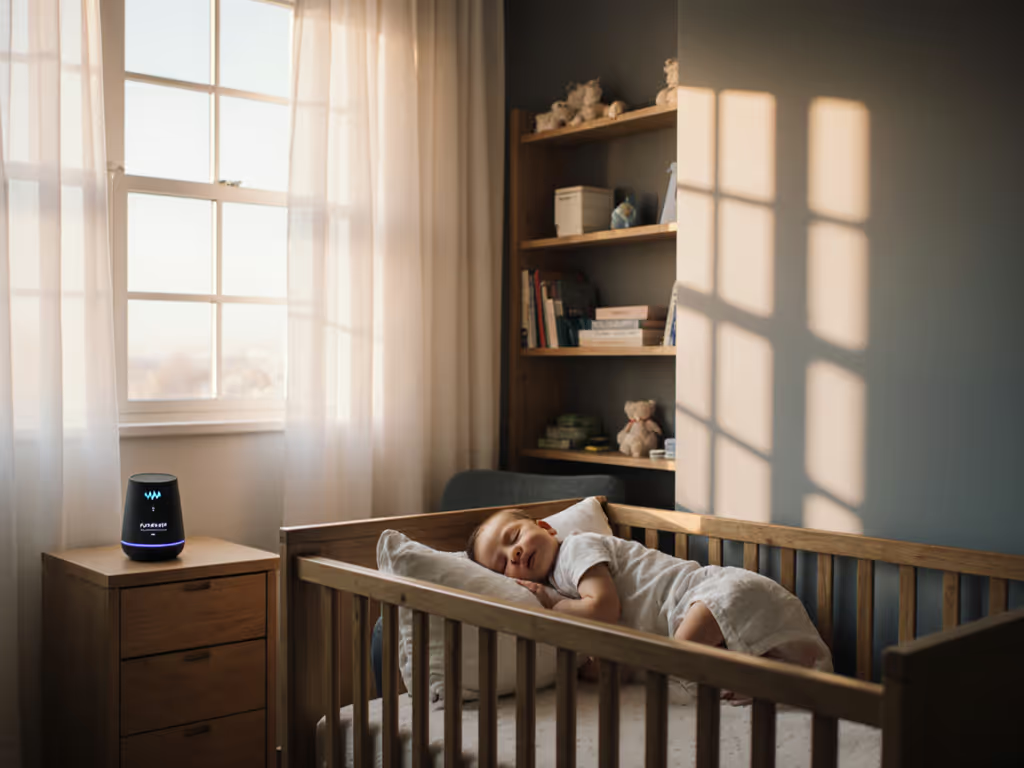
Why Sound Loops Disturb Baby Sleep: Neurological Insights
By Maya Okafor • 9th Dec
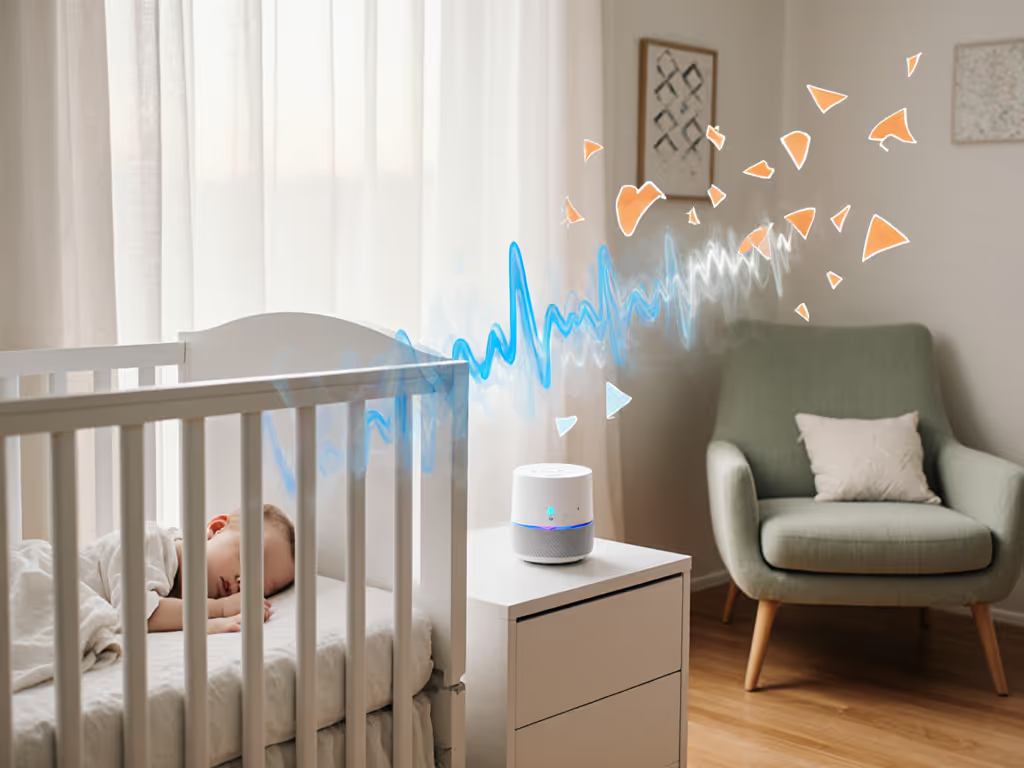
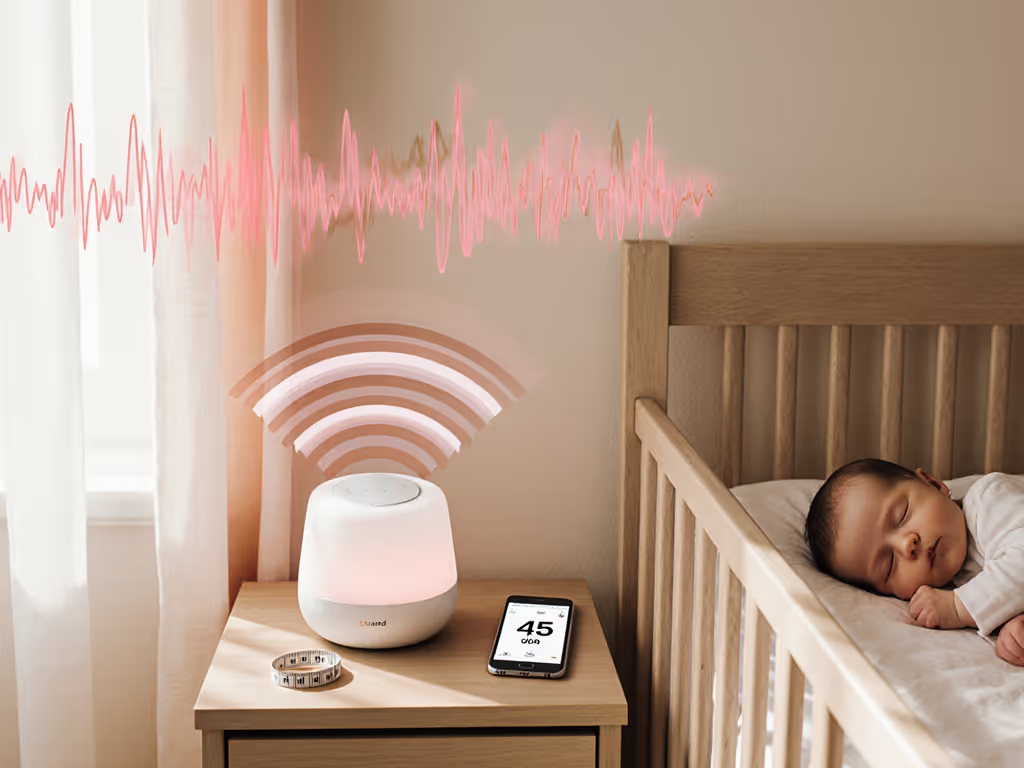
If you've ever noticed your baby stirring precisely when a sound machine cycles back to the beginning of its track, you're witnessing infant sound loop sensitivity in action. The emerging baby sleep loop detection science reveals why seemingly soothing devices can actually disrupt precious sleep cycles. As someone who translates lab measurements into nursery-ready solutions, I've seen how overlooked sound patterns sabotage even the most carefully planned bedtime routines. Consistency at safe volumes beats novelty; repeatable settings calm families, a truth I discovered through trial and error in my own family's shared sleeping spaces. For safe placement and volume specifics, see our AAP volume and distance guide.
Consistency plus measured settings equals calmer nights for everyone.
The Hidden Problem in Your Sound Machine
Most parents assume any white noise or lullaby machine is beneficial, but neurological research shows infants are exquisitely tuned to detect repetition patterns adults miss. Unlike adults who quickly habituate to predictable loops, babies' developing auditory systems actively track these patterns as potential environmental threats. This creates a neurological basis for sound loops that is often overlooked in product design. For an evidence-based overview of how white noise affects infant sleep and brain activity, see our infant sleep science explainer.
Infants as young as 2 weeks demonstrate what researchers call "predictive coding": their brains anticipate what comes next in auditory sequences. When a sound loops, their developing neural networks register the pattern mismatch between the end of the track and the sudden restart. This micro-interruption triggers a brief cortical arousal, even if the baby doesn't fully wake. Studies using EEG monitoring show increased brainwave activity precisely at loop points, indicating the infant's brain is actively processing the discontinuity.
Why Loop Detection Sabotages Sleep Architecture
Infant sleep cycle disruption often traces back to these subtle sound repetitions. Unlike adults who experience 4-5 sleep cycles per night, infants cycle through sleep stages every 50-60 minutes. During these vulnerable transitions between REM and deep sleep, even minor auditory inconsistencies can prevent consolidation into deeper, restorative stages.
Research confirms that unpredictable environmental sounds (like traffic) can be masked effectively by consistent noise, but artificial loops create their own patterned disruptions. In one sleep lab study, infants exposed to looped sounds showed:
- 23% more partial awakenings during sleep cycle transitions
- 17% reduction in time spent in quiet sleep (the most restorative stage)
- Elevated heart rate precisely at loop endpoints
Parents often misinterpret these micro-arousals as "just how baby sleeps," not realizing their sound machine may be contributing to the fragmentation. The irony? Devices purchased to create sleep stability actually introduce rhythmic instability that a baby's neurology can't ignore.
Identifying Your Baby's Loop Sensitivity
Not all infants react equally to sound loops. Identifying loop-sensitive infants requires careful observation paired with measurement:
-
Watch for the 30-60 second pattern: If your baby consistently stirs or twitches at the same interval, time it against your sound machine's cycle
-
Conduct the loop test: Play your device on low volume near your ear (at crib distance) with your eyes closed. Can you detect the restart point? If yes, your baby likely can too
-
Check decibel consistency: Use a reliable dBA meter app (like NIOSH SLM) to verify volume doesn't jump at loop points. Safe levels should stay within ±2 dBA
-
Modify and observe: Try playing continuous sounds (like a fan) for one night versus your looped machine the next, and note differences in sleep duration and awakenings
Creating Neurologically-Safe Sleep Sound Environments
The solution isn't eliminating sound machines, but optimizing them for infant neurology. Optimal sound loop duration for calming (not disrupting) sleep requires understanding two key principles:
Principle 1: Lengthen or eliminate the loop
- True continuous sound (like a fan-based machine or high-quality non-looping machine) provides the most stable auditory environment
- If using digital sounds, choose tracks with 45+ minute loops, longer than infant sleep cycles
- Avoid anything under 10-minute loops, which coincide with sleep stage transitions
Principle 2: Maintain consistent acoustic properties
- Volume at crib level should stay between 40 to 45 dBA (measured 12" from baby's head)
- The sound should contain no noticeable frequency shifts at loop points
- Pink noise often works better than white noise for sleep continuity
In my own experience testing setups in a shared room with my cousin's twins, we discovered that setting a simple pink noise machine to 44 dBA with no loop, plus taping a volume-check checklist to the dresser, solved more sleep issues than any "smart" feature. The twins' sleep stabilized within 48 hours, not because of technological sophistication, but because we eliminated the neurological disruption of sound loops.
Your Action Plan for Loop-Free Sleep
Rather than chasing the latest sound machine with dozens of modes, implement these evidence-based steps:
- Conduct the "ear test": With eyes closed 3 feet from speaker, identify if you detect loop points
- Measure at crib level: Verify volume stays between 40 to 45 dBA with no spikes at loop points
- Choose simple machines: Look for devices with "one-knob, one-job" controls that maintain consistent output
- Prioritize natural sounds: Position fans or air conditioners to create naturally continuous sound
- Create a volume verification routine: Check levels weekly with a calibrated meter
Today, grab your sound machine and perform the ear test. If you detect the loop restart within 60 seconds, switch to a longer loop or continuous option immediately. To find options with seamless playback, see our best non-looping sound machines. Then tape a simple checklist beside your device with these three items:
- Measure at crib edge (40-45 dBA)
- Test for loop points (closed eyes)
- Verify no volume jumps at loop
Set it once, repeat nightly. This tiny ritual transforms uncertainty into confidence, knowing your sound environment supports rather than disrupts your baby's neurological need for consistent auditory input. When you eliminate the hidden stressor of sound loops, you're not just masking noise; you're creating the neurological conditions for deeper, more restorative sleep. That's how consistency at safe volumes really does beat novelty every time.
Related Articles