Infant Circadian Rhythm, Sound, and Baby Sleep Cycle Development
By Maya Okafor • 29th May
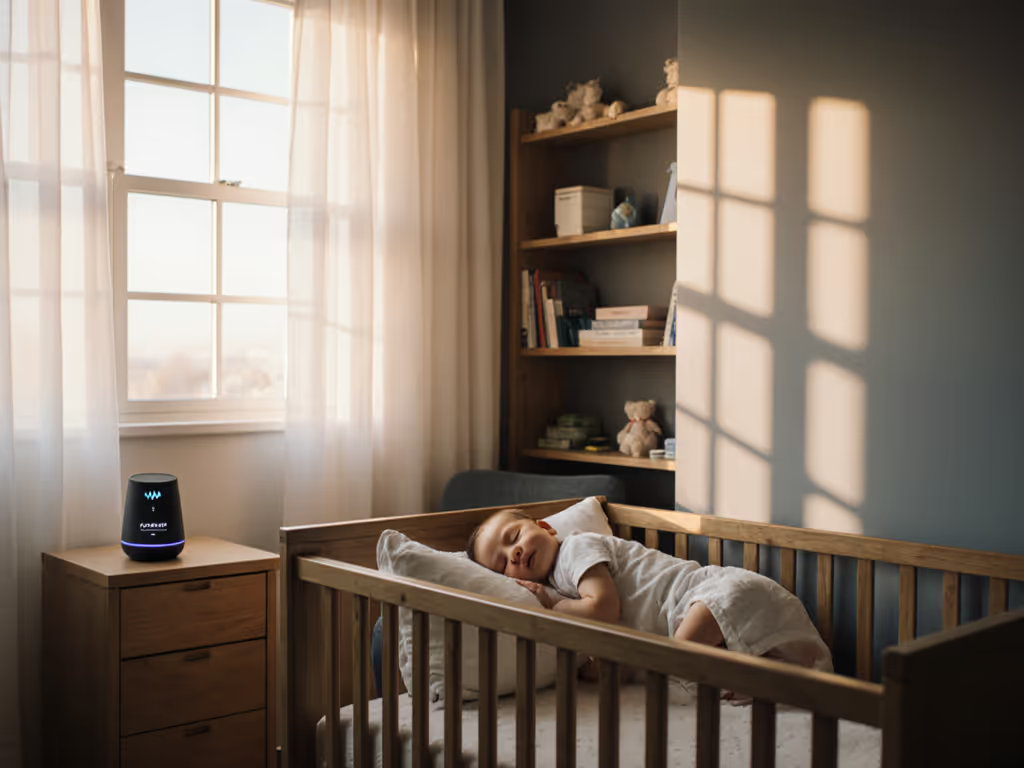
Infant sleep is more than minutes and naps; it's an emerging infant circadian rhythm, shaped by light, timing, and sound. When you understand how infant circadian rhythm sound interacts with baby sleep cycle development, you can stop chasing hacks and start building a calm, repeatable 24-hour pattern.
Consistency plus measured settings equals calmer nights for everyone.
In this guide, I'll translate what we know from circadian research into practical sound machine timing strategies, simple circadian rhythm sleep cues, and a stepwise plan you can actually follow in real rooms with real noise.
1. The infant circadian system in plain language
Circadian rhythm is the body's roughly 24-hour clock that helps regulate sleep, wakefulness, hormones, and temperature.[5] In adults, it's why we feel naturally sleepy at night and more alert in the morning.
How this clock develops in babies
- At birth, babies do not have a mature, day-night circadian rhythm; their sleep is spread across the full 24 hours.[1][8]
- In the first 2 months, naps and wakes can happen at any time, usually in 1-4 hour chunks, with frequent feeds.[1]
- Around 2-3 months, the circadian system starts to organize: more sleep begins to cluster at night, and a more predictable wake time may emerge.[1][3][5]
- Between 4-6 months, many babies consolidate longer stretches of night sleep, though they still need multiple daytime naps.[1]
Research on infant biological clock development shows that light exposure (bright light in daytime, darkness at night) is the dominant cue that helps the clock sync to the outside world.[3][4][5] Sound and routines are supporting cues, not the primary driver. For the science behind how steady noise supports infant sleep cycles, see our white noise benefits.
So the order of operations is:
- Protect light-dark patterns.
- Layer in predictable sound and routine as "backup signals" that say, "Now we sleep."
2. Baby sleep cycle development: what's happening inside a nap
When we talk about baby sleep cycle development, we're looking at how babies move between light and deep stages of sleep and how long each cycle lasts.
Newborns (0-2 months)
- Sleep is immature and fragmented.
- They cycle quickly between active (similar to REM) and quiet (deeper) sleep.
- Because their circadian rhythm isn't leading the show yet, they sleep around the clock, often totaling 11-19 hours in 24 hours, with large variations between babies.[1]
Infants (2-6 months)
- Sleep starts to consolidate at night, especially after 2 months.[1]
- Daytime naps are still essential and usually multiple times per day until close to 1 year.[1]
- The ability to link multiple sleep cycles improves, so babies can gradually stay asleep longer.
This maturing pattern is why routines start to "work" better after the first weeks: you're no longer fighting a completely random system. You're guiding a clock that's learning the difference between day and night.
3. Where sound fits: circadian rhythm sleep cues
Light tells the body clock what time it is.[3][5] Sound tells the nervous system whether it's safe, predictable, and boring enough to sleep.
Think of infant circadian rhythm sound as a steady backdrop that supports the bigger circadian pattern you're building with light and timing.
What sound can realistically do
Sound can:
- Help babies fall asleep by providing a consistent, non-threatening background.
- Mask unpredictable spikes (doors, traffic, siblings) so lighter stages of sleep are protected. See our noise masking lab results to choose sounds that block your home's biggest disruptions.
- Act as a predictable cue when paired with the same pre-sleep routine each time.
Sound cannot:
- Replace light-dark patterns as the main circadian signal.[3][5]
- Force a newborn into a strict schedule before their brain is ready.[1][5]
4. Safe and sensible sound: translating dBA into real life
You do not need a lab to use sound safely, but a few numbers help.
A practical decibel framework
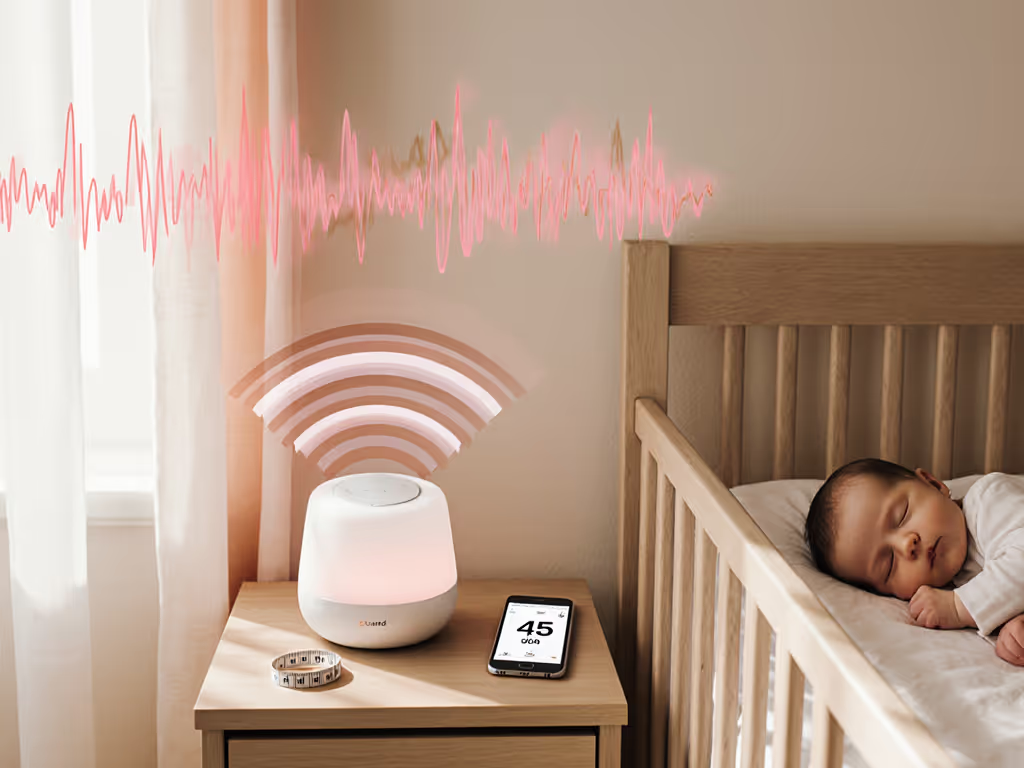
Most professional guidance for infants aims to keep continuous background sound around 45-50 dBA or lower at the crib. For safety specifics on placement and levels, follow the AAP volume and distance guide. This is roughly similar to a bathroom fan or soft shower heard from a room away.
Because most phone apps are imperfect, use them as a ballpark, not a verdict. The goal isn't a single magic number; it's a range that is:
- Loud enough to mask your real-world noise.
- Quiet enough that you'd comfortably sit at that level for hours.
Simple placement and volume rules
Use this checklist when you set up any sound source:
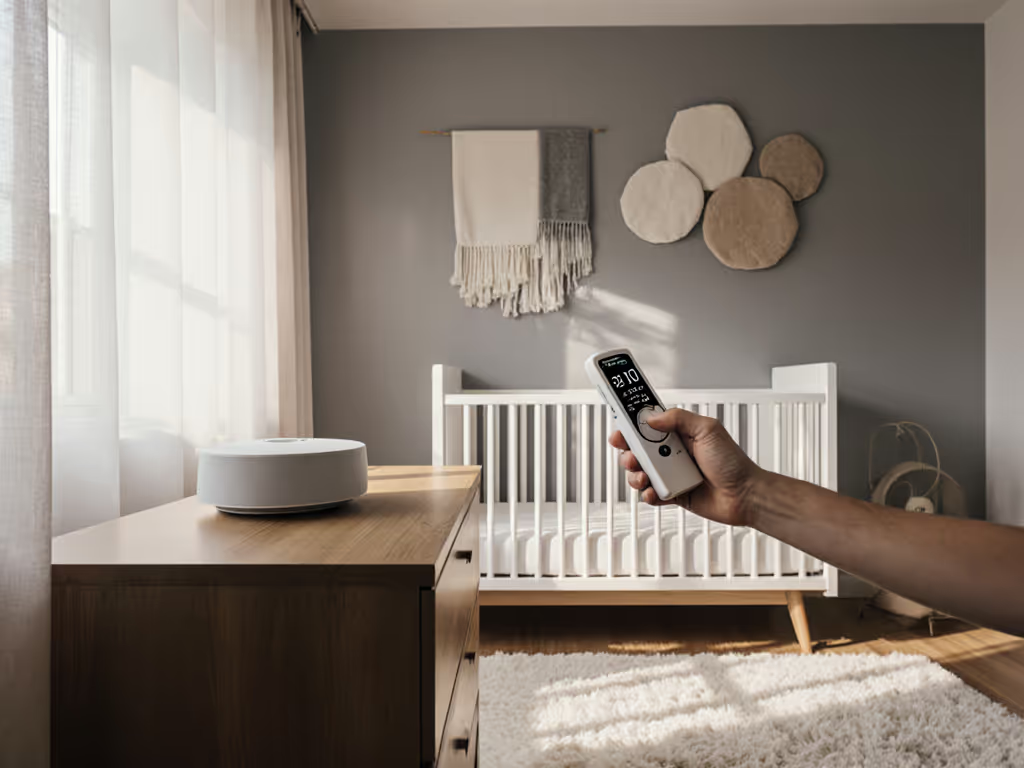
- Distance: Start the machine at least 6-7 feet from the crib, never in or on the crib.
- Direction: Point speakers away from baby's head, not directly at it.
- Volume: Stand at the crib. If you must raise your voice to speak, it's too loud.
- Stability: Avoid modes that randomly jump in volume or add startling effects.
I'm a big fan of "one-knob, one-job" controls (simple hardware buttons that make it easy to return to the same volume and sound every night). For the simplest options, browse our set-it-and-forget-it picks. Set it once, repeat nightly.
5. Sleep sound schedule integration: a 24-hour view
You don't need a complicated sound script. You need a repeatable pattern that fits where your baby is developmentally.
0-6 weeks: Survival with gentle guardrails
- Circadian reality: No stable clock yet; sleep is around-the-clock and tied to feeds.[1][5]
- Light: Keep daytime reasonably bright and active; keep night feeds dim and low-key to slowly differentiate day and night.[1][3]
- Sound strategy:
- Use steady white or pink noise only when needed to calm or mask sudden sounds.
- Turn it off once baby is up and you're interacting.
Goal: Reduce startling and help them settle, without running high-volume sound 24/7.
6-12 weeks: Gently supporting a forming clock
- Circadian reality: The biological clock is now responding more reliably to light-dark cycles.[3][5]
- Light:
- Morning: Open curtains; expose baby to natural light soon after wake.[2][3]
- Naps and night: Use a very dark room; darkness helps melatonin and easier settling.[1][2]
- Sound strategy:
- Use the same sound (for example, a soft, steady noise) for every nap and at night.
- Start it during your pre-sleep routine and leave it on for the whole nap or night stretch at a measured, safe volume.
This is where consistency beats novelty. Swapping sounds or gadgets nightly creates uncertainty; keeping one predictable pattern helps the maturing circadian system link "this sound + darkness = longer sleep."
3-6 months: Coordinating cycles, naps, and night
- Circadian reality: Sleep is more night-focused, and patterns are more predictable, though not perfect.[1][3][5]
- Light and schedule:
- Aim for a roughly consistent morning wake window.
- Protect naps in a dark, cave-like room to help them bridge cycles.[1][2] To fine-tune nap routines, see our nap sound optimization guide.
- Sound strategy:
- Keep using the same sound profile and volume across nights and naps.
- Use a sound machine timing strategy like: "Sound on at start of routine, off when baby is picked up for the day."
- During night feeds, keep the sound running so the environment doesn't swing from noisy to silent and back.
Think of your sound setup as the background "wallpaper" of sleep: it should be steady, low-drama, and nearly invisible.
6. Step-by-step: building your infant sound + circadian plan
Here is a simple way to pull everything together over one week.
Step 1: Choose your default settings
Write these down on an index card near the crib:
- Sound type: e.g., "soft broadband noise" (no voices, lullabies, or sharp patterns).
- Volume: a single mark on the dial that reads as ~45-50 dBA at the crib, if you can measure.
- Placement: one fixed spot in the room, at least 6-7 feet from baby.
Consistency plus measured settings equals calmer nights for everyone.
Step 2: Anchor the day with light
For one week, focus on two light anchors:
- Morning: Within 30 minutes of baby's first wake, expose them to daylight (open blinds, move near a window).[2][3]
- Night: After your chosen "start of night" routine, keep lights very dim; use a small, indirect source for feeds and diaper changes.[1][2]
These light cues do the circadian heavy lifting; sound rides alongside them.[3][5]
Step 3: Define when sound is on and off
Create a clear sleep sound schedule integration rule, for example:
- Naps: Sound on at the start of the nap routine, off when baby is removed from the crib.
- Night: Sound on at the first bedtime cue (sleep sack, story), stays on through night feeds, off at the morning wake cue.
Avoid drifting into "sound is always on", which makes it harder for your child to distinguish sleep time from play time.
Step 4: Use a simple checklist for every caregiver
Shared caregivers, room-sharing, and travel all get easier when the plan lives on paper. On a single sheet, list:
- Target bedtime window.
- Light instructions (e.g., "blinds closed before routine").
- Sound settings (type, volume mark, placement).
- Feed/diaper notes like "keep voices low, lights dim at night."[1]
In my own family, a taped-up checklist and steady, measured sound made transitions between caregivers smoother than any new gadget did. The pattern (not the product) did the heavy lifting.
7. Your actionable next step: a 3-night experiment
Tonight, you do not need to overhaul everything. Try this 3-night experiment:
- Pick one room where your baby sleeps most often.
- Set light rules for that room (how dark at naps and night, how bright in the morning).
- Pick one sound, one volume, one placement.
- Write it down and follow it exactly for 3 nights and 3 days of naps.
- On Night 4, ask yourself:
- Did settling become a little smoother?
- Were night wakings easier to resettle after feeds?
- Did you feel less anxious because the environment was predictable?
If the answer to any of these is yes, keep going for another week. Tweak only one variable at a time (e.g., a 5-10% volume change or slightly different placement), then give it a few days.
Set it once, repeat nightly. When you let the circadian system mature while keeping sound measured and consistent, you give your baby, and yourself, a clearer path to longer, calmer sleep.
Related Articles