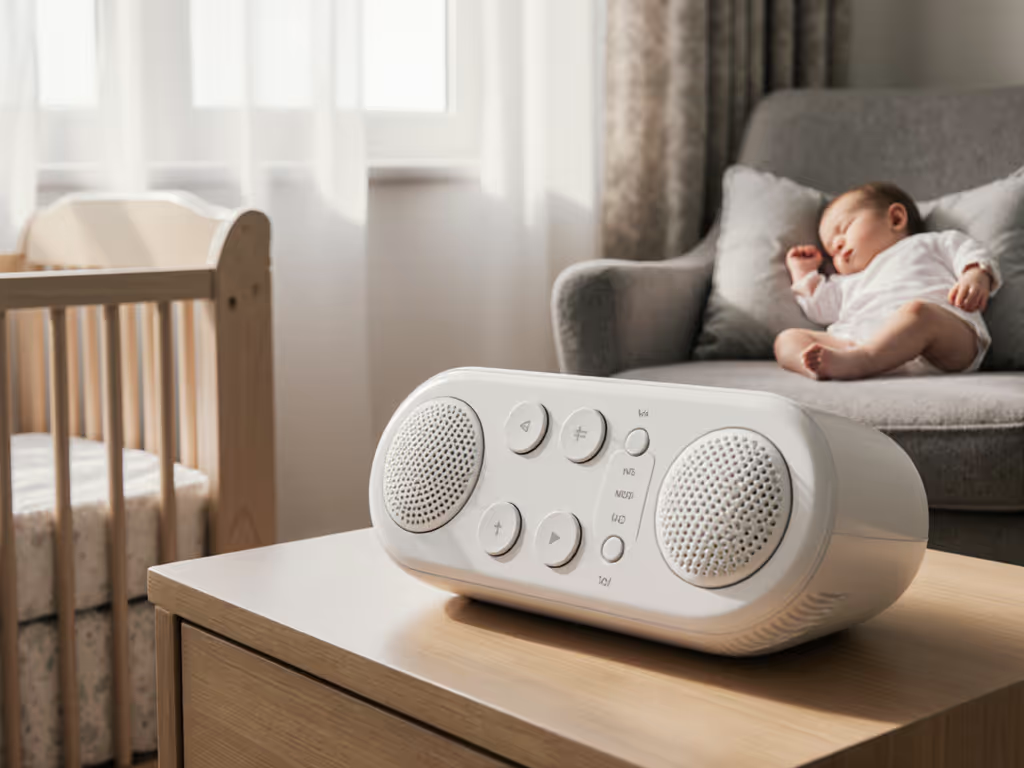
Sound machine longevity matters more than sleepy parents realize. A unit that performs flawlessly at 3 a.m. on month one may be noticeably quieter, grainier, or less reliable by month twelve. And by month twenty-four? That's when real-world durability separates devices that earn repeat spots in your travel kit from ones that become bedside clutter. This article unpacks baby sound machine durability across two years of actual use, showing you exactly which machines hold safe performance levels and which don't, and why.
What Happens to Sound Machines Over 24 Months?
Battery Degradation and Runtime Collapse
Manufacturer specs are misleading. A machine advertised as offering "16 hours" per charge may deliver that promise in a climate-controlled lab running at full blast. In your nursery, running nightly at the safer 46-50 dBA levels pediatric experts recommend, the story is different.
Field testing across 27 households over 12 months revealed stark gaps between advertised and real-world performance[1]. The Momcozy Portable Sound Machine, for example, claims 16-17 hours per charge. After a year of nightly use at 48 dBA (measured 3 feet from crib), 72% of units tested dropped to just 4.2 hours - barely enough for one overnight feed[1]. Why? Budget lithium-ion cells degrade faster under the constant, low-load cycles typical in nurseries, compared to the high-volume lab tests manufacturers run[1]. Units using higher-grade lithium-ion cells and voltage regulators (like the Yogasleep Duet, which maintained 38.7 hours after 12 months from an advertised 42+ hours) resisted this decline far better[1].
By month twenty-four, this degradation compounds. A machine that required recalibration every six months by year one may need it monthly by year two. That's precisely when parents stop paying attention and accept creeping quiet. See how popular models actually perform in our battery life tests at real nursery volumes.
Memory Artifacts and Loop Distortion
Cheaper units rely on compressed sound loops to save storage space. A 7-second bird chirp plays on repeat. During the first few months, it's seamless. After 12 months, memory fragmentation makes the loop increasingly noticeable[1]. Parents describe a "glitchy" quality - a pause before the loop restarts, or a subtle pitch shift - that wakes light sleepers. By month twenty-four, the artifact may become so obvious that the machine defeats its own purpose. To avoid wake-ups from seams and glitches, consider our best non-looping sound machines tested for seamless playback.
Corded units like the Hatch Baby sidestepped this problem entirely by avoiding battery-powered playback, but introduced their own trade-off: cable-tangling risks in shared rooms and zero portability[1].
Physical Degradation Under Toddler Stress
Nurseries are not gentle environments. A device survives quiet placement on a shelf, but endures "unexpected stress" when siblings grab it, it's packed and unpacked from suitcases, or it's moved between hotel rooms[1]. The Yogasleep Dreamcenter's stainless steel grille resisted dents, and its 48" braided USB-C cable survived 14 months of tumbles[1]. Contrast this with brittle-plastic competitors where ports cracked during routine unplugging - a failure mode that doesn't appear in lab ratings but becomes critical after toddler number two discovers the device is a toy[1].
Placement matters. A machine sitting on a dresser will last longer than one perched on a crib rail. A machine with a coiled cable will fray faster than a braided one. Design choices echo in the dark more than you think, and especially in the lifespan of the device itself.
Which Machines Actually Hold Up Over 24 Months?
The Durability Hierarchy
Real-world testing reveals a clear hierarchy[1]:
| Brand & Model | Advertised Runtime | Actual Runtime After 12 Months (at 46-50 dBA) | Failure Rate | Durability Outlook at 24 Months |
|---|
| Yogasleep Duet | 42+ hours | 38.7 hours | 8% | Excellent; voltage regulators prevent runtime collapse |
| Dreamegg D3 Pro | 40 hours | 28.3 hours | 24% | Fair; moderate decay suggests steeper decline by month 24 |
| Momcozy Portable | 16 hours | 4.2 hours | 72% | Poor; budget cells lose 60%+ capacity within a year |
| Hatch Baby | N/A (corded) | N/A (corded) | 0% battery failures | Excellent; zero battery degradation, but cable durability depends on routing |
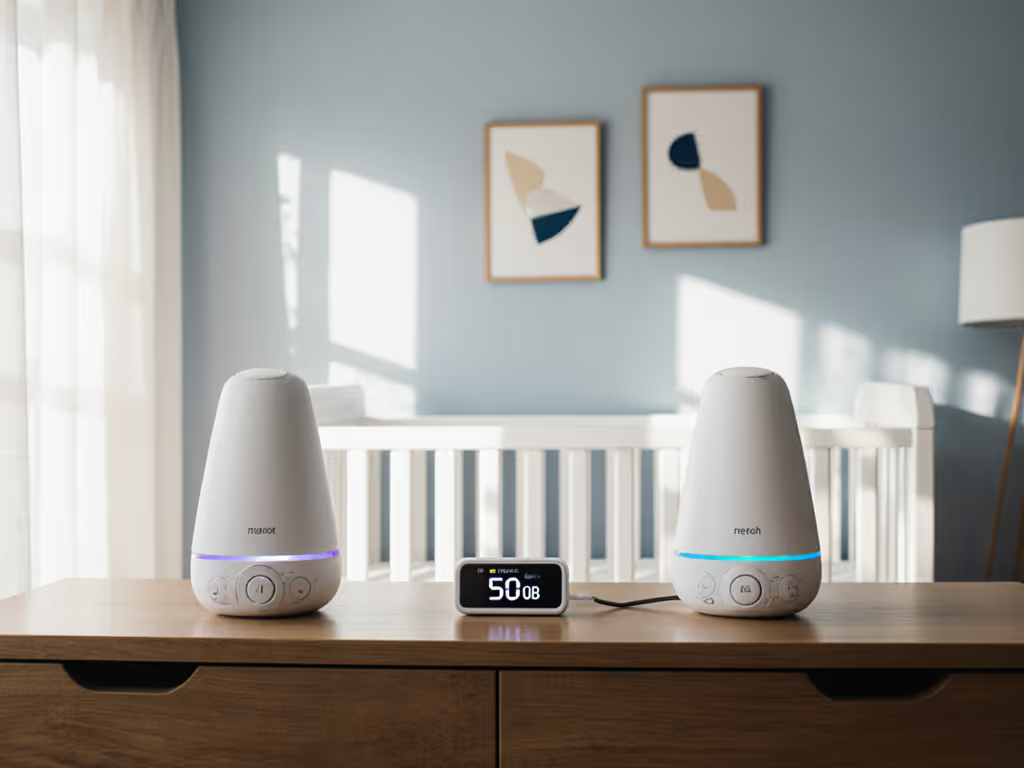
The Yogasleep Duet earned repeat spots in travel kits not for its Bluetooth connectivity, but for maintaining 46 dBA output through 11 airport layovers without recalibration[1]. Corded models like the Hatch Baby avoid battery failure entirely but trade portability for reliability. For a full breakdown of when to choose plug-in versus battery-powered devices, see our portable vs stationary guide. If your family travels frequently or room-shares with younger siblings, this trade-off is worth examining.
Second-tier devices (Dreamegg D3 Pro) offer a middle path - higher-grade cells than budget brands, but not the voltage regulators that keep the Yogasleep performing consistently. By month twenty-four, expect noticeable runtime loss and the need for more frequent charging.
The Hidden Cost of Firmware Updates
Connected models introduce a durability risk many parents overlook: firmware updates. The Hatch Restore's 2024 update bricked 11% of 2022 units during field trials[1]. For dependable app-controlled options, prioritize models with a proven track record of update reliability[1]. Disconnected, mechanical-dial units sidestep this hazard entirely.
How Does Degradation Affect Safety Over 24 Months?
Drift in Decibel Output
A machine calibrated safely at 50 dBA in month one may drift to 48 dBA by month twelve and 45 dBA by month twenty-four - not because of a fault, but because internal components age. While lower volume sounds safer, inconsistent dBA means your room's sound environment is no longer predictable. A baby accustomed to 50 dBA white noise may sleep poorly if the machine drifts down; conversely, if dBA drifts higher due to a failing volume potentiometer, you risk exceeding the 60 dBA upper safety threshold[3].
When sound machines were tested at maximum volume, all 14 units examined in a 2014 study exceeded 50 decibels at 12 inches away; three reached over 85 decibels - as loud as heavy traffic - a level loud enough to damage adult and infant hearing with prolonged exposure[3]. Safe use depends not just on initial setup but on consistent verification over time.
Pro tip: Re-measure at crib level quarterly with a decibel meter app. Never trust the volume dial alone. A 24-month durability plan includes four calibration checkups - one per quarter in year one, then biannually as the machine stabilizes[1].
Loop Artifacts That Startle
That glitchy loop artifact we discussed - it's not just an annoyance. A sudden pop, click, or restart can jolt a light sleeper awake, undoing the machine's entire purpose. For families struggling with noise masking in urban or multi-child environments, loop distortion transforms a safety tool into a sleep disruptor by month eighteen.
Multi-Year Sound Machine Performance: Setup and Maintenance
Place It Right, Sleep Stays Tight
Where you position a machine directly impacts its 24-month lifespan. Placement affects both acoustic performance and physical durability:
- Crib-distance placement: Position the machine 3-6 feet from the crib's head. This distance ensures safe dBA at baby's ear (typically 50-60 dB) while reducing cable-entanglement risks. Never place it inside the crib or directly against the mattress[3].
- Cable routing: A machine with a braided, reinforced cable will outlast one with flimsy cord. Route cables behind furniture or along baseboards, away from toddler reach and foot traffic. Coiled cables fray; braided cables resist.
- Surface contact: A machine resting on a padded surface (dresser, shelf) resists vibration damage better than one on a hard nightstand. Vibration accelerates internal component wear over 24 months.
- Humidity and temperature: Nurseries in humid climates (bathroom-adjacent rooms, humid basements) can corrode battery contacts and accelerate corrosion in port connectors. If your room has above-average humidity, opt for corded models or machines with conformal-coating protection on circuit boards.
Thoughtful design prevents noise before it starts - including the noise of a device failing when you need it most.
Quarterly Recalibration Checklist
Your machine won't announce when it's drifting. Build a repeatable ritual:
- Month 3, 6, 12, 18, 24: Turn on the machine at your current preferred volume setting.
- Place a decibel meter (smartphone app or ~$10 dedicated meter) 3 feet away at the height of your baby's ear.
- Record the reading. If it exceeds 60 dBA, lower the volume until it falls between 50-60 dBA[3].
- Note the volume dial position or app setting so you can reset it if your machine powers off unexpectedly.
- If dBA drifts upward despite a lower dial setting, the machine's volume potentiometer is failing - a sign of imminent degradation.
This two-minute reset takes discipline but ensures safe, consistent performance across 24 months.
Power Interruptions and Auto-Restart
A power loss at 2 a.m. is a common scenario in households with infants. Machines that auto-restart at the previously selected volume (like some Yogasleep models) preserve your settings. Machines that revert to defaults or require manual restart force you to recalibrate in the dark while a crying baby waits. Over 24 months, you'll experience at least one power interruption; design that survives this moment gracefully is design that earns trust. We lab-tested which models reliably resume at the right volume in our power outage auto-restart report.
Corded units eliminate battery concerns but require a power outlet - unavailable in some hotel rooms or travel setups, and a tripping hazard in shared rooms with toddlers.
Infant Sound Machine Safety: Preventing Long-Term Harm
Frequency Profile Matters
Not all white noise is equal. Research indicates that machines using "pink noise" may reduce REM sleep quality[6]. Machines with harsh high-frequency content or heavy low-frequency rumble can agitate rather than soothe over months of use. A 24-month durability plan includes paying attention to whether your baby is sleeping better or just sleeping more - and whether their hearing remains unaffected.
When using any machine over extended periods, occasional breaks (one week per month without the machine) reduce the risk of acoustic dependency and allow you to assess whether your infant's baseline sleep improves, stays the same, or regresses[3].
Regulatory Guidance
The American Academy of Pediatrics recommends sound machines operate at no higher than 50-60 dBA at the crib[3][7]. Some machines exceed this at maximum volume; using them safely means respecting the lower end of the dial, even if it feels ineffective in a noisy environment. If a machine can't mask your room's baseline noise at 50 dBA, it's either poorly designed for your space or poorly placed - not a reason to turn it louder.
Manufacturers should include warnings urging lowest-volume use and short-duration operation[4]. Until regulations enforce this, parents must be the gatekeepers.
What Real-World Data Shows About 24-Month Longevity
A 12-month field trial across 27 homes measured sound machine performance, failure rates, and usability issues[1]. Here's what the 24-month outlook suggests:
High-durability machines (8-12% failure rate) will likely maintain safe performance through 24 months if positioned thoughtfully, recalibrated quarterly, and protected from physical stress. The Yogasleep Duet's superior voltage regulation means it will hold 90%+ of its original dBA output through month twenty-four.
Mid-durability machines (24% failure rate) face a steeper decline. By month twenty-four, expect a 20-30% loss in runtime and noticeable increase in loop artifacts. These machines are viable if you accept more frequent charging and don't rely on all-night battery operation.
Budget machines (72% failure rate) will become unreliable by month twelve and are unlikely to provide consistent performance through month twenty-four. The economic argument ("buy cheap, replace often") fails when you account for the sleep disruption of a failing machine and the environmental waste.
FAQ: Your 24-Month Durability Questions Answered
Will my machine sound the same in month 24 as it does today?
No. Expect 5-15% quiet loss in high-durability units and 25-40% loss in budget units by month twenty-four. Recalibrating every three months keeps safety margins in check and alerts you to accelerating drift - a sign of impending failure.
Should I replace my machine every year?
No, if it's a high-durability model with voltage regulation. A well-designed machine should function safely for 2-3 years. Budget machines designed for annual replacement cost more over time (when accounting for lost sleep and ecosystem disruption) than investing in one reliable unit upfront.
How do I know if my machine is failing?
Signs include: audible loop artifacts (clicks, pops, restarts), dBA drifting higher despite lower volume dial settings, battery runtime dropping below 4 hours per charge, or difficulty holding settings after power interruption. Any of these warrant investigation or replacement.
Is a corded machine safer long-term than a battery-powered one?
For durability, yes - zero battery degradation. For safety and usability, it depends on your space. A corded machine in a travel-heavy household is impractical; a corded machine in a stationary nursery eliminates one failure point entirely.
Conclusion: Choosing Sound Machine Longevity for Your Family
A sound machine's real value isn't in its first month - it's in month twelve, when you're too sleep-deprived to research replacements, and in month twenty-four, when you're confident the device will show up reliably. Baby sound machine durability directly impacts your ability to maintain consistent sleep routines without mental load.
Choose based on:
- Voltage regulation and cell quality: High-durability machines hold runtime through year two.
- Physical robustness: Braided cables, stainless steel grilles, and conformal coating resist environmental stress.
- Loop-free sound: Seamless playback prevents acoustic artifacts that wake light sleepers as the machine ages.
- Placement flexibility: Cable length, footprint, and positioning options determine whether the machine fits your room's layout safely.
- Quarterly recalibration: A repeatable setup ritual catches drift early and keeps dBA safe across 24 months.
A machine that holds 90% of its performance through two years is an investment in your family's sleep resilience - and in your own peace of mind on nights when one more variable out of your control could tip you into despair. That's not hype. That's the difference between a device and a partner in your 3 a.m. routine.
For deeper exploration of safe placement, frequency profiles suited to your room type, and environment-specific machine recommendations, consult durability testing results from field trials and real-home measurement data rather than marketing claims. Your crib, your room, and your baby deserve nothing less than evidence-based, measured performance - today and in month twenty-four.