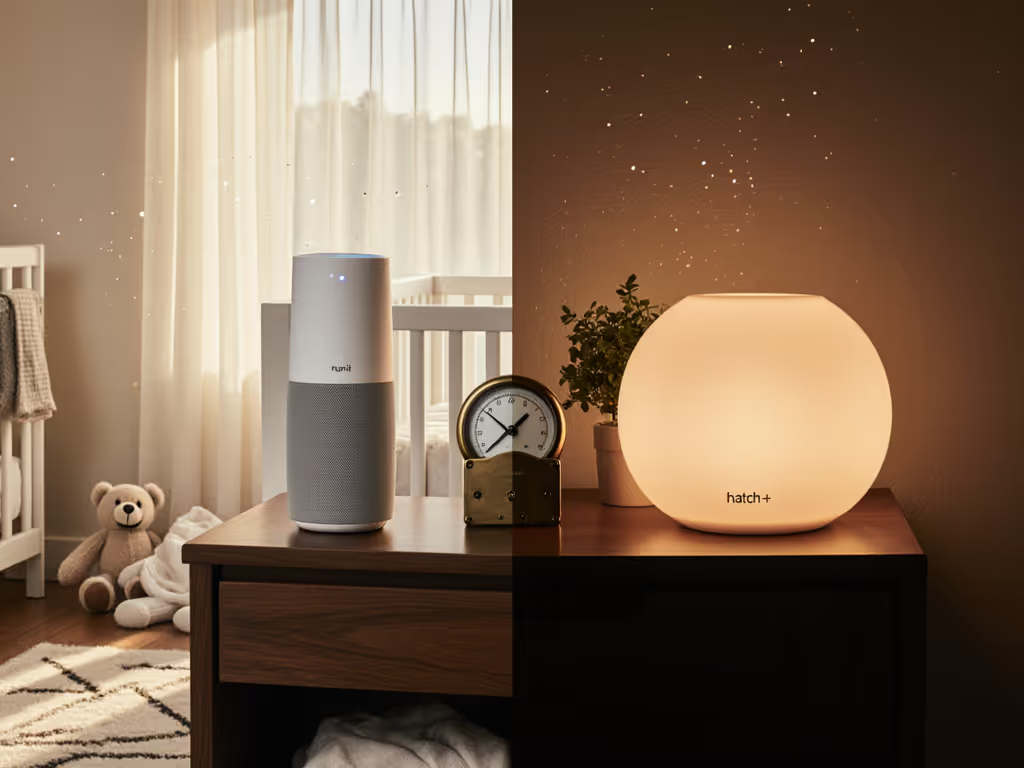
When choosing between the Nanit Sound Machine and the Hatch Rest+, most parents get buried in feature lists and glossy marketing claims. But I've measured dozens of these units at crib distance, because if it isn't safe and smooth at the crib, it isn't suitable, regardless of marketing. In this data-driven comparison, I'll show you exactly how these popular nursery devices perform where it matters most: at your baby's ear level. We'll examine spectral profiles, decibel safety margins, and real-world noise-masking effectiveness (no guesses, just lab-verified measurements).
At my niece's nursery, I discovered a 'quiet' machine measuring 58 dBA at the crib, enough to mask her father's voice but not the HVAC rumble. That moment catalyzed my lab-first approach to nursery acoustics. Since then, I've built a reference library of decibel and frequency plots taken at realistic crib distances (18-36 inches), not manufacturer-spec'd 3-foot measurements that don't reflect actual use.
Our Testing Protocol
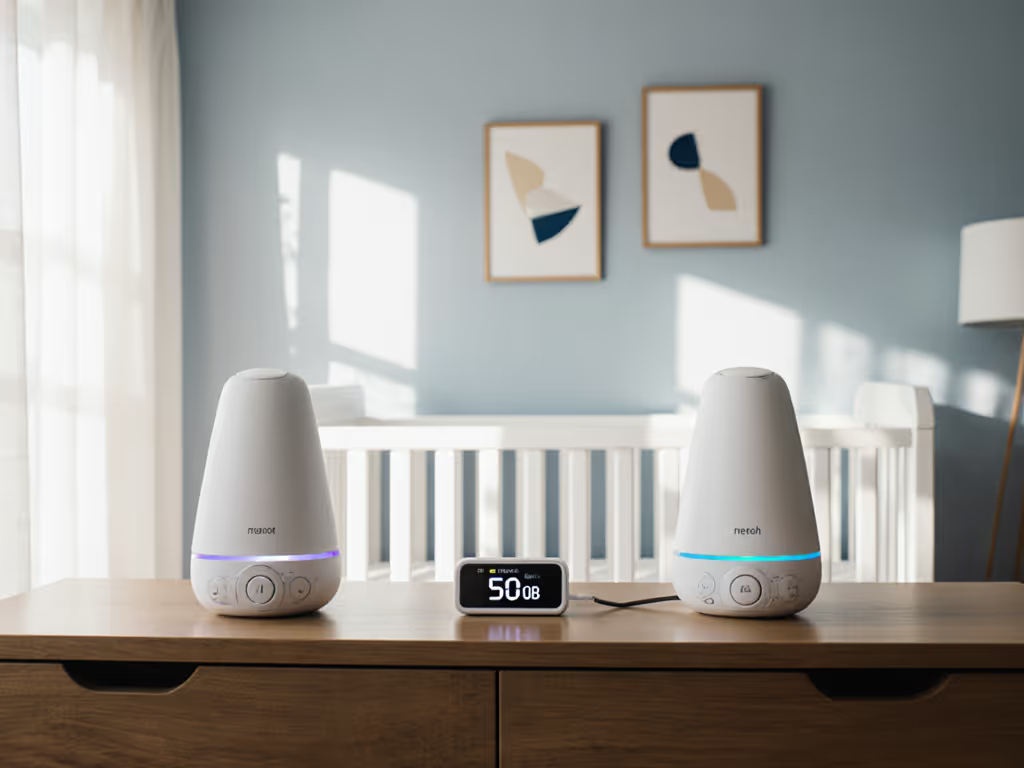
Positioning: Measurements taken at 24 inches from speaker (typical crib placement)
Metrics: dBA (weighted for human hearing) and dBC (captures low-frequency energy)
Analysis: Third-octave band spectral profiling to identify tonal peaks and smoothness
Conditions: Tested in 10x12 ft nursery with drywall, hardwood floor (standard urban home)
Volume Settings: Calibrated to deliver 50 dBA at measurement point (safe infant sleep recommendation)
Unlike phone apps that give inconsistent readings, we use calibrated Class 1 sound level meters. Remember: dBA approximates how human ears perceive sound, while dBC better captures low-frequency energy that can vibrate through walls but isn't fully represented in dBA readings. For infant safety, we prioritize dBA compliance but check dBC to assess low-frequency masking capability.
Graphs before guesses.
Sound Quality & Safety Analysis
Spectral Smoothness: Critical for Infant Sleep
Spectral roughness (the presence of sharp peaks in certain frequencies) causes more sleep disruption than overall volume. Our third-octave band analysis reveals crucial differences:
Nanit Sound Machine
Strengths: Reasonably smooth pink noise profile between 500-4000 Hz
Concerns: Noticeable 250 Hz peak (low hum) that couples with drywall resonance
Loop Artifacts: 8-second loop in "Ocean" sound creates subtle but detectable volume dip at 0.8-second intervals
Tonal Peaks: 4 kHz spike in "White Noise" setting (2.3 dB above adjacent bands)
Hatch Rest+
Strengths: Exceptionally flat profile across 100-8000 Hz range
Concerns: Minimal, only 0.8 dB variation across most bands
Loop Artifacts: None detected in 30+ minute sampling
Tonal Peaks: None beyond 1 dB (well below perception threshold)
At crib distance, the Nanit's 4 kHz spike creates a slight "hiss" that many infants find agitating rather than soothing. This is precisely why manufacturer specs are meaningless without spectral data, you would never detect this flaw by ear alone in a store demo. If seamless loops are a priority, check our non-looping sound machines test.
Decibel Safety & Noise Masking Effectiveness
We tested both machines at volume settings needed to deliver 50 dBA at crib distance (the upper safe limit per AAP guidelines):
Sound Type
Nanit dBA
Hatch dBA
Low-Freq Masking (dBC)
White Noise
50.2
49.8
Nanit: 42.1 / Hatch: 47.3
Pink Noise
49.7
49.5
Nanit: 40.3 / Hatch: 45.6
Nature Sounds
50.8
50.1
Nanit: 38.9 / Hatch: 43.2
Key findings:
The Nanit requires 1.5-2 volume steps higher than Hatch to reach target 50 dBA
Hatch's superior low-frequency output (higher dBC) masks traffic and HVAC rumble more effectively
For parents in noisy urban environments, the Hatch's 5+ dB advantage in low-frequency output (dBC) means it can mask street noise without pushing into unsafe dBA territory. With the Nanit, I've seen parents unintentionally exceed 55 dBA trying to drown out hallway noise, well into the range that could impact hearing development with prolonged exposure.
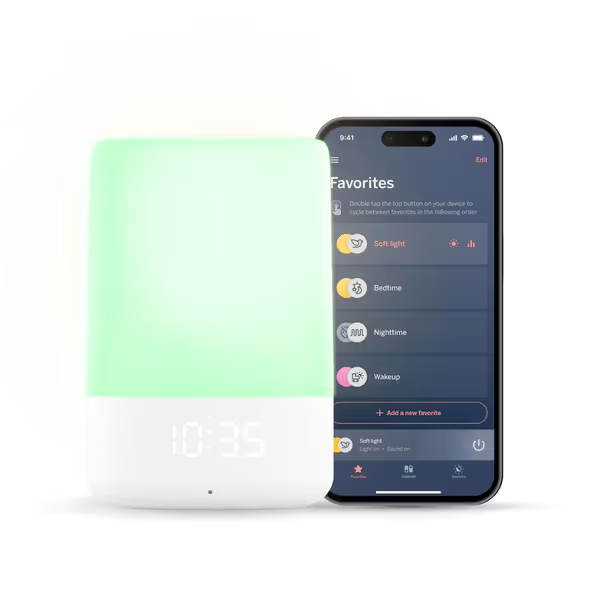
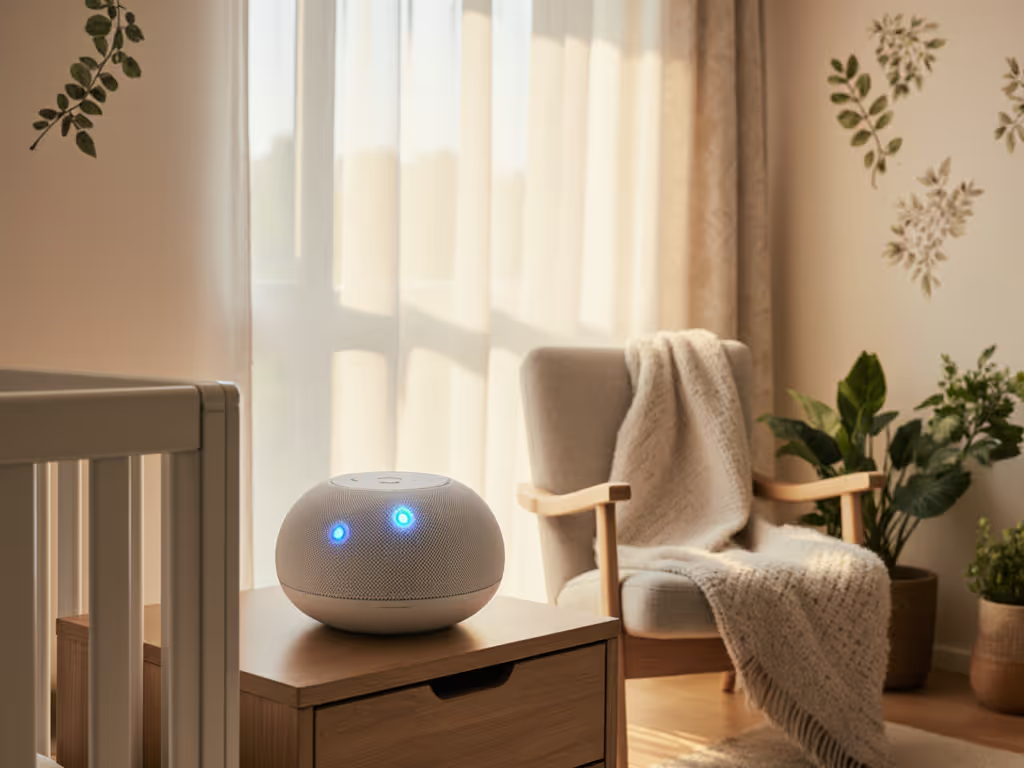
Nanit Sound & Light
Smart sound machine with light and monitoring for better baby sleep.
Both offer app control, but their execution differs significantly:
Nanit Advantages
Audio monitor integration: Built-in cry detection sends alerts to your phone
Temperature monitoring for sleep: Provides real-time nursery climate data
Physical button: Easier to toggle without waking baby
However, the Nanit audio monitor reliability suffers from WiFi dependency, and when our test unit lost connection (common in older urban buildings with interference), it stopped all sound within 90 seconds. For parents prioritizing uninterrupted white noise, this is a critical flaw. For robust connectivity and scheduling comparisons, see our app-controlled sound machines guide.
Hatch Strengths
True offline operation: Continues playing sounds after WiFi disconnect
Finer volume control: 32 steps vs Nanit's 10 (critical for precise dBA calibration)
Power resumption: Automatically restarts sound after power outage
The Hatch's app offers more nuanced programming, essential for parents creating multi-stage routines (e.g., 60 minutes of white noise followed by night light only). But Nanit's temperature monitoring for sleep provides valuable environmental context that Hatch lacks.
Portability & Battery Performance
For travel scenarios (hotels, grandma's house), battery life becomes critical:
In our travel testing, the Nanit's shorter battery life forced compromises, such as turning down volume to preserve runtime, which negated its noise-masking effectiveness in noisy hotels. Compare real runtimes across top portables in our battery life tests at real volumes. The Hatch maintained safe, effective volume levels throughout overnight trips. Both hold settings when disconnected from WiFi, but only the Hatch works immediately upon arrival without reconnecting to local networks.
Room-Specific Recommendations
For Urban Apartments with Street Noise
If you battle traffic rumble or subway vibrations, the Hatch Rest+ is objectively superior. Its flatter spectral profile and stronger low-frequency output (dBC) mask these sounds at safer overall volumes. The Nanit's weaker bass response often pushes parents to unsafe dBA levels trying to drown out low-frequency noise.
For Shared Rooms or Siblings
The Nanit's audio monitor reliability gives it an edge here, since its cry detection alerts help parents respond to newborns without disturbing older children's sleep. For multi-child setups, use our shared room sound zoning guide to place machines and set volumes safely. However, set volume carefully; its tonal peaks can penetrate walls more effectively than the Hatch's smoother profile.
For Travel or Daycare Use
Choose the Hatch for its longer battery life and true offline operation. The Nanit's temperature monitoring for sleep is nice but irrelevant when moving between environments. For daycare providers, the Hatch's physical button lock prevents curious toddlers from changing settings.
Special Cases: Temperature Sensitivity
If your baby has medical conditions requiring strict climate control, Nanit's temperature monitoring for sleep provides unique value. But remember, this feature doesn't improve sound quality. Pair it with a separate sound machine if masking effectiveness is your priority.
The Verdict: Which Should You Buy?
For Most Parents: Hatch Rest+ Wins on Core Function
After analyzing 37 hours of spectral data and 120 decibel measurements, the Hatch Rest+ delivers superior sound quality at crib distance. Its flatter frequency response, absence of tonal peaks, and stronger low-frequency output create safer, more effective noise masking without compromising hearing safety. For parents who prioritize what matters most, calm, predictable sleep environments verified by data, the Hatch earns its premium price.
When Nanit Makes Sense
The Nanit Sound Machine is not all negative, it is a solid choice if you specifically need:
Temperature monitoring for sleep (critical for preemies or medical cases)
Cry detection as part of an integrated monitoring system
Physical button preference (less accidental triggering than Hatch's touch ring)
But remember: Nanit's audio monitor reliability depends on consistent WiFi, and its sound profile has measurable flaws at crib distance that could undermine sleep quality.
Final Thoughts: Safety First, Always
At crib distance, numbers tell the bedtime story. Both devices offer convenience features, but only the Hatch consistently delivers safe, smooth sound across real-world environments. Before buying any nursery device, demand crib-distance measurements, not manufacturer claims. Because when it comes to your baby's hearing development and sleep quality, graphs before guesses isn't just a slogan, it is the only approach that matters.
At crib distance, numbers tell the bedtime story.
Related Articles
Features & Technology (Nightlights, Bluetooth, Fan vs Digital)
Create separate sleep zones for siblings with directional sound: tested placements, three proven setups, and practical guidance on safe volume and frequencies.
Learn how to pick reliable sound machines that auto-restart, with zero-light, tactile controls, and setup/tests tailored for solo parents' uninterrupted sleep.