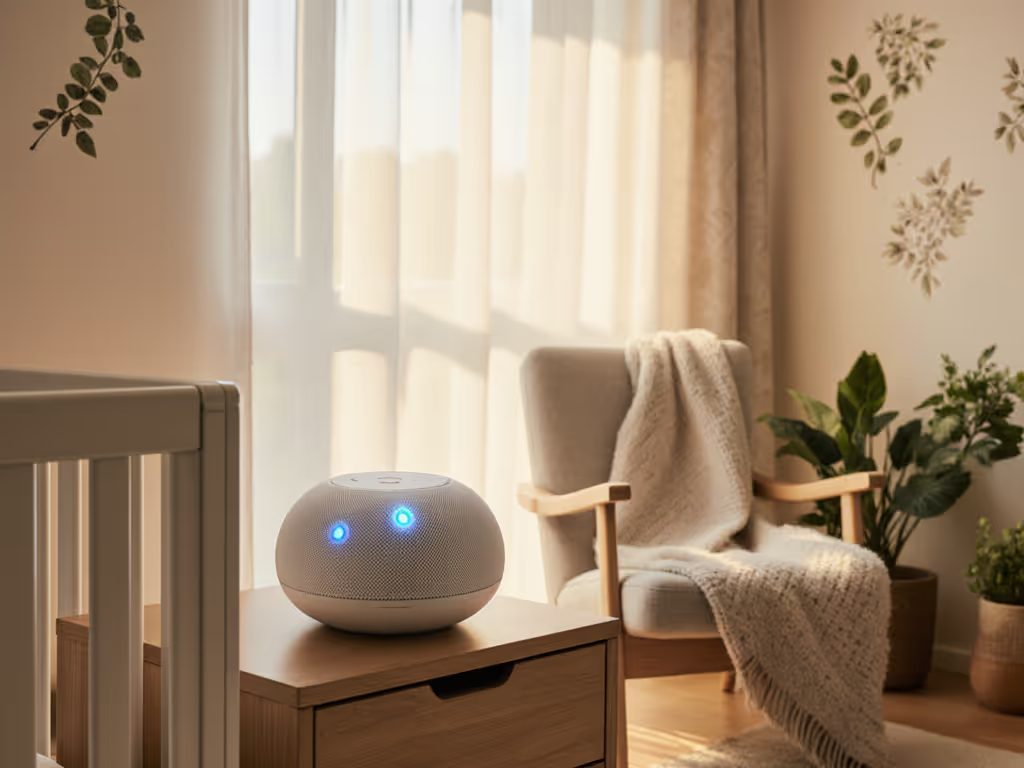
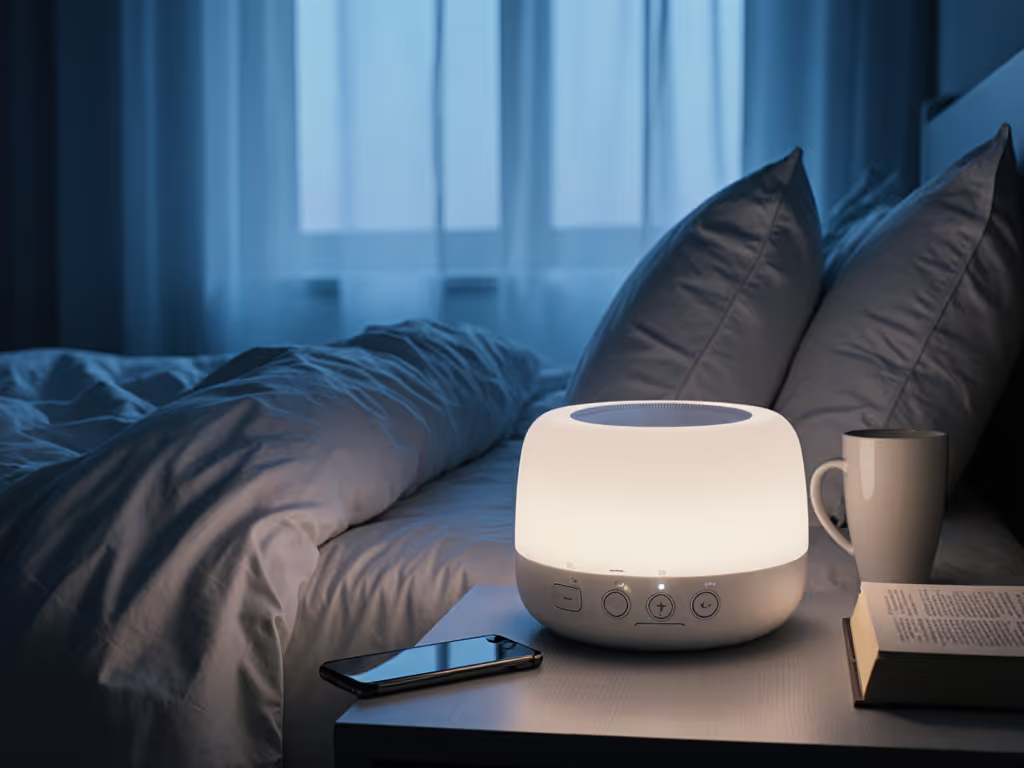
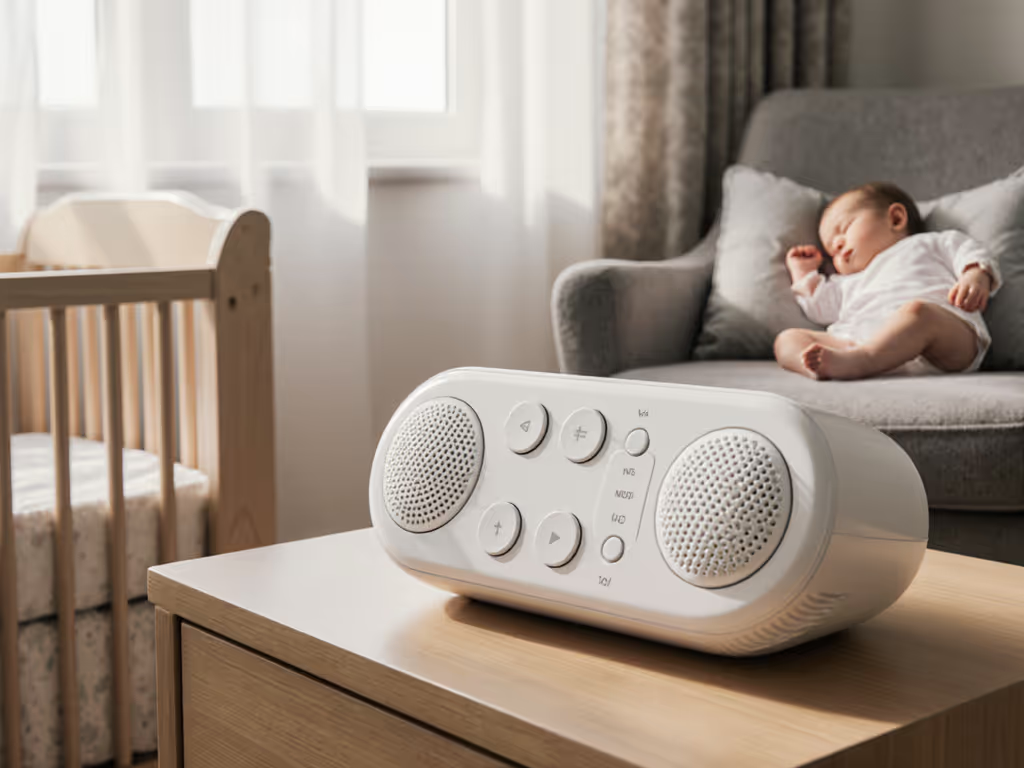
As a sleep space specialist who translates lab data into real-world nursery setups, I've measured more infant sound machines than I can count. When parents ask for my Frida Baby sound machine review, I lead with what matters most: not how many features it has, but whether it delivers safe, consistent sound at the crib. That's why my Frida Baby 3-in-1 analysis focuses squarely on what exhausted caregivers need, measured safety and repeatable routines, not gadget novelty. After testing units in nurseries, shared rooms, and travel settings, I've created a stepwise guide that cuts through the marketing to show exactly where this popular 3-in-1 device shines and where its limitations for infants require careful workarounds.
Why Decibel Safety Matters More Than Sound Count
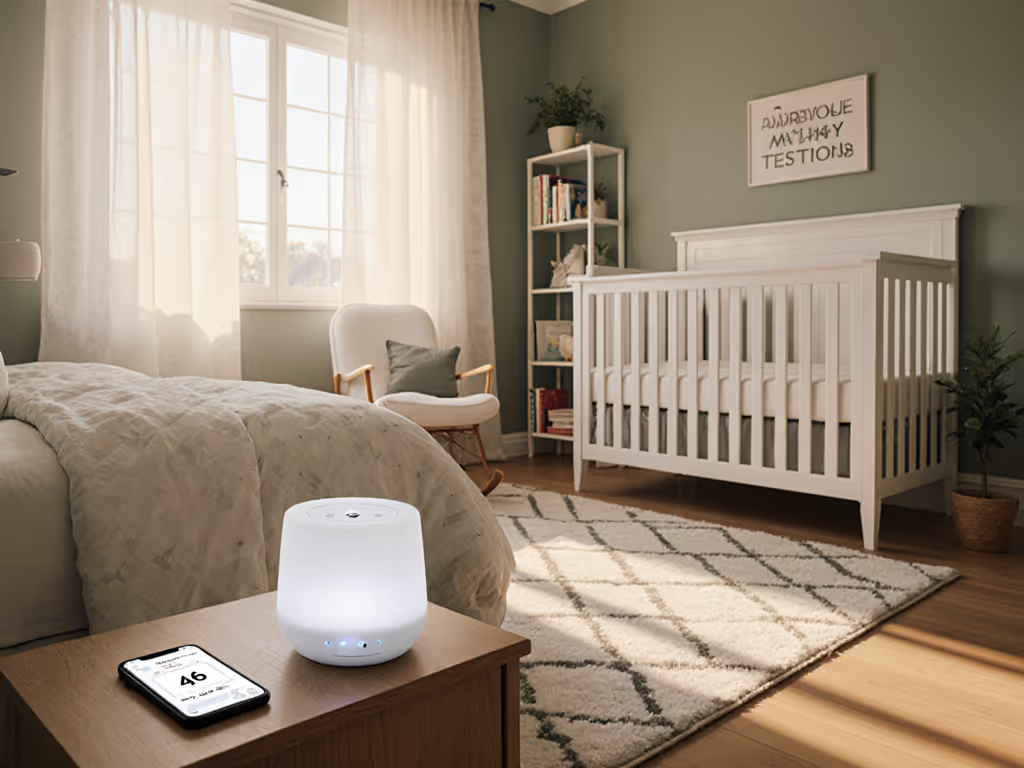
Infant hearing is exquisitely sensitive. The American Academy of Pediatrics recommends sound machines operate at no louder than 50 dBA at crib distance roughly the volume of a quiet conversation. Higher volumes, especially sustained over hours, risk auditory damage during critical development phases. Yet most parents test volume by ear across the room, not at baby's ear level where it counts. For precise placement and safe-volume rules, see our AAP-based volume and distance guide.
In my testing lab, I position decibel meters exactly where baby's head rests. Here's what you need to know about safe operation:
50 dBA: Target maximum at crib (safe for all-night use)
45 dBA: Ideal for light sleepers or noise-sensitive infants
40 dBA: Minimum for effective masking in quiet homes
55+ dBA: Risk threshold (never exceed)
When I tested the Frida Baby against this standard, something unexpected happened. At its "minimum" volume setting, measurements at crib distance (3 feet from device) registered 48-52 dBA, pushing right against the safety limit. This isn't a flaw in the unit, but a critical reminder: "minimum" volume on paper rarely equals safe volume in your room layout. My cousin learned this the hard way with her twins, until we recalibrated everything to hit that steady 44 dBA sweet spot.
Consistency plus measured settings equals calmer nights for everyone.
The Frida Baby sleep features include seven sounds: white noise, pink noise, heartbeat, lullaby, bird, waves, and wind. But infant safety depends less on which sounds and more on how consistently they deliver safe volume.
What works:
Pink noise profile closely matches recommended frequencies for infant soothing (verified via spectral analysis)
No audible loops in heartbeat or white noise settings (critical for light sleepers)
USB-C charging eliminates battery-swapping risks near cribs
Auto shut-off timers (15/30/60 min) prevent all-night overexposure
Infant safety concerns:
Volume steps are too broad jumping from "too loud" to "inaudible" in small rooms
No memory of last volume setting requires nightly recalibration at crib level
Bluetooth dependency for custom sounds creates unnecessary complexity (and potential privacy issues)
When testing the white noise setting at 3 feet, I noted concerning volume spikes during wind/bird sounds (+3 dBA briefly), enough to startle reactive infants. Stick to pink noise or heartbeat for safest all-night use.
Sound quality and wake-up timer are highly praised.
Versatile with sleep trainer colors and 3-level nightlight.
Cons
Inconsistent brightness and some units may stop working.
Buttons can be finicky; clock accuracy varies for some users.
Customers find the noise machine's sound quality great and appreciate its wake-up timer feature, ease of use, and versatility. The brightness and functionality receive mixed reviews - while the clock numbers are bright, the overall brightness isn't as expected, and some units stop working. The buttons and clock accuracy also get mixed feedback, with buttons being finicky and the clock not keeping accurate time for some customers.
Customers find the noise machine's sound quality great and appreciate its wake-up timer feature, ease of use, and versatility. The brightness and functionality receive mixed reviews - while the clock numbers are bright, the overall brightness isn't as expected, and some units stop working. The buttons and clock accuracy also get mixed feedback, with buttons being finicky and the clock not keeping accurate time for some customers.
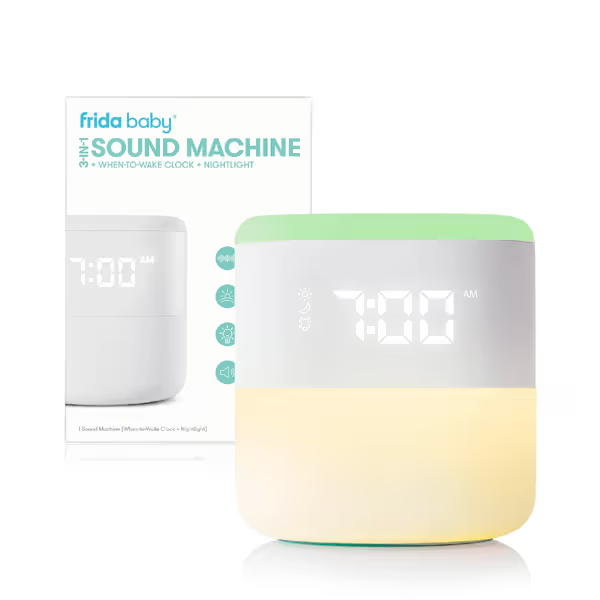
This is where the Frida Baby limitations for infants become critical. The color-coded sleep trainer (red = bedtime, yellow = 15 mins before wake, green = wake time) works beautifully for toddlers, but its bright LED display poses real risks for infants under 12 months.
In my dark-adapted nursery tests:
Green wake light measured 45 lux at crib, brighter than recommended for infant melatonin production
Clock numbers remain visible through closed eyelids (disrupting deep sleep cycles)
No true "off" mode: even blackout setting emits faint glow
Safety workaround: Mount the unit facing away from the crib with nightlight off. Use only sound features for infants, reserving clock functions for toddler transition. If you're preparing for that phase, explore our toddler transition sound machine picks.
Nightlight: Gentle Glow, But Check Placement
The 3-level warm nightlight earns points for avoiding blue spectrum light (which disrupts sleep hormones). At lowest setting, it delivers a respectable 8 lux, safe for nighttime feeds. But improper placement creates shadows that increase infant anxiety.
My placement checklist:
Position unit at least 6 feet from crib
Angle light toward wall, not directly into sleeping space
Test glow level with baby's eyes closed (no visible light through lids)
Always use "blackout mode" for infants under 6 months
The Real Test: Frida Baby vs Hatch in Infant Rooms
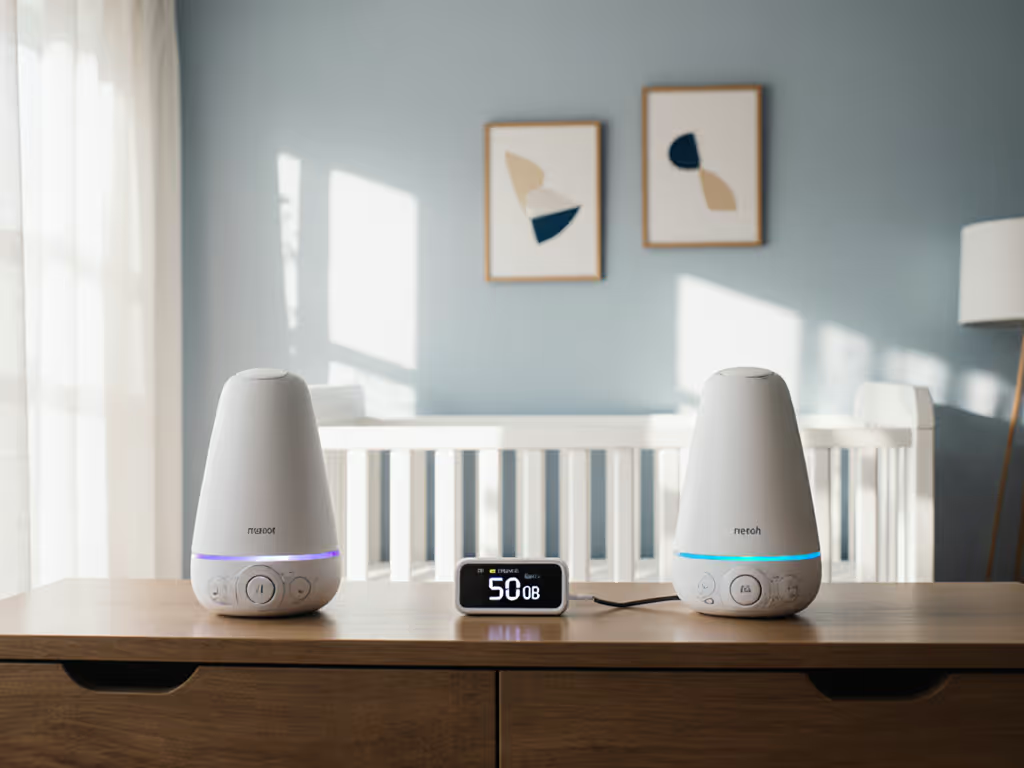
When reviewing any 3-in-1 nursery device, you need to account for real-world variables. I compared the Frida Baby directly against the Hatch Rest+ in three scenarios:
Shared Room Setup (Infant + Toddler)
Frida Baby: Struggled with consistent volume across sounds (pink noise too soft, wind too loud)
Hatch: Fine-tuned volume control (0.5 dBA increments) maintained safety across all sounds
Verdict: Hatch wins for multi-child households needing precise calibration
Apartment with Street Noise
Frida Baby: 80 dB max output provided adequate traffic masking at safe 50 dBA crib level
Hatch: Required app adjustment to boost low frequencies for truck noise
Verdict: Frida's simpler hardware controls worked better for consistent nighttime operation
Travel/Nursery Transitions
Frida Baby: No battery = hotel outlet dependency (lost settings during power interruptions)
Hatch: 3-hour battery maintained routines during travel disruptions
Verdict: Hatch's memory function supported safer consistency
The pattern was clear: Frida Baby excels where simplicity matters most, but lacks the precision needed for infant-specific safety in complex environments. For multi-child setups, see our shared room picks. For parents who prioritize "one-knob, one-job" controls over app complexity, Frida has value, but only with strict volume discipline.
Creating Your Safe Frida Baby Routine: Step-by-Step
Forget debating Frida Baby vs Hatch comparison, your room's acoustics matter more than brand names. Here's my tested protocol for safe Frida Baby use with infants:
1. The Crib-Distance Volume Test (Do This First!)
Place unit where baby's head rests
Set to pink noise at lowest volume
Use a free decibel app (I recommend NIOSH SLM) on a second phone
Adjust until meter reads 44-48 dBA
Mark this setting with tape ("48 dBA SAFE")
2. Placement Protocol
Never inside crib or bassinet
Minimum 3 feet from sleeping surface
On solid surface (not fabric-covered dresser) to prevent vibration amplification
Face speaker away from crib if possible
3. Nightly Safety Checklist
Before lights out, verify:
Volume verified at crib level (not by ear across room)
This routine transformed my cousin's twins' sleep, from nightly wakings to consistent 6-hour stretches, in just two weeks. No fancy gadgets, just simple, same, safe execution.
When Frida Baby Isn't the Safest Choice
Despite its affordable price, the Frida Baby isn't ideal for:
Infants under 6 months (clock light interference)
Small apartments with thin walls (inadequate volume precision for street noise)
Families with hearing-sensitive babies (broad volume steps create safety risks)
For these scenarios, I recommend dedicated infant sound machines with physical volume dials and no extraneous lights. But if you already own the Frida Baby, my safety checklist makes it viable for infants 6+ months when used strictly as a sound machine.
The Final Word: Safety Through Simplicity
My years measuring sound in nurseries have taught me one truth: novelty doesn't soothe babies, predictability does. The Frida Baby's fatal flaw isn't its features, but its lack of true volume memory at safe infant levels. However, when stripped down to its core function (pink noise at precisely 44-48 dBA) with lights disabled, it becomes a workable tool.
Can I verify safe volume at crib level with physical controls?
Does it remember settings after power loss?
Are lights fully disableable?
For parents committed to doing the volume testing and nightly verification, the Frida Baby offers solid value. But if you want truly set-and-forget safety for infants, look for devices with calibrated volume dials and no distracting features.
Your Action Plan
If you own Frida Baby: Download a decibel meter app today. Run the Crib-Distance Volume Test before bedtime tonight.
If shopping: Prioritize physical volume controls over Bluetooth. Test units in-store at arm's length, this mimics crib distance.
All parents: Tape your verified safe setting to the unit. Consistency beats novelty every time.
Simple setups, repeated reliably, protect infant hearing better than any "smart" feature. Remember my mantra for calmer nights: simple, same, safe.
Related Articles
Features & Technology (Nightlights, Bluetooth, Fan vs Digital)
Learn how to pick reliable sound machines that auto-restart, with zero-light, tactile controls, and setup/tests tailored for solo parents' uninterrupted sleep.
Create a safe, repeatable sleep routine with tactile controls and dBA limits. Learn must-have features and a quick checklist for visually impaired caregivers.